Also known as Trans-Pecos Copperhead, Broad-banded Pit Viper
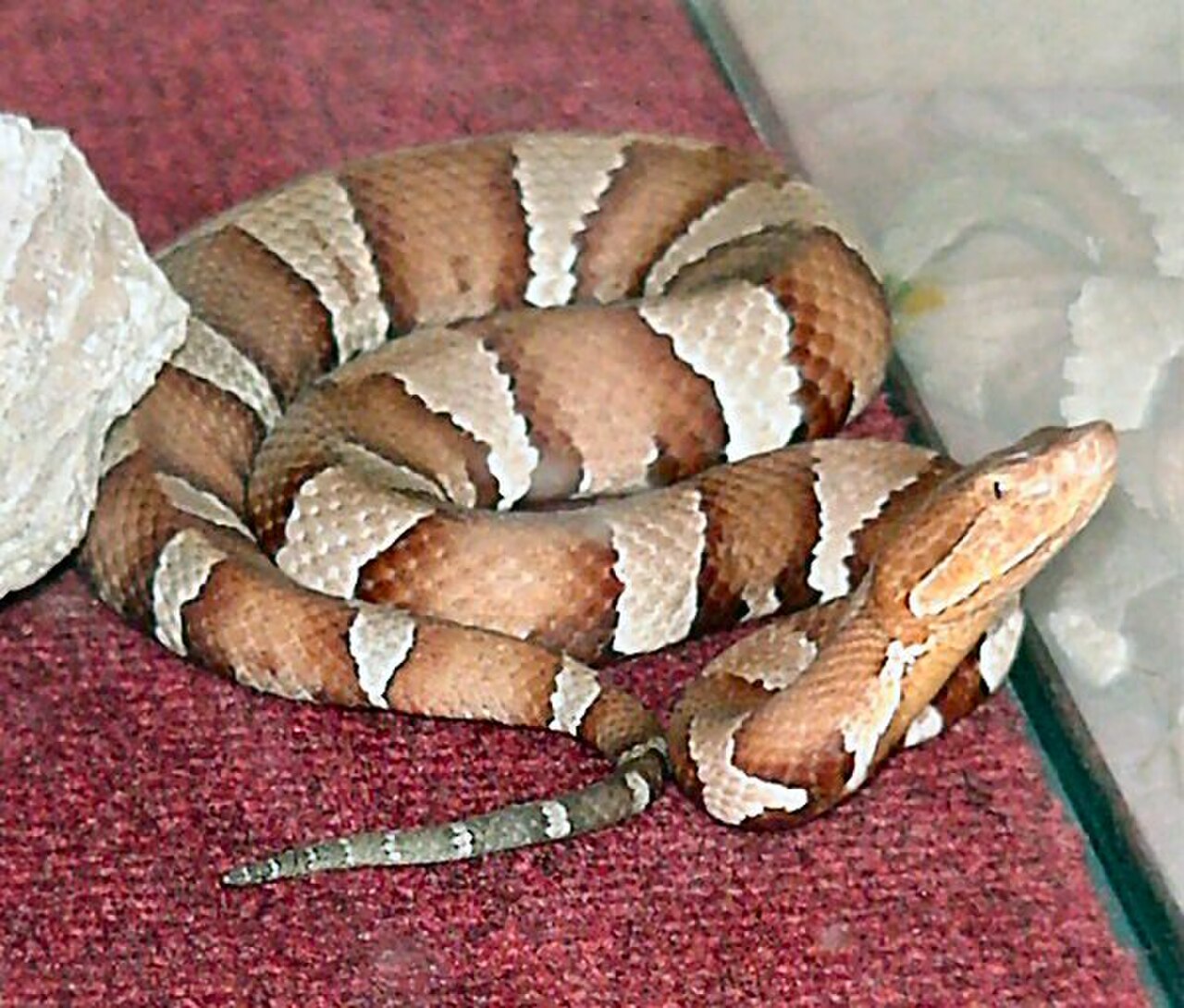
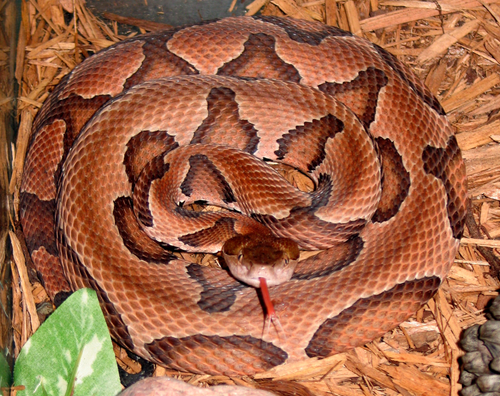
Broad-banded copperheads rely on striking chestnut-and-tan camouflage to ambush prey along desert canyon ledges and woodland floors. Thermal pit organs located between their eyes and nostrils allow them to pinpoint warm-bodied prey even in total darkness. When threatened, they often vibrate their tails rapidly against dry leaves, producing a buzzing sound that warns intruders to stay clear.
ThreatsHabitat fragmentation, road mortality, and intentional killing
HabitatsChihuahuan Desert canyons, rocky hillsides, oak woodlands, and spring-fed riparian zones
Life span15–25 years
Size / weightNot available
Classification
FamilyViperidae
SpeciesAgkistrodon contortrix pictigaster
Range & activity
Range data is not available yet.
Safe observation
Interaction riskVery high
Low
Moderate
High
Very high
Why interaction risk is very high
Possesses hemotoxic venom; maintain a safe distance and watch step in rocky or brushy terrain.
Why it is dangerous
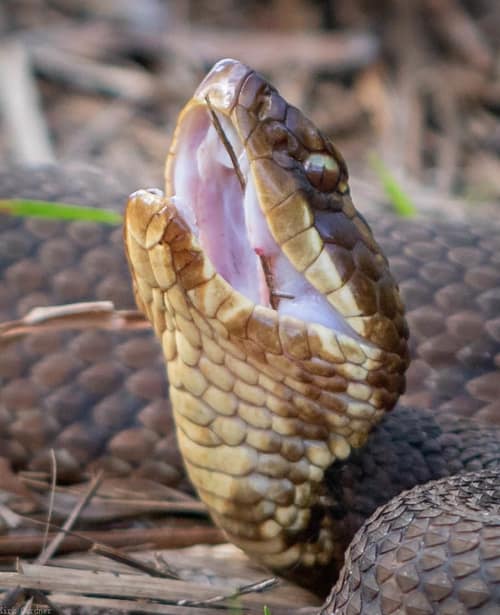
Injects hemotoxic venom through hinged fangs, causing severe localized pain, tissue swelling, and potential necrosis requiring urgent medical evaluation.
How to recognize a risky encounter
Look for broad, alternating bands of light tan and reddish-brown along the body with prominent heat-sensing pit organs near the snout.
What to do
Freeze and step back slowly if spotted; never attempt to touch, capture, or corner a venomous snake.
Responsible observation
Observation Distance: Maintain at least two meters of distance, as pit vipers can strike up to half their body length.
Night Safety: Carry a bright flashlight when walking through rocky canyon habitat after sunset during warm summer months.
Footwear Caution: Wear sturdy boots and long trousers while hiking in known copperhead territory.