
Bird · GBIF taxon 6093389
Elfin Woods Warbler
Setophaga angelaeAlso known as Reinita Del Bosque Enano, Elfin-woods Warbler
Elfin Woods warblers forage high in the dense upper canopy of humid mountain forests, gleaning small insects from leaves and mossy twigs with deliberate, steady movements. Recognized by striking black-and-white plumage and a bold facial pattern, these compact songbirds remain adeptly hidden within thick foliage. Monogamous pairs defend small territories year-round in wet cloud forests, nesting in sheltered canopy bromeliads and tree forks.
EndemicInsectivoreSongbird
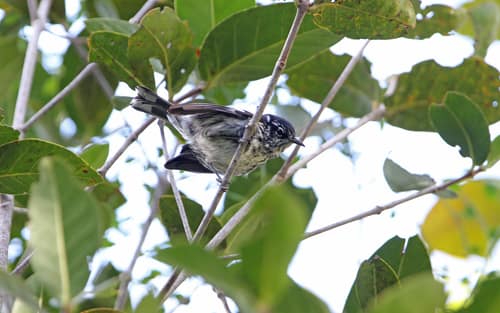
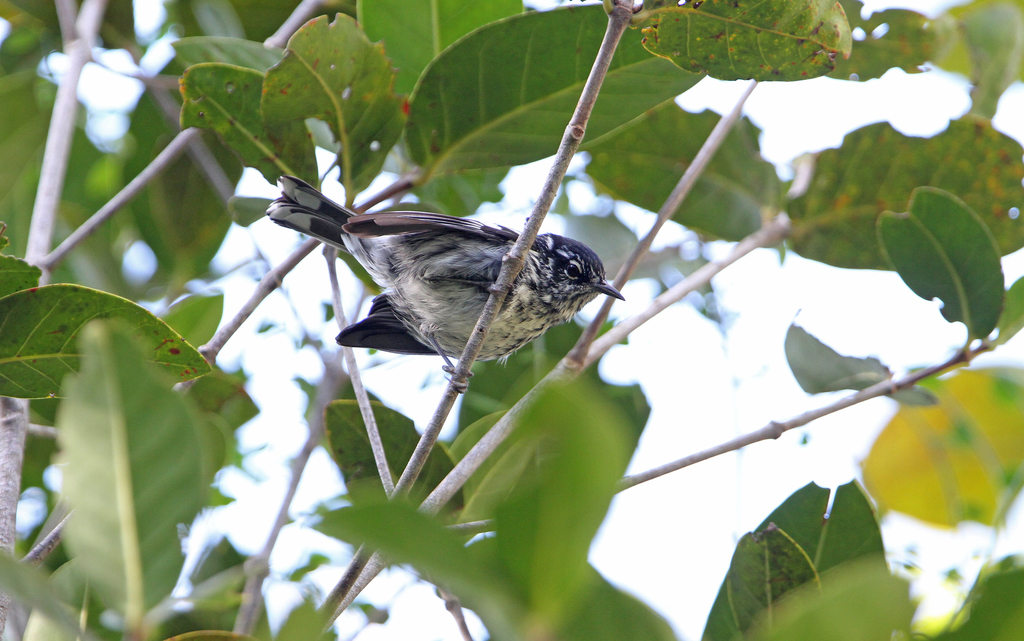 1 / 2
1 / 2—observations
—countries
—peak records
EndangeredConservation statusIUCN Red List categoriesLCNTVUENCREWEXEndangeredRed List categories, explained →
Diet & prey
- Insects
- Spiders
- Caterpillars
Predators
- Black rat
- Small Asian mongoose
- Puerto Rican screech-owl
ThreatsHabitat fragmentation, hurricane damage, nest predation by invasive species
HabitatsElfin high-elevation forests, cloud forests, podocarp forests
Life span3–6 years
Size / weightNot available
Classification
- FamilyParulidae
- SpeciesSetophaga angelae
Range data is not available yet.
Interaction riskLow
- Low
- Moderate
- High
- Very high
- Why interaction risk is low
- Safe to observe at a normal distance.
- What to notice
- Look for a tiny black-and-white songbird with a dark crown, white cheek crescent, and heavily streaked white underparts.
- Support conservation
- Remain on designated paths in reserves such as Maricao and El Yunque, and refrain from playing recorded bird calls.
Responsible observation
- Listen for vocalizations: Locate them by their high-pitched, reedy song ringing through dense fog.
- Scan canopy vegetation: Look closely at mossy bark and leafy branches in high-elevation forests.
- Maintain quiet distance: Stay on marked trails in protected cloud forests to avoid disturbing nests.
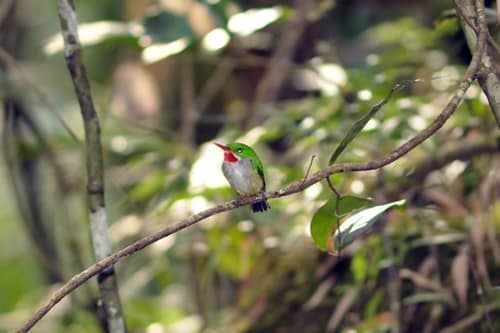
Frequent Companion (c) Tom Kennedy, some rights reserved (CC BY) · cc-by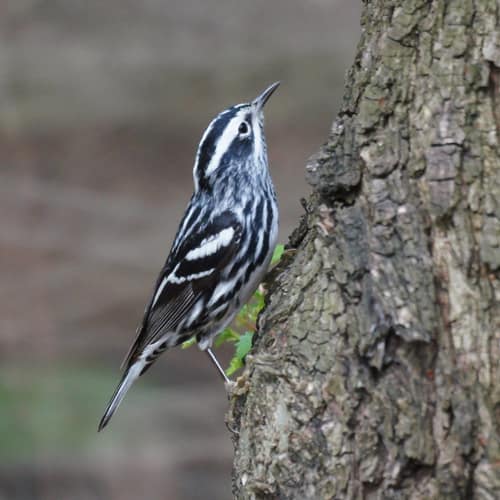
Winter Visitor "Black and White Warbler" by Mike's Birds is licensed under CC BY-SA 2.0. To view a copy of this license, visit https://creativecommons.org/licenses/by-sa/2.0/. · cc-by-sa Image unavailable
Close Relative Close Relative
Help improve the field guideSomething wrong?
Checking your Fauna account…Report a name, category, or profile issue for review.