
Bird
Magnolia Warbler
Setophaga magnoliaAlso known as Black-and-yellow Warbler
Magnolia warblers flit restlessly through dense conifer boughs, fanning their distinctive white-banded tails while snatching caterpillars from the undersides of needles. Breeding males boast a striking yellow breast streaked with thick black stripes, a jet-black face mask, and a slate-gray crown. Each autumn, millions embark on long nocturnal journeys from boreal spruce forests to spend the winter in Central American humid lowlands and shade-coffee plantations.
SongbirdMigratoryColorful
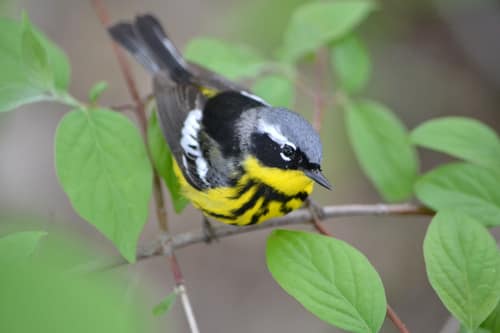
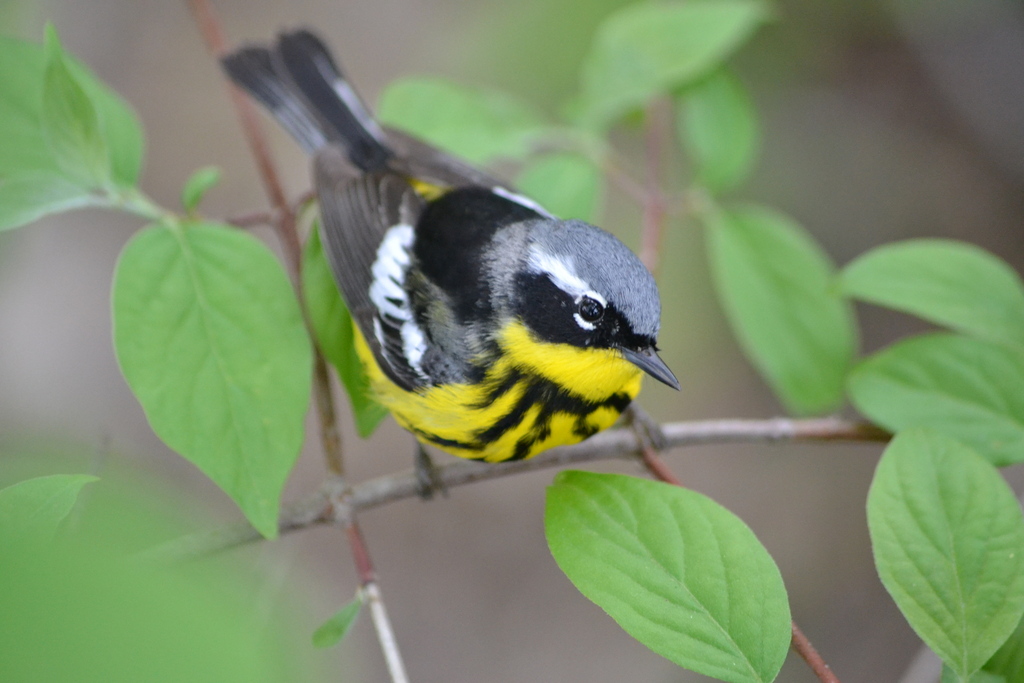
—observations
—countries
—peak records
Least ConcernConservation statusIUCN Red List categoriesLCNTVUENCREWEXLeast ConcernRed List categories, explained →
Diet & preyCaterpillars, Spiders, Aphids
Predators
- Sharp-shinned Hawk
- Merlin
- Blue Jay
ThreatsCollisions with artificial structures during nocturnal migration and winter habitat loss
HabitatsDense boreal conifer forests, regenerating spruce stands, and mixed migratory woodlands
Life span5–8 years
Classification
- OrderPasseriformes
- FamilyParulidae
- GenusSetophaga
- SpeciesSetophaga magnolia
Range data is not available yet.
Interaction riskLow
- Low
- Moderate
- High
- Very high
- Why interaction risk is low
- Safe to observe at a normal distance.
Responsible observation
- Field Observation: Watch the lower to mid-canopy of small spruces and look for tail-fanning behavior.
- Acoustic Cues: Listen for a cheerful, rapid song often rendered as 'wichety-wichety-wichew'.
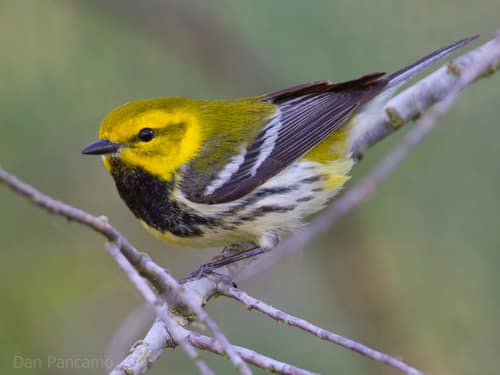
Competitor (c) Dan Pancamo, some rights reserved (CC BY-SA) · cc-by-sa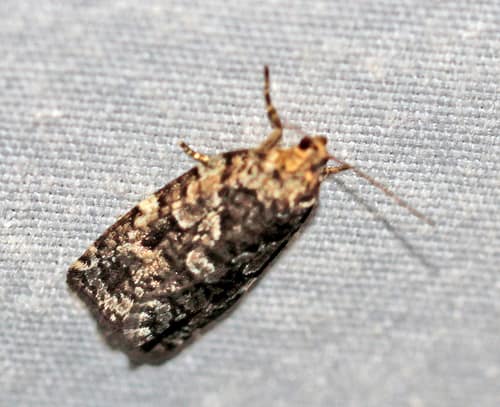
Prey no rights reserved · cc0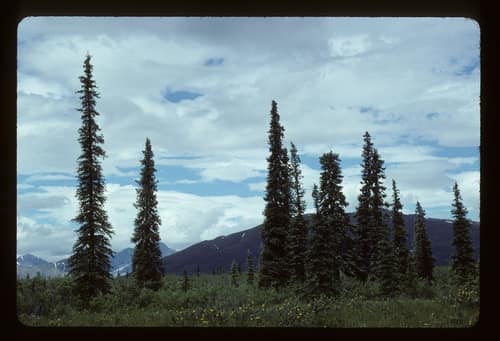
Host Plant (c) Douglas Goldman, some rights reserved (CC BY-SA), uploaded by Douglas Goldman · cc-by-sa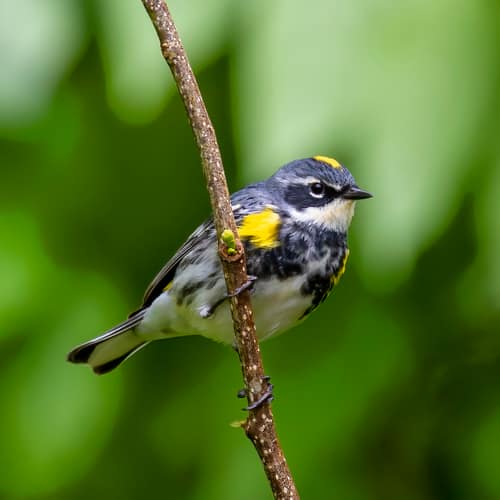
Close Relative (c) Dan Vickers, some rights reserved (CC BY), uploaded by Dan Vickers · cc-by
Keep collecting in Fauna
Found in Collections
Species set Pro
Backyard Birds
Magnolia Warbler is found in this collection. Identify it in Fauna to fill this slot and continue your progress.
Unlock to track progress
Help improve the field guideSomething wrong?
Checking your Fauna account…Report a name, category, or profile issue for review.