
Bird
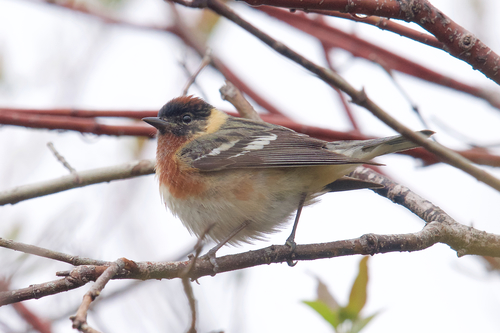
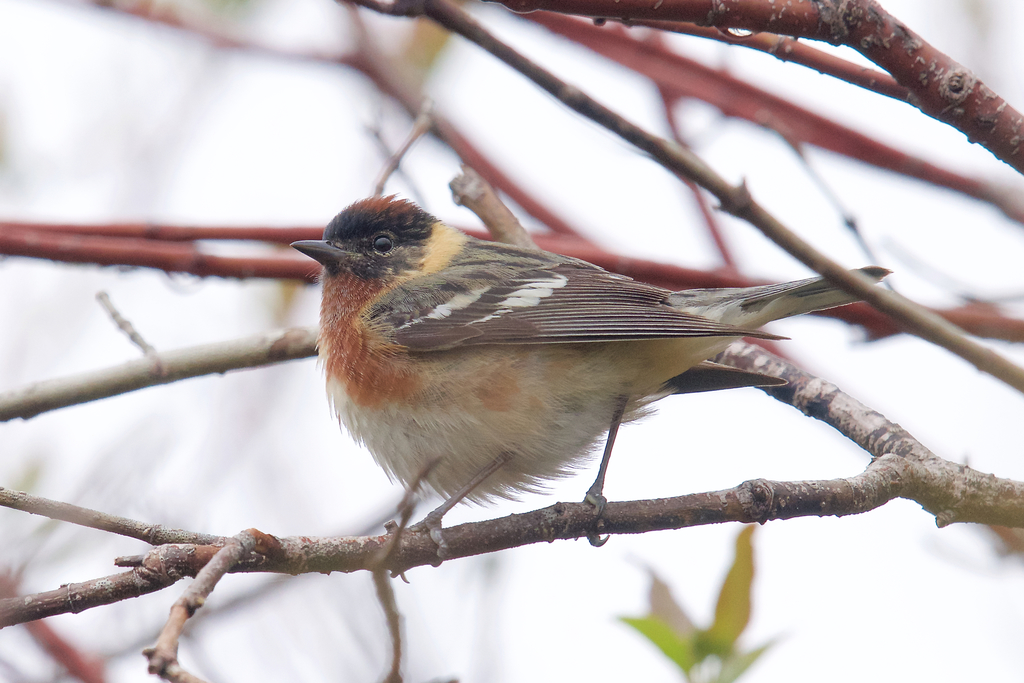
Bay-breasted Warbler
Setophaga castaneaBay-breasted warblers are specialized spruce-woods foragers closely tied to cyclic outbreaks of eastern spruce budworms, rapidly swelling their clutch sizes during boom years. Males in spring plumage sport deep chestnut crowns and flanks with creamy buff neck patches, transforming into a dull greenish-olive plumage for the autumn journey south. They forage deliberately along middle-story branches of boreal conifers, creeping along needles rather than darting swiftly like many fellow wood-warblers.
MigratorySongbirdBoreal
—observations
—countries
—peak records
Least ConcernConservation statusIUCN Red List categoriesLCNTVUENCREWEXLeast ConcernRed List categories, explained →
Diet & preySpruce Budworm, Caterpillars, Spiders
Predators
- Sharp-shinned Hawk
- Merlin
- Red Squirrel
ThreatsHabitat loss in wintering grounds, boreal logging, and building collisions during migration
HabitatsBoreal coniferous forests, mixed woodlands, and tropical canopy during winter
Life span4 to 7 years
Classification
- OrderPasseriformes
- FamilyParulidae
- GenusSetophaga
- SpeciesSetophaga castanea
Range data is not available yet.
Interaction riskLow
- Low
- Moderate
- High
- Very high
- Why interaction risk is low
- Safe to observe at a normal distance.
Responsible observation
- Binocular Scanning: Look slowly along interior conifer limbs, where they methodically search needles for caterpillars.
- Spring Windows: Watch migration hotspots in mid-to-late May when adults exhibit their richest chestnut plumage.
- Audio Detection: Listen for high-pitched, thin, squeaky song phrases delivered high in the canopy.
Ecological Peer no rights reserved · cc0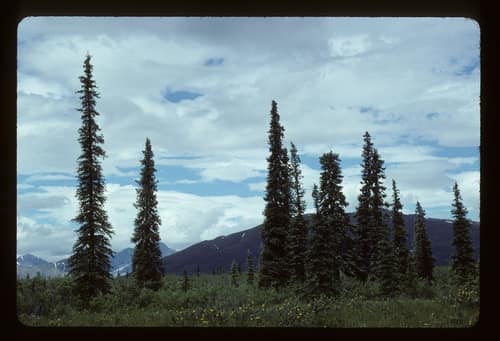
Host Plant (c) Douglas Goldman, some rights reserved (CC BY-SA), uploaded by Douglas Goldman · cc-by-sa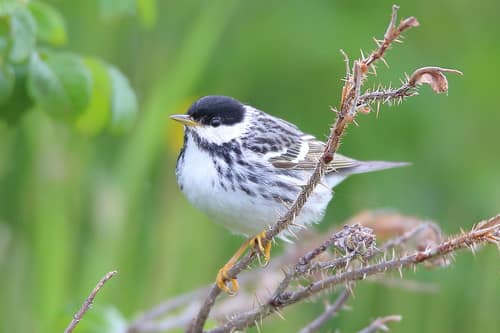
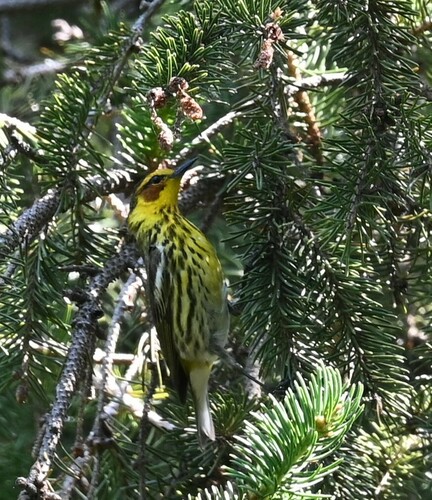
Close Relative "Blackpoll Warbler" by Scott Heron is licensed under CC BY-SA 2.0. To view a copy of this license, visit https://creativecommons.org/licenses/by-sa/2.0/. · cc-by-sa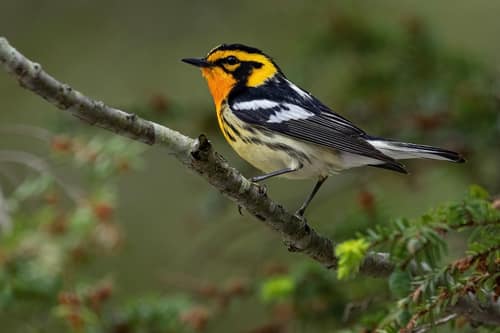
Close Relative (c) Matt Felperin, some rights reserved (CC BY), uploaded by Matt Felperin · cc-by
Keep collecting in Fauna
Found in Collections
Species set Pro
Backyard Birds
Bay-breasted Warbler is found in this collection. Identify it in Fauna to fill this slot and continue your progress.
Unlock to track progress
Help improve the field guideSomething wrong?
Checking your Fauna account…Report a name, category, or profile issue for review.