
Bird · GBIF taxon 6085572
Magellanic Horned Owl
Bubo virginianus magellanicusAlso known as Lesser Horned Owl, Tucúquere, Magellanic Owl
Magellanic horned owls hunt from elevated perches along Andean cliffs and Patagonian woodlands, dropping silently onto rodents, birds, and small reptiles. Their musical calls feature a distinct double note cadence that echoes across southern canyonlands during dusk displays. These adaptable raptors nest in tree hollows, cliff ledges, or abandoned stick nests built by other large birds.
NocturnalApex PredatorRaptor
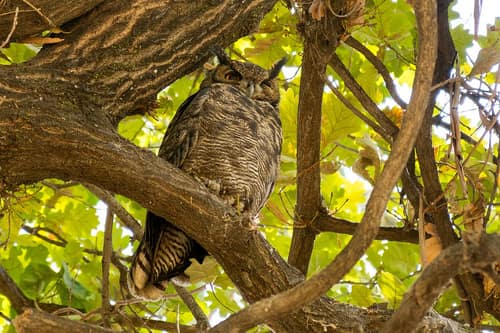
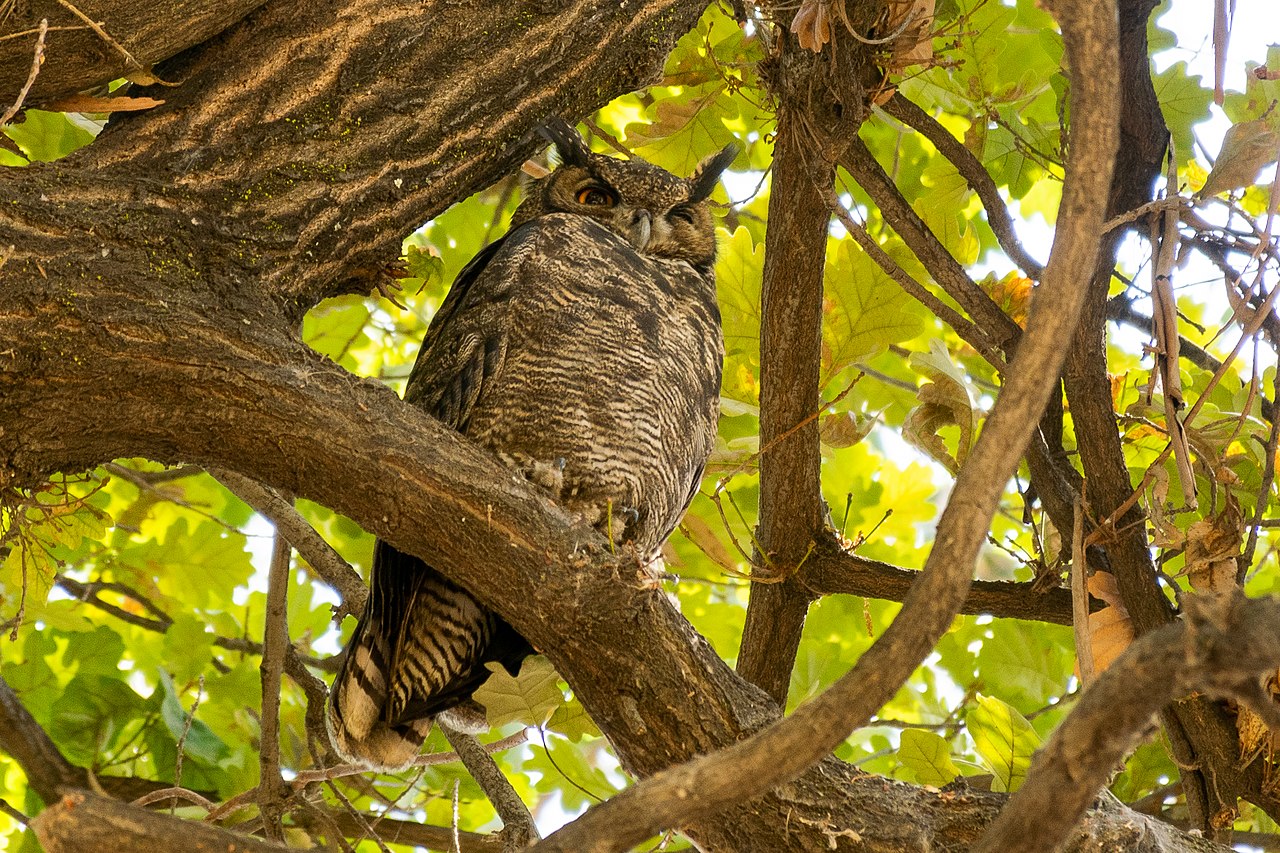
Licensed referenceMilodon3 / CC BY-SA 4.0 · cc-by-sa
—observations
—countries
—peak records
Least ConcernConservation statusIUCN Red List categoriesLCNTVUENCREWEXLeast ConcernRed List categories, explained →
Diet & prey
- Tuco-tucos
- Patagonian maras
- Small rodents
Predators
- Pumas
- Foxes
ThreatsHabitat loss, human persecution, secondary poisoning
HabitatsTemperate forests, Patagonian steppe, rocky canyons, scrublands
Life span15–20 years
Size / weightNot available
Classification
- FamilyStrigidae
- SpeciesBubo virginianus magellanicus
Range data is not available yet.
Interaction riskLow
- Low
- Moderate
- High
- Very high
- Why interaction risk is low
- Capable of inflicting scratches if nests are approached; observe from a safe distance.
Responsible observation
- Listen at twilight: Scan rocky canyon walls and tree lines at dusk when their distinctive two-note call begins.
- Give nests space: Avoid climbing near cliff ledges or dense tree hollows during spring nesting season.
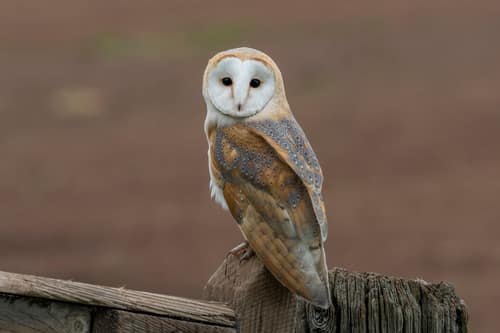
Competitor (c) caroline legg, some rights reserved (CC BY) · cc-by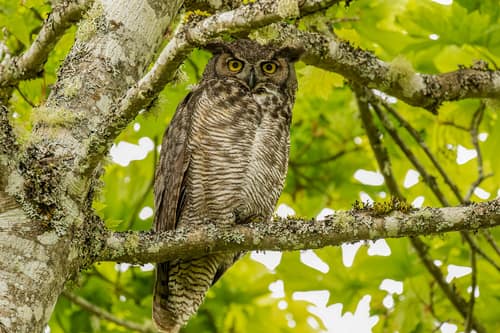
Close Relative "Great Horned Owl, the first I've seen in decent light this year. Didn't want to disturb it for too long so we continued along the trail" by island deborah- is licensed under CC BY-SA 2.0. To view a copy of this license, visit https://creativecommons.org/licenses/by-sa/2.0/. · cc-by-sa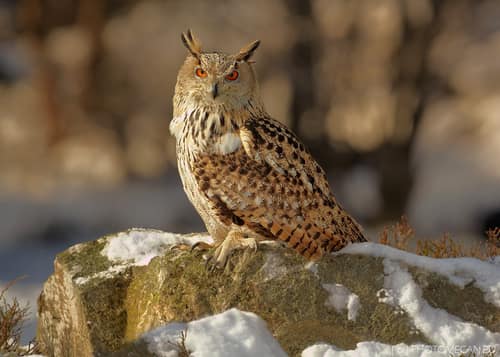
Close Relative Martin Mecnarowski (http://www.photomecan.eu/) / CC BY-SA 3.0 · cc-by-sa
Help improve the field guideSomething wrong?
Checking your Fauna account…Report a name, category, or profile issue for review.