
Reptile
Western Skink
Plestiodon skiltonianusAlso known as Skilton's Skink, Western Blue-Tailed Skink
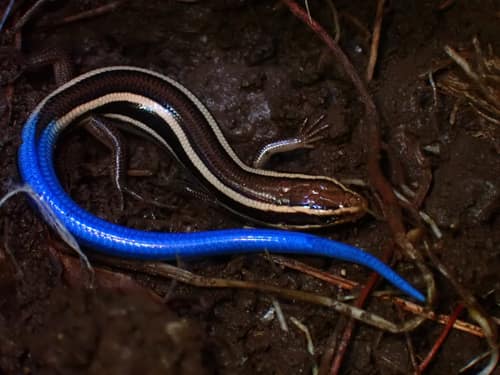
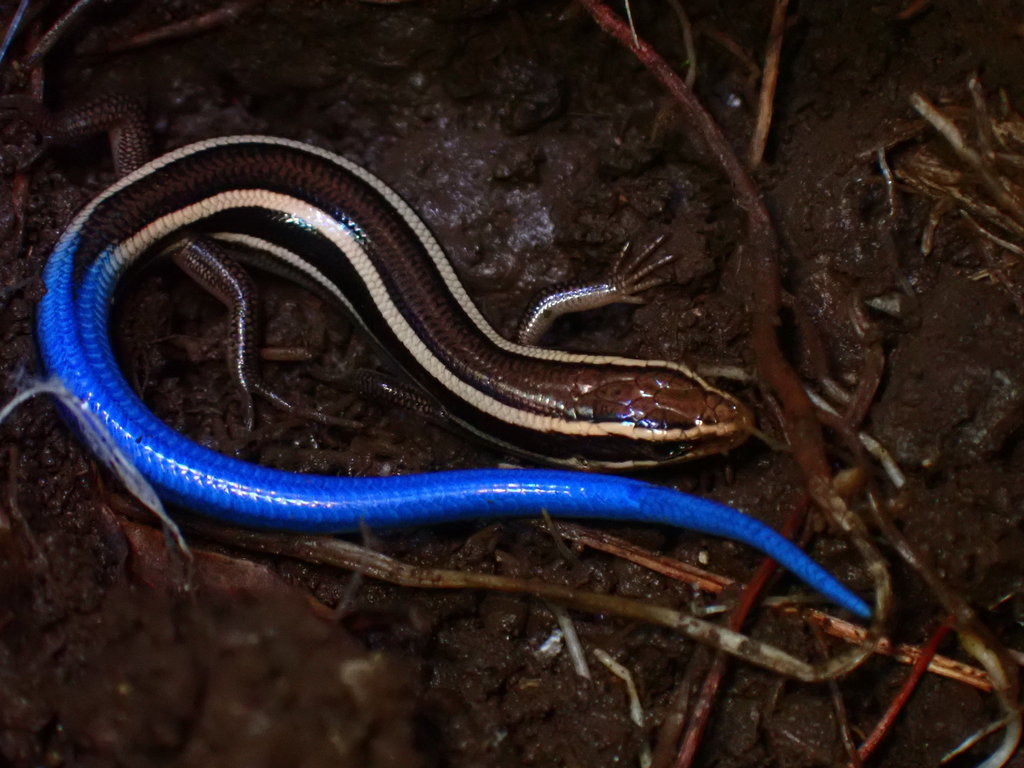
Bright blue tails on juveniles give way to sleek brownish stripes on adults, drawing predator strikes away from vital organs. These agile, smooth-scaled lizards spend much of their morning basking near cover before darting through leaf litter in search of insects. When cornered or seized, a western skink can shed its tail, which twitches frantically to distract threats while the lizard slips into safety.
DiurnalReptileStriped
—observations
—countries
—peak records
Least ConcernConservation statusIUCN Red List categoriesLCNTVUENCREWEXLeast ConcernRed List categories, explained →
Diet & preySpiders, Beetles, Crickets
Predators
- Snakes
- Hawks
- Domestic Cats
ThreatsHabitat loss, urban development, invasive predators like domestic cats
HabitatsOpen woodlands, grasslands, rocky hillsides, forest edges
Life span5 to 10 years
Classification
- FamilyScincidae
- SpeciesPlestiodon skiltonianus
Range data is not available yet.
Interaction riskLow
- Low
- Moderate
- High
- Very high
- Why interaction risk is low
- Nips when grabbed or cornered; observe quietly without attempting to catch.
Responsible observation
- Finding Them: Look around sunny clearings, under flat rocks, and near fallen logs during warm mornings.
- Tail Care: Avoid grabbing or touching the tail, as it detaches easily and drains vital energy to regrow.
- Viewing Etiquette: Keep a modest distance to watch natural foraging behavior without scaring them into cover.
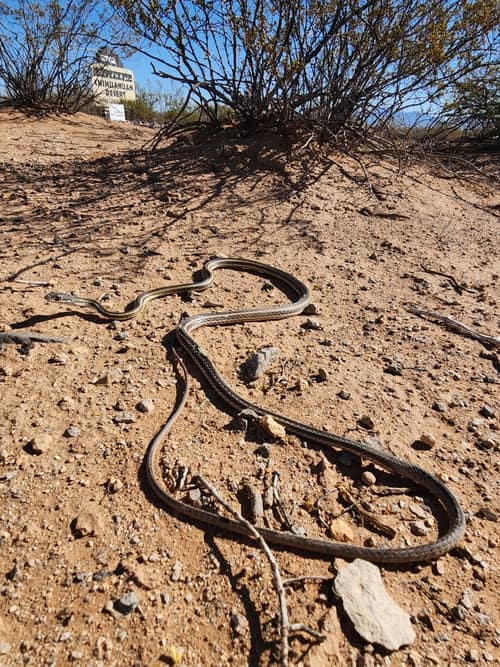
Predator no rights reserved · cc0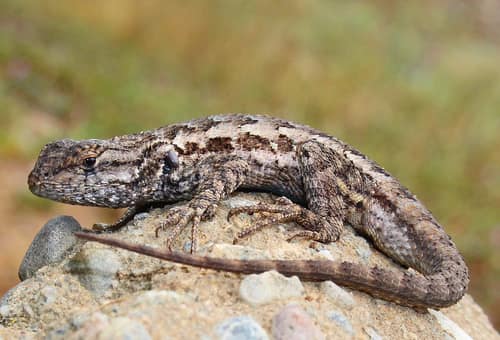
Frequent Companion Connor Long / CC BY-SA 4.0 · cc-by-sa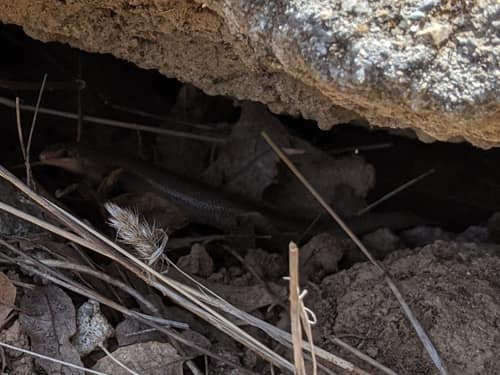
Close Relative (c) Justin, some rights reserved (CC BY) · cc-by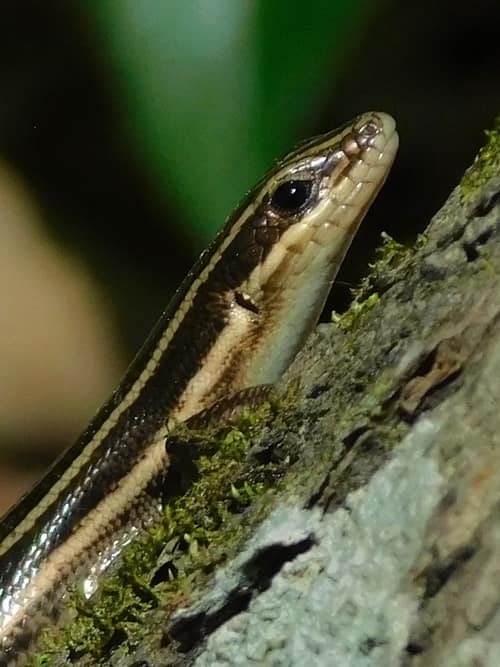
Eastern Relative (c) Michael J. Papay, some rights reserved (CC BY), uploaded by Michael J. Papay · cc-by
Help improve the field guideSomething wrong?
Checking your Fauna account…Report a name, category, or profile issue for review.