
Bird · GBIF taxon 5959240
Greater Sage-Grouse
Centrocercus urophasianusAlso known as Sagehen, Sage Grouse, Cock of the Plains
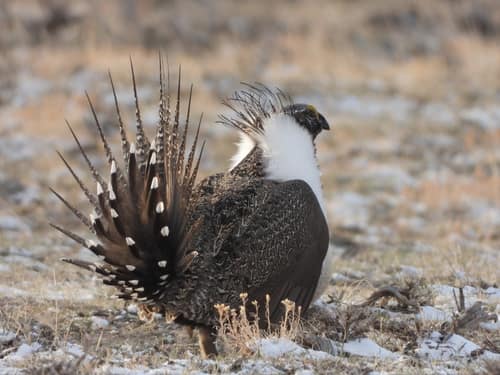
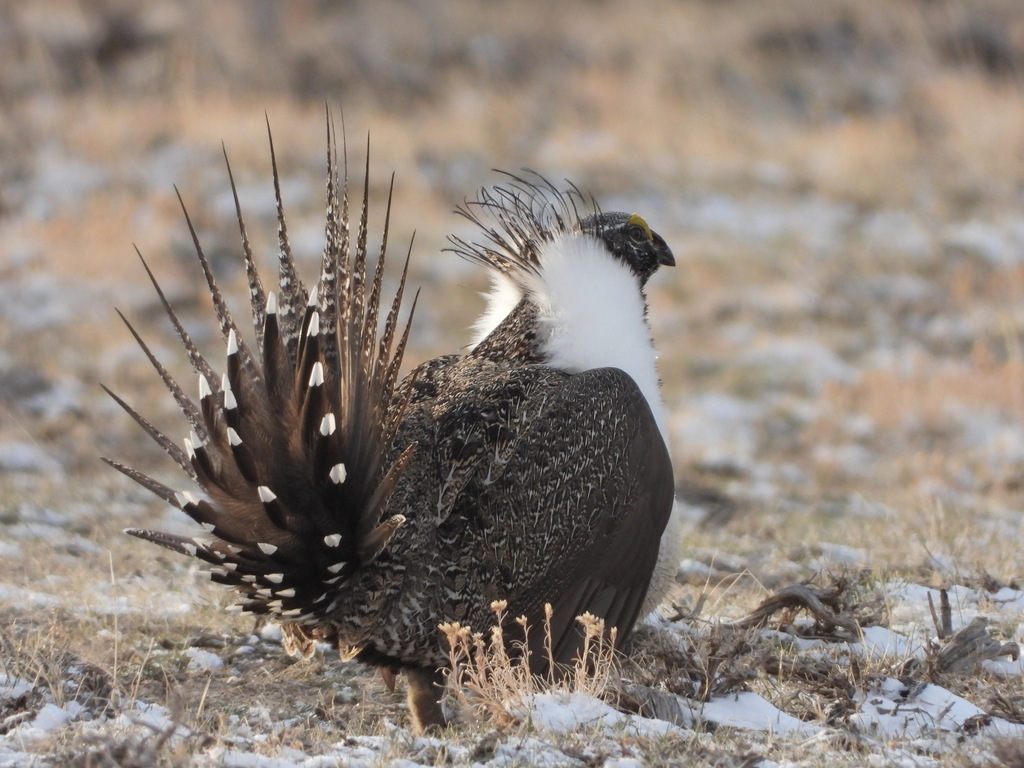
Greater sage-grouse depend entirely on expansive sagebrush steppes for food, shelter, and breeding grounds throughout their lifecycle. During spring courtships, males gather on communal display sites called leks, inflating bright yellow chest sacs, fanning pointed tail feathers, and producing resonant popping sounds to attract females. Habitat loss and fragmentation across the western sagebrush ecosystem present severe long-term challenges to surviving populations.
Steppe BirdLek BreederSagebrush Obligate
 1 / 7
1 / 7—observations
—countries
—peak records
VulnerableConservation statusIUCN Red List categoriesLCNTVUENCREWEXVulnerableRed List categories, explained →
Diet & prey
- Sagebrush leaves
- Forbs
- Insects
Predators
- Golden Eagle
- Coyote
- Badger
ThreatsHabitat fragmentation, wildfire, invasive cheatgrass, energy development
HabitatsSagebrush steppe, semi-arid shrublands
Life span3–6 years
Size / weightNot available
Classification
- FamilyPhasianidae
- SpeciesCentrocercus urophasianus
Range data is not available yet.
Interaction riskLow
- Low
- Moderate
- High
- Very high
- Why interaction risk is low
- Safe to observe at a normal distance.
- What to notice
- Look for large, mottled brown grouse with long pointed tails and white breasts on open sagebrush plains.
- Support conservation
- Observe leks strictly from inside a vehicle at a distance, arriving before first light and remaining until birds depart.
Responsible observation
- Spring Viewing: Arrive at leks before dawn and stay inside your vehicle to avoid disrupting display rituals.
- Distance Control: Keep a respectful distance of at least 100 meters during the breeding season.
- Habitat Respect: Stick to designated roads and trails to prevent damaging fragile sagebrush environments.
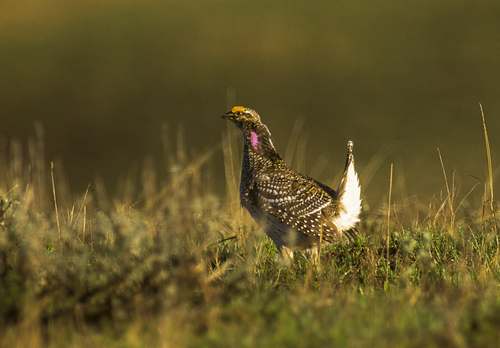
Co-occurring Species (c) Francesco Veronesi, some rights reserved (CC BY-SA) · cc-by-sa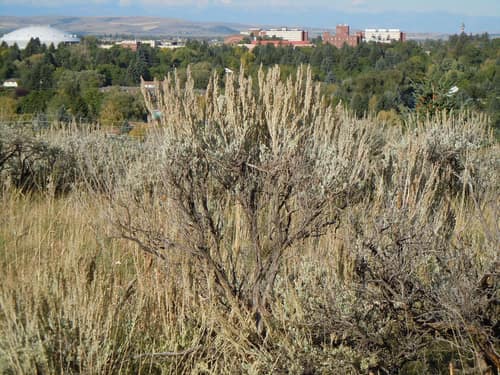
Host Plant (c) Matt Lavin, some rights reserved (CC BY) · cc-by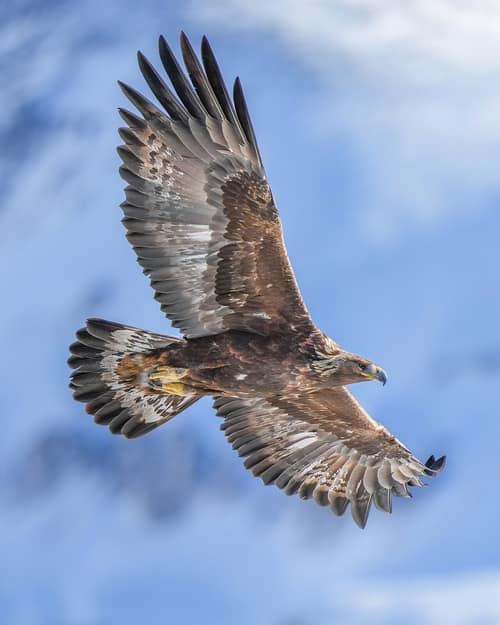
Predator Giles Laurent / CC BY-SA 4.0 · cc-by-sa Image unavailable
Close Relative
Help improve the field guideSomething wrong?
Checking your Fauna account…Report a name, category, or profile issue for review.