
Bird · GBIF taxon 5959233
Great Green Macaw
Ara ambiguusAlso known as Buffon's Macaw, Great Military Macaw
Great green macaws are majestic canopy dwellers, recognizable by their massive size, pale green plumage, and brilliant scarlet forehead patch. These highly social parrots form lifelong pairs and travel in noisy family groups, communicating with deep, raucous squawks that echo across the forest. In Central America, their survival is intimately tied to the towering almendro tree, which provides both their primary food source and essential nesting cavities.
Canopy-dwellingVocalSocial
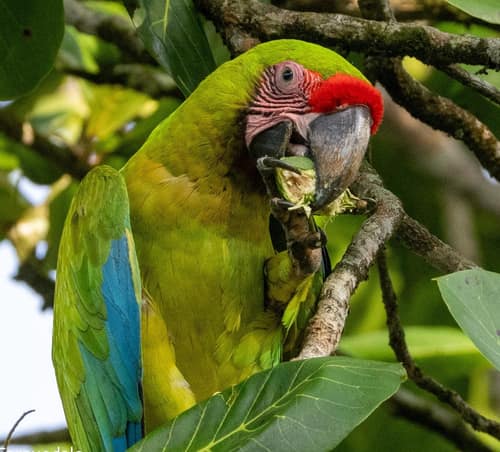
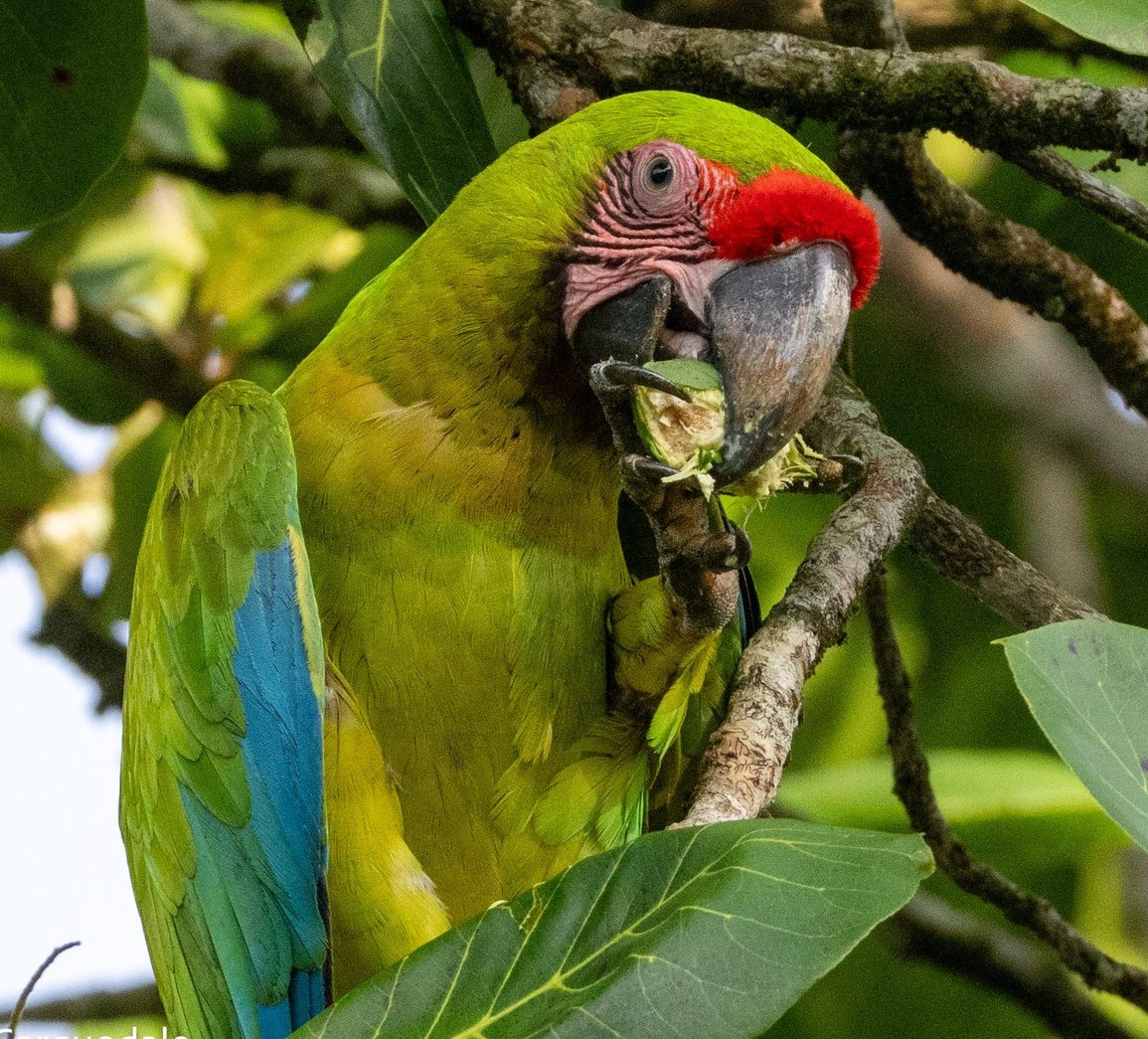
Licensed referenceDavid McCorquodale / CC BY 4.0 · cc-by
—observations
—countries
—peak records
Critically EndangeredConservation statusIUCN Red List categoriesLCNTVUENCREWEXCritically EndangeredRed List categories, explained →
Diet & prey
- Almendro seeds
- Tualo nuts
- Wild figs
Predators
- Harpy Eagle
- Tayra
- Large snakes
ThreatsHabitat loss, logging of nesting trees, and the illegal pet trade
HabitatsWet tropical forests, deciduous dry forests, and canopy edges
Life span50 to 60 years in the wild
Size / weightNot available
Classification
- FamilyPsittacidae
- SpeciesAra ambiguus
Range data is not available yet.
Interaction riskLow
- Low
- Moderate
- High
- Very high
- Why interaction risk is low
- Capable of a powerful defensive bite; observe wild birds from a respectful distance.
- Why it is dangerous
- Possesses an incredibly strong beak designed to crack hard nuts, which can inflict severe crush injuries if the bird is cornered or handled.
- How to recognize a risky encounter
- Look for a massive, heavy black bill, a bright red forehead, and a large green body measuring up to 90 centimeters.
- What to do
- Never attempt to approach, corner, or handle wild macaws; maintain a safe distance and use binoculars for viewing.
- What to notice
- Listen for loud, harsh screeching high in the canopy and watch for large green silhouettes flying in pairs.
- Support conservation
- Keep noise levels low near known nesting sites, avoid disclosing exact nest locations publicly, and support local habitat conservation initiatives.
Responsible observation
- Listen closely: Listen for their loud, metallic squawks to locate them high in the canopy before they fly.
- Use binoculars: Observe their foraging behavior from a distance to avoid disrupting their feeding sessions.
- Watch the flyways: Position yourself near forest edges at dawn or dusk to see pairs commuting between roosts.
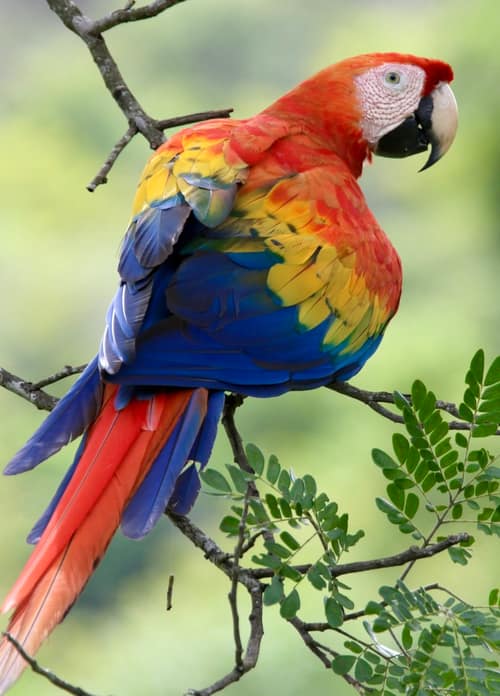
Congener (c) Cricket Raspet, some rights reserved (CC BY), uploaded by Cricket Raspet · cc-by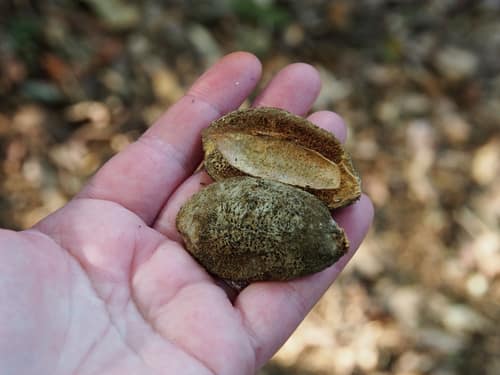
Keystone Food Source (c) Lena Struwe, some rights reserved (CC BY-SA), uploaded by Lena Struwe · cc-by-sa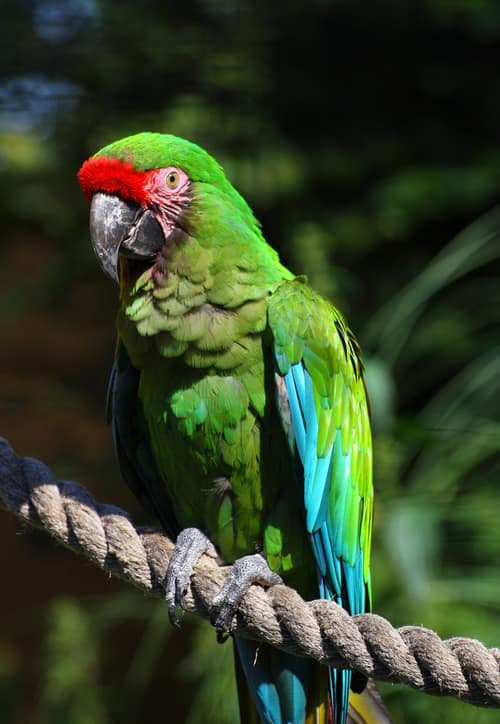
Close Relative neiljs / CC BY 2.0 · cc-by
Help improve the field guideSomething wrong?
Checking your Fauna account…Report a name, category, or profile issue for review.