
Bird · GBIF taxon 5959230
Military Macaw
Ara militarisAlso known as Military Green Macaw, Green Macaw
Military macaws are highly social parrots that gather in noisy, communal roosts along cliff faces and high forest canopies. They fly in pairs or small family groups, communicating with loud, harsh squawks and screeches that echo across deep canyons. These birds play a vital role in their ecosystems by dispersing seeds from the tough, hard-shelled fruits they crack open with their powerful beaks.
VocalSocialCanopy-dwelling
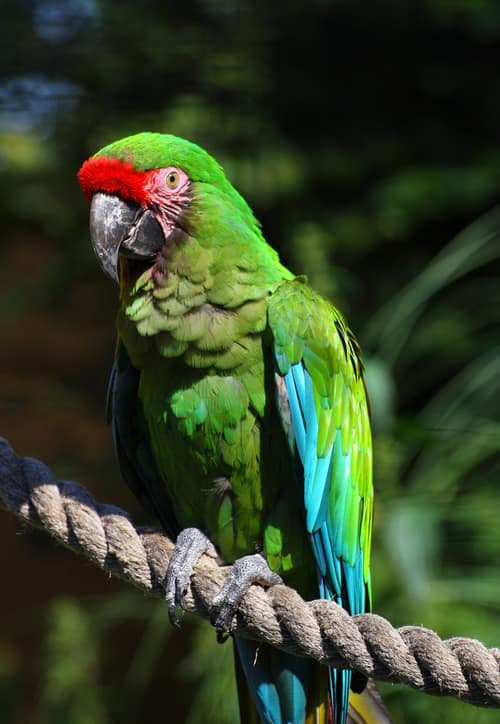
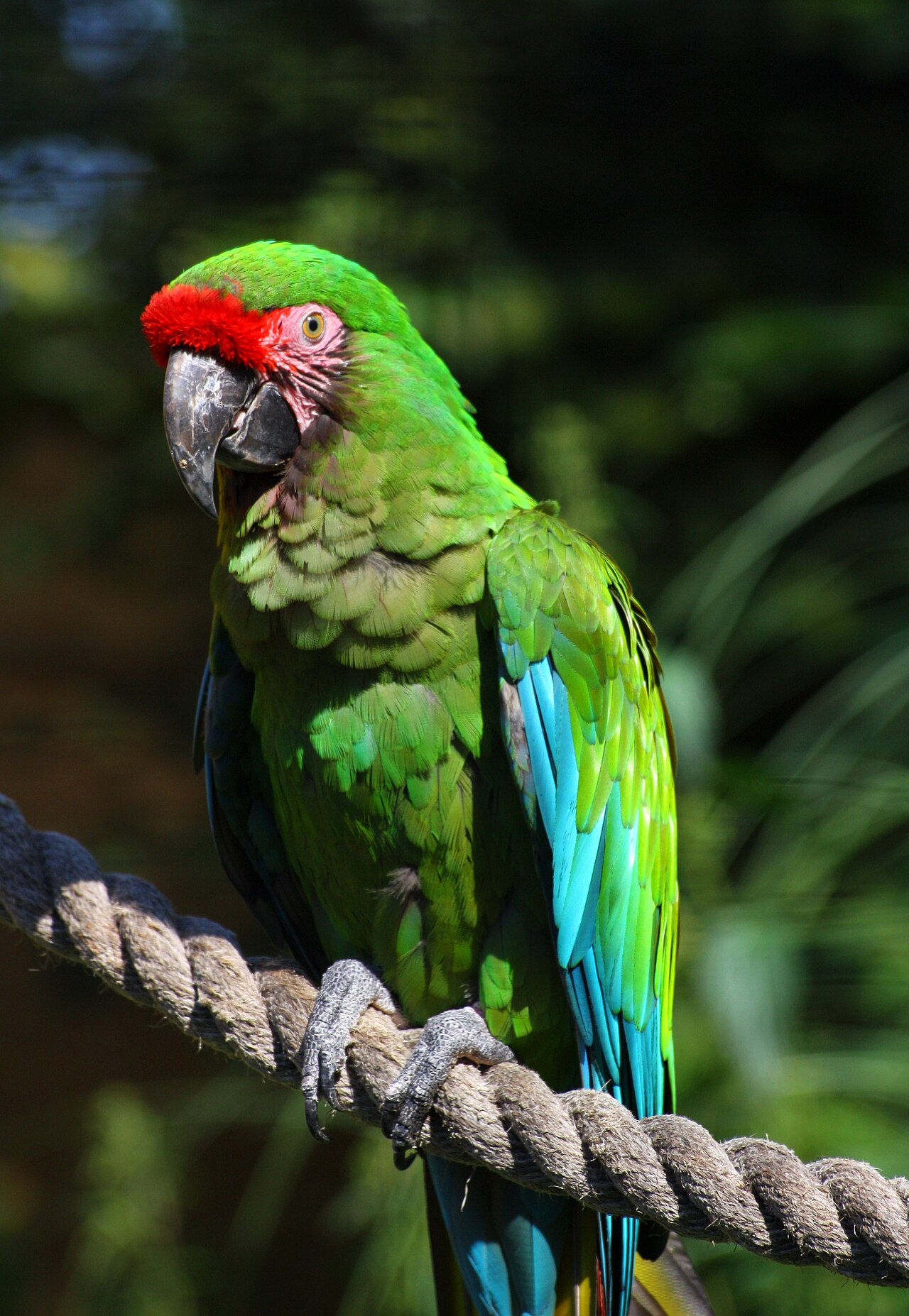
Licensed referenceneiljs / CC BY 2.0 · cc-by
—observations
—countries
—peak records
VulnerableConservation statusIUCN Red List categoriesLCNTVUENCREWEXVulnerableRed List categories, explained →
Diet & prey
- Palm nuts
- Hard seeds
- Wild fruits
Predators
- Harpy Eagle
- Jaguar
- Large tree snakes
ThreatsHabitat loss, illegal pet trade poaching, and nest site competition
HabitatsTropical deciduous forests, pine-oak woodlands, and canyon cliffs
Life span50 to 60 years in the wild
Size / weightNot available
Classification
- FamilyPsittacidae
- SpeciesAra militaris
Range data is not available yet.
Interaction riskLow
- Low
- Moderate
- High
- Very high
- Why interaction risk is low
- Possesses an extremely powerful beak capable of delivering a severe bite; observe from a respectful distance.
- Why it is dangerous
- Equipped with a massive, crushing beak designed to crack hard nuts, which can easily break skin and bones if the bird feels cornered.
- How to recognize a risky encounter
- Look for a medium-to-large green parrot with a bright red forehead patch and blue flight feathers.
- What to do
- Never attempt to handle wild macaws; give nesting pairs at least thirty meters of space.
- What to notice
- Recognizable by its green body, red forehead, and loud, screeching vocalizations in flight.
- Support conservation
- Report any suspected poaching or illegal trade activities to local wildlife authorities immediately.
Responsible observation
- Listen closely: Listen for their loud, raucous calls echoing through canyons to locate hidden roosts.
- Watch the cliffs: Scan steep, rocky cliff faces early in the morning when they emerge from nesting cavities.
- Keep your distance: Avoid approaching nesting sites to prevent causing stress or nest abandonment.
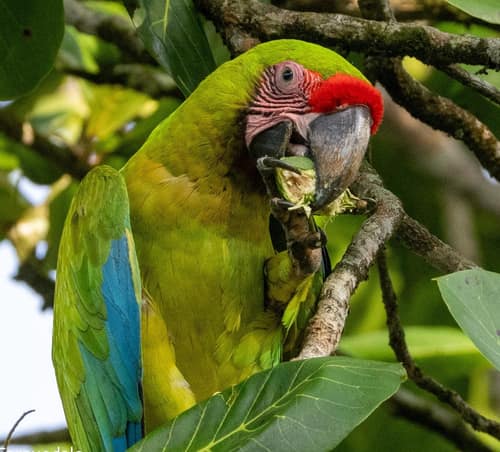
Close Relative David McCorquodale / CC BY 4.0 · cc-by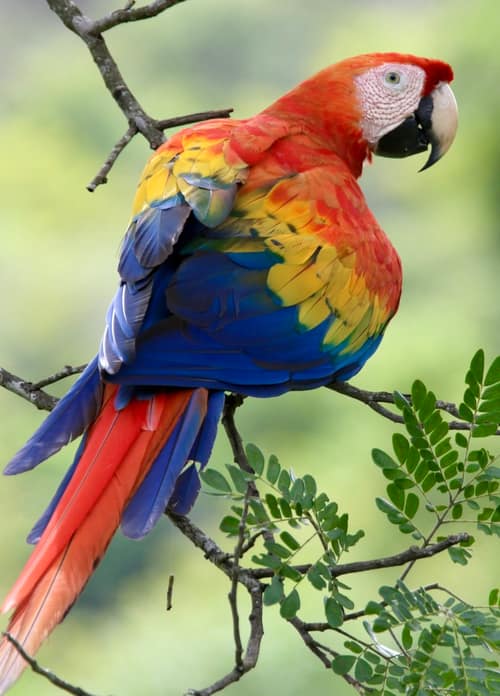
Close Relative (c) Cricket Raspet, some rights reserved (CC BY), uploaded by Cricket Raspet · cc-by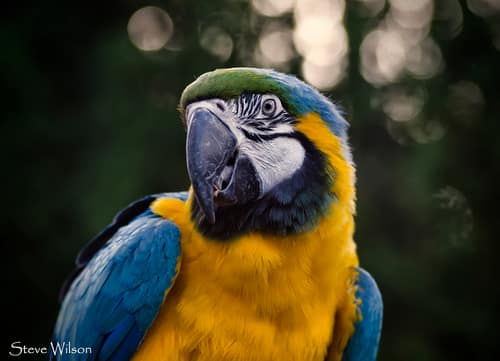
Close Relative "Blue and Yellow Macaw" by Steve Wilson - over 10 million views Thanks !! is licensed under CC BY 2.0. To view a copy of this license, visit https://creativecommons.org/licenses/by/2.0/. · cc-by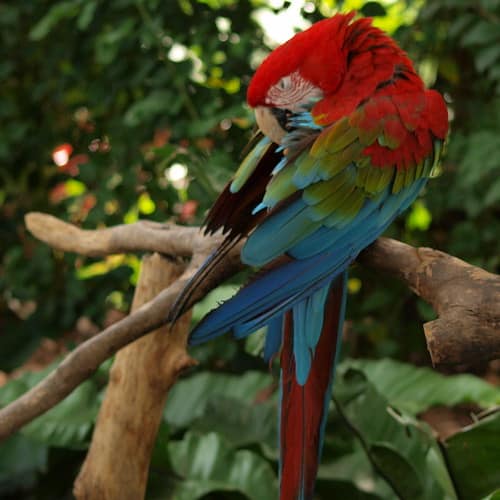
Close Relative "Red-and-green Macaw" by ~Shanth is licensed under CC BY-SA 2.0. To view a copy of this license, visit https://creativecommons.org/licenses/by-sa/2.0/. · cc-by-sa
Help improve the field guideSomething wrong?
Checking your Fauna account…Report a name, category, or profile issue for review.