
Bird · GBIF taxon 5959225
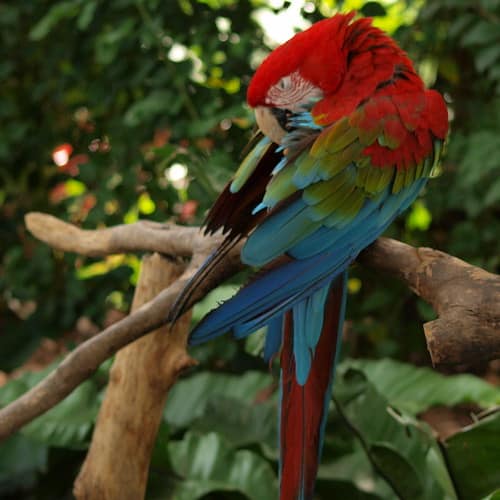
Red-and-green Macaw
Ara chloropterusAlso known as Green-winged Macaw, Red-and-blue Macaw
Red-and-green macaws mate for life, traversing the Amazonian canopy in devoted pairs that fly with wings almost touching while exchanging raspy, echoing contact calls. Pairs nest high up in tree cavities or sandstone cliff fissures, diligently defending their single or pair of chicks from arboreal predators. Flocks gather at riverbank clay licks at sunrise, ingesting mineral-rich soil that neutralizes dietary plant toxins and supplements essential sodium.
VibrantCanopy DwellerFrugivore
—observations
—countries
—peak records
Least ConcernConservation statusIUCN Red List categoriesLCNTVUENCREWEXLeast ConcernRed List categories, explained →
Diet & prey
- Brazil Nuts
- Palm Fruit
- Ficus Figs
Predators
- Harpy Eagle
- Jaguar
- Boa Constrictor
ThreatsDeforestation, habitat fragmentation, and illegal trapping for the pet trade
HabitatsTropical lowland rainforests, gallery forests, and riverine edges
Life span50–70 years
Size / weightNot available
Classification
- OrderPsittaciformes
- FamilyPsittacidae
- GenusAra
- SpeciesAra chloropterus
Range data is not available yet.
Interaction riskLow
- Low
- Moderate
- High
- Very high
- Why interaction risk is low
- Possesses an exceptionally strong beak capable of severe bites; observe wild birds from a respectful distance.
- Why it is dangerous
- The massive bill generates tremendous bite force designed to crack hard-shelled nuts, easily inflicting bone fractures or deep lacerations.
- How to recognize a risky encounter
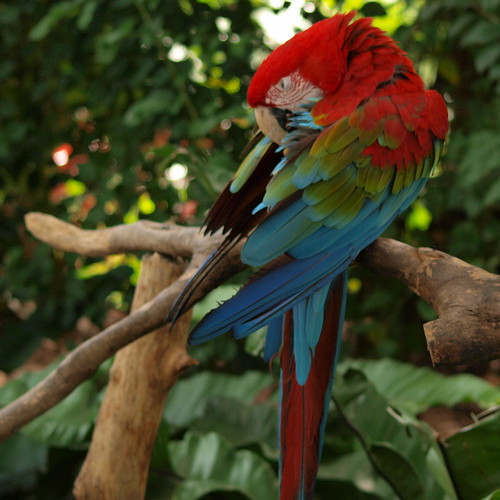
- Recognizable by solid red head and body plumage, broad green wing coverts, and red feather line patterns on bare white facial skin.
- What to do
- Do not corner injured or grounded individuals; keep a safe distance and alert local wildlife rehabilitators.
Responsible observation
- Clay Licks: Visit exposed riverbanks early in the morning to observe communal mineral feeding.
- Auditory Spotting: Listen for harsh, screeched vocalizations echoing through the canopy before scanning overhead.
- Canopy Gaps: Scan clearing edges and emergent trees where perched pairs stand out clearly against green foliage.
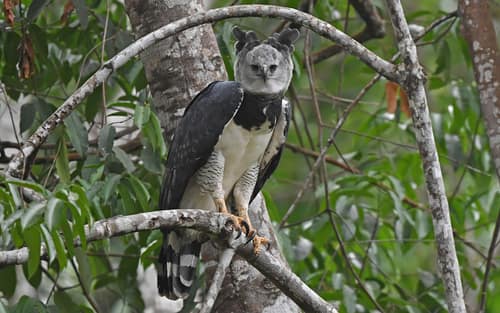
Predator (c) Christoph Moning, some rights reserved (CC BY), uploaded by Christoph Moning · cc-by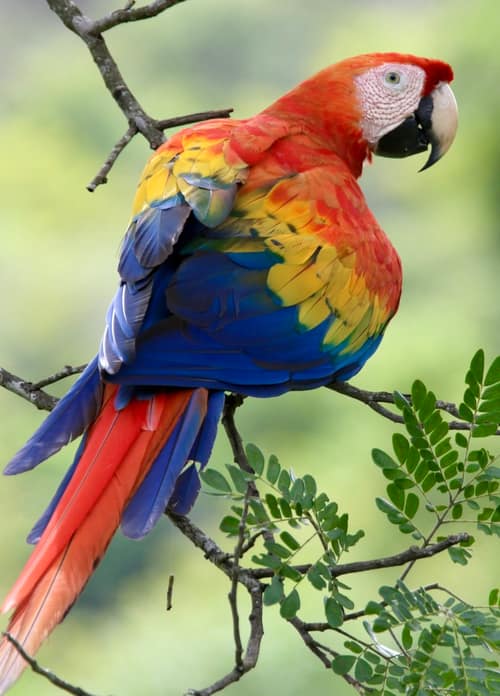
Close Relative (c) Cricket Raspet, some rights reserved (CC BY), uploaded by Cricket Raspet · cc-by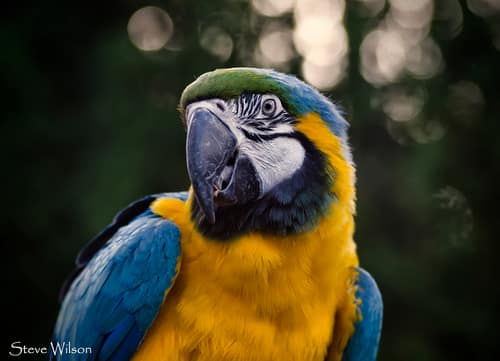
Close Relative "Blue and Yellow Macaw" by Steve Wilson - over 10 million views Thanks !! is licensed under CC BY 2.0. To view a copy of this license, visit https://creativecommons.org/licenses/by/2.0/. · cc-by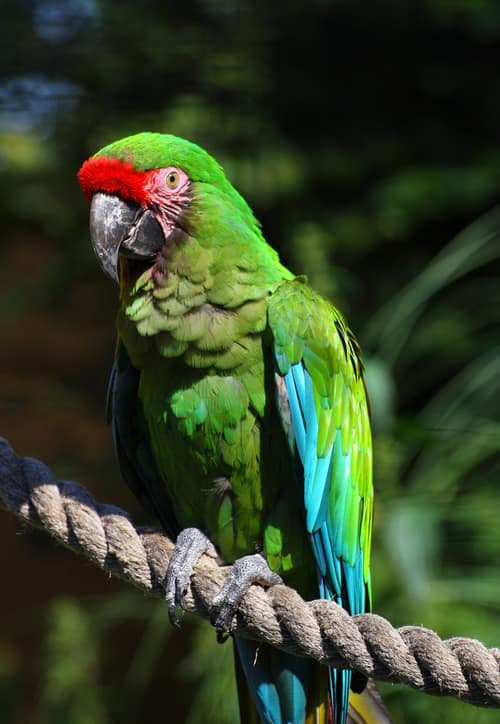
Close Relative neiljs / CC BY 2.0 · cc-by
Keep collecting in Fauna
Found in Collections
Species set Pro
Emerald Kingdom
Red-and-green Macaw is found in this collection. Identify it in Fauna to fill this slot and continue your progress.
Unlock to track progress
Help improve the field guideSomething wrong?
Checking your Fauna account…Report a name, category, or profile issue for review.