
Invertebrate
Dungeness Crab
Metacarcinus magisterAlso known as Market Crab, Pacific Edible Crab
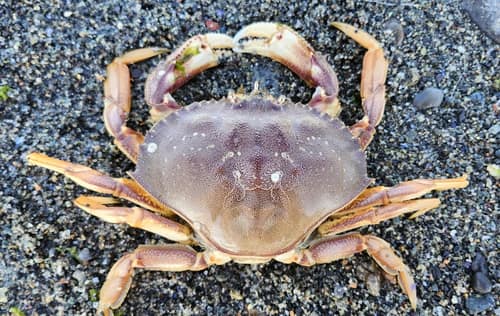
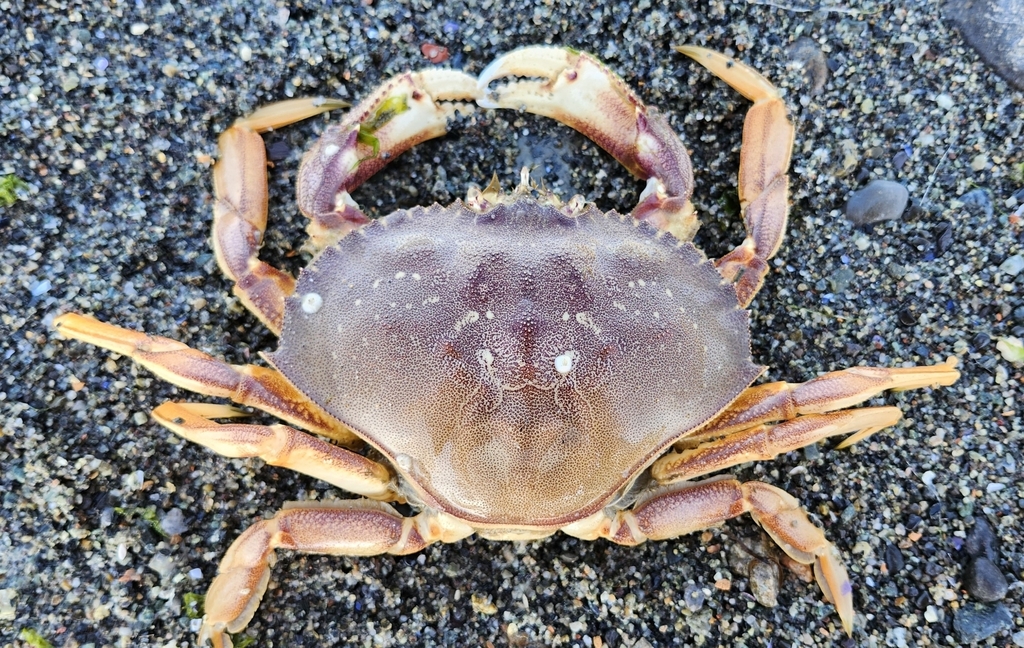
Dungeness crabs are robust bottom-dwellers that spend much of their time buried just beneath sandy seafloors with only their eyes and antennae exposed. They feed actively on soft-bodied benthic invertebrates and young fish, using broad, sharp-toothed pincers to pry open bivalve shells. During spring molting, soft females attract males that guard them in a protective embrace until their new carapaces harden.
MarineCrustaceanCoastal
—observations
—countries
—peak records
Not EvaluatedConservation statusIUCN Red List categoriesLCNTVUENCREWEXNot Evaluated — not placed on the risk ladderRed List categories, explained →
Diet & preyClams, Marine worms, Small crustaceans
Predators
- Sea otters
- Giant Pacific octopus
- Pacific halibut
ThreatsOcean acidification, marine heatwaves, habitat degradation, ghost fishing gear
HabitatsEelgrass beds, sandy and muddy ocean bottoms, shallow estuaries
Life span8–13 years
Classification
- OrderDecapoda
- FamilyCancridae
- GenusMetacarcinus
- SpeciesMetacarcinus magister
Range data is not available yet.
Interaction riskLow
- Low
- Moderate
- High
- Very high
- Why interaction risk is low
- Powerful pincers can inflict a painful pinch; hold firmly from the rear of the shell.
- Why it is dangerous
- Equipped with strong pincers designed to crush shells, which can deliver a painful pinch or break skin.
- How to recognize a risky encounter
- Recognized by a broad, purplish-brown shell with ten distinct teeth along the forward edges.
- What to do
- Grasp firmly from behind the back legs on the rear carapace to avoid the claws entirely.
Responsible observation
- Safe Handling: Hold live individuals securely by the back edge of the carapace to keep fingers clear of pincers.
- Observation Cues: Look for eyestalks and antennae protruding above sandy substrates in shallow estuaries at low tide.
- Harvest Compliance: Verify local marine regulations regarding legal size limits, seasonal openings, and female conservation.
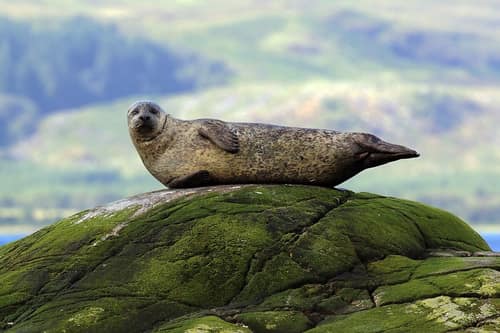
Predator Charles J. Sharp / CC BY-SA 4.0 · cc-by-sa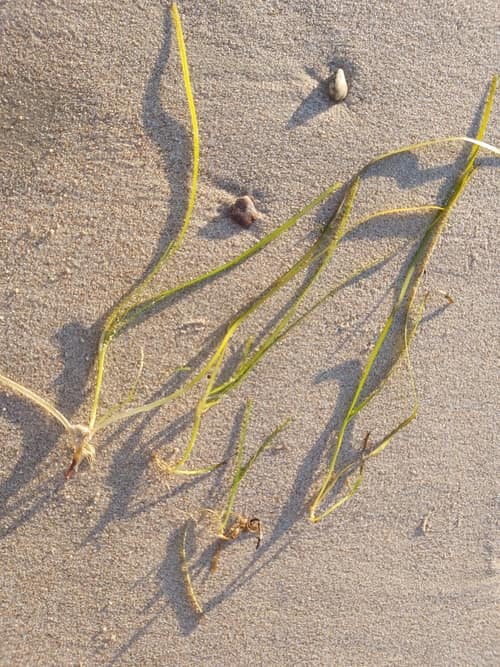
Nursery Habitat no rights reserved · cc0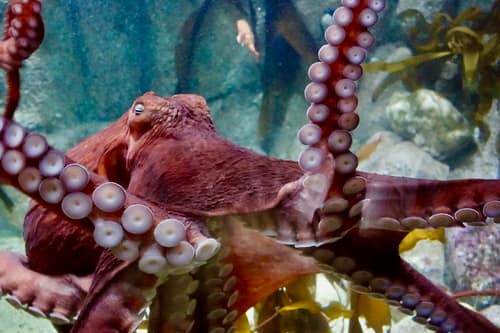
Predator "Giant Pacific Octopus" by jurvetson is licensed under CC BY 2.0. To view a copy of this license, visit https://creativecommons.org/licenses/by/2.0/. · cc-by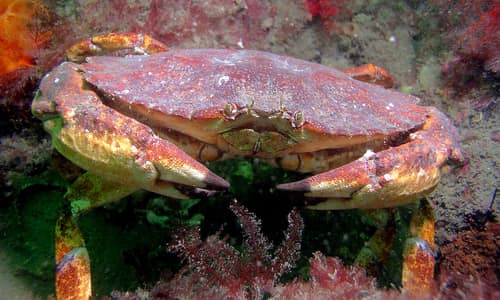
Close Relative Taollan82; Kirt L. Onthank / CC BY-SA 3.0 · cc-by-sa
Keep collecting in Fauna
Found in Collections
Species set Pro
Shore Life
Dungeness Crab is found in this collection. Identify it in Fauna to fill this slot and continue your progress.
Unlock to track progress
Help improve the field guideSomething wrong?
Checking your Fauna account…Report a name, category, or profile issue for review.