
Species
Coccosteus decipiens
Coccosteus decipiensCoccosteus decipiens patrolled ancient freshwater lakes and coastal bays during the Middle Devonian, utilizing a ball-and-socket neck joint that allowed its armored head to snap upward to engulf prey. Instead of true enamel teeth, sharp bony plates projecting from its jaw margins sheared cleanly past each other like self-sharpening scissors. While heavy dermal armor shielded its forward body, its unarmored, flexible tail provided agile propulsion across murky lake floors.
PlacodermCarnivore
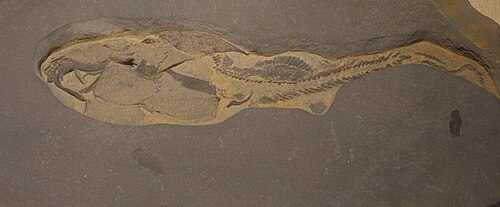
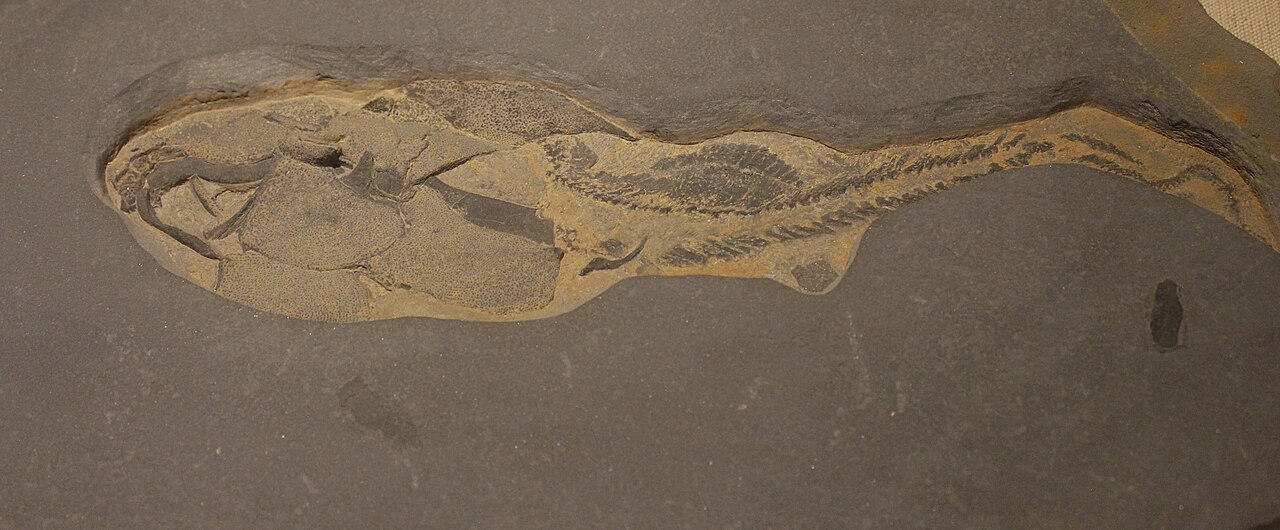
—observations
—countries
—peak records
ExtinctConservation statusIUCN Red List categoriesLCNTVUENCREWEXExtinctRed List categories, explained →
Diet & preySmall jawless fish, Early ray-finned fish, Benthic arthropods
Predators
- Larger placoderms
- Tristichopterid lobe-finned fish
ThreatsDevonian extinction events and competitive turnover
HabitatsDevonian freshwater lakes, rivers, and shallow coastal lagoons
Life spanUnknown (estimated 5–15 years)
Classification
- FamilyCoccosteidae
- SpeciesCoccosteus decipiens
Range data is not available yet.
Interaction riskLow
- Low
- Moderate
- High
- Very high
- Why interaction risk is low
- Extinct species known only from Devonian fossils; safe to observe.
Responsible observation
- Fossil Identification: Look for tuberculated bone plates and distinctive neck joints in Old Red Sandstone flagstones.
- Museum Viewing: Study prepared articulated skeletons in paleontology exhibits to see the shearing jaw plates.
 Image unavailable
Prey 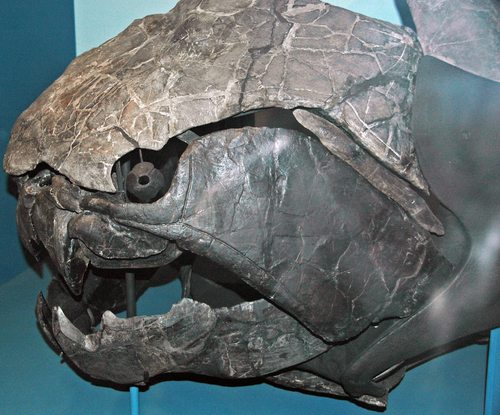
Close Relative (c) James St. John, some rights reserved (CC BY) · cc-by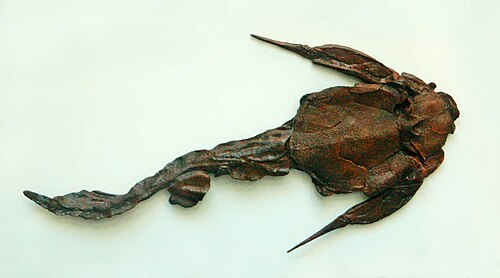
Distant Relative Hectonichus / CC BY-SA 3.0 · cc-by-sa
Help improve the field guideSomething wrong?
Checking your Fauna account…Report a name, category, or profile issue for review.