
Fish
Bothriolepis canadensis
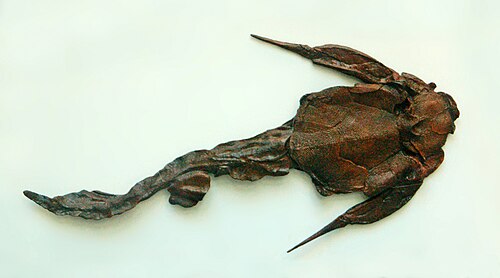
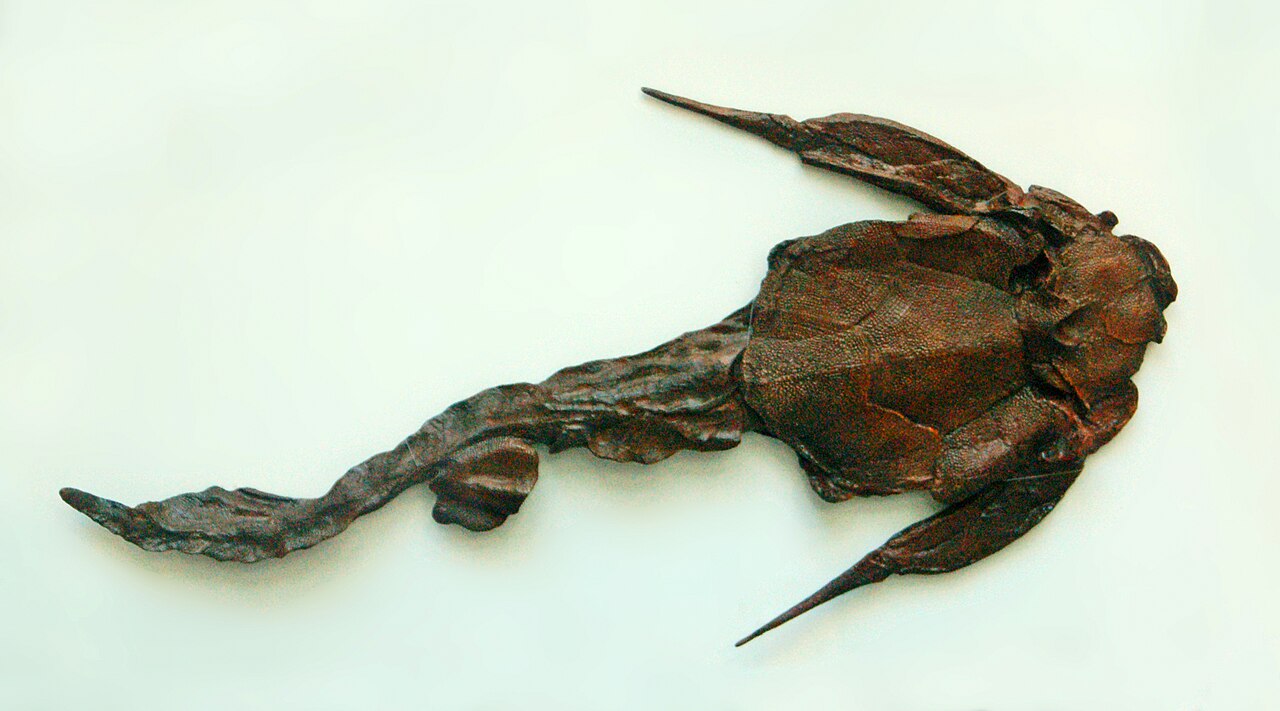
Bothriolepis canadensisBothriolepis canadensis scoured ancient riverbeds and estuarine floors during the Late Devonian, using heavily armored, jointed pectoral appendages to pull itself across the mud. Its head and thorax were encased in a rigid box of interlocking bony plates, leaving only a soft, scaleless tail exposed for propulsion. Thousands of exceptionally preserved fossils from Quebec reveal complex internal spiral gut traces, showing how efficiently it processed nutrient-rich benthic sediment.
Armored FishFossil
—observations
—countries
—peak records
ExtinctConservation statusIUCN Red List categoriesLCNTVUENCREWEXExtinctRed List categories, explained →
Diet & preyOrganic sediment, Algal films, Benthic microinvertebrates
Predators
- Eusthenopteron foordi
- Large sarcopterygians
- Predatory placoderms
ThreatsLate Devonian extinction events (extinct)
HabitatsDevonian freshwater rivers, estuaries, and shallow coastal lagoons
Life spanUnknown (estimated 5–15 years)
Classification
- FamilyBothriolepididae
- GenusBothriolepis
- SpeciesBothriolepis canadensis
Range data is not available yet.
Interaction riskLow
- Low
- Moderate
- High
- Very high
- Why interaction risk is low
- Extinct prehistoric organism known only from fossils; safe to observe.
Responsible observation
- Museum viewing: Visit Miguasha National Park to see complete, three-dimensionally preserved specimens.
- Fossil identification: Check Devonian shales for dense, pitted plates with distinct jointed arm sockets.
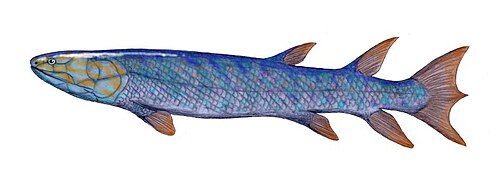
Neighbor Nobu Tamura (http://spinops.blogspot.com) / CC BY 2.5 · cc-by Image unavailable
Close Relative Same Family
Help improve the field guideSomething wrong?
Checking your Fauna account…Report a name, category, or profile issue for review.