
Reptile · GBIF taxon 5789782
Cuban Rock Iguana
Cyclura nubilaAlso known as Cuban Ground Iguana, Cuban Iguana
Cuban rock iguanas are massive, terrestrial lizards adorned with dorsal crest spines, dark gray-brown banding, and prominent jowls. They spend their days basking on coastal limestone outcrops, retreating into rock crevices or sea grape thickets when threatened. Dominant males aggressively defend territories using head bobs and body inflation while playing a key role as seed dispersers across Caribbean island ecosystems.
ReptileHerbivorousCoastal
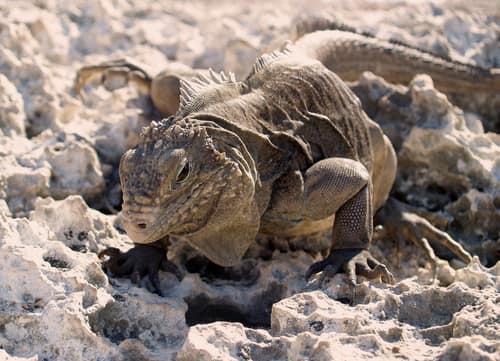
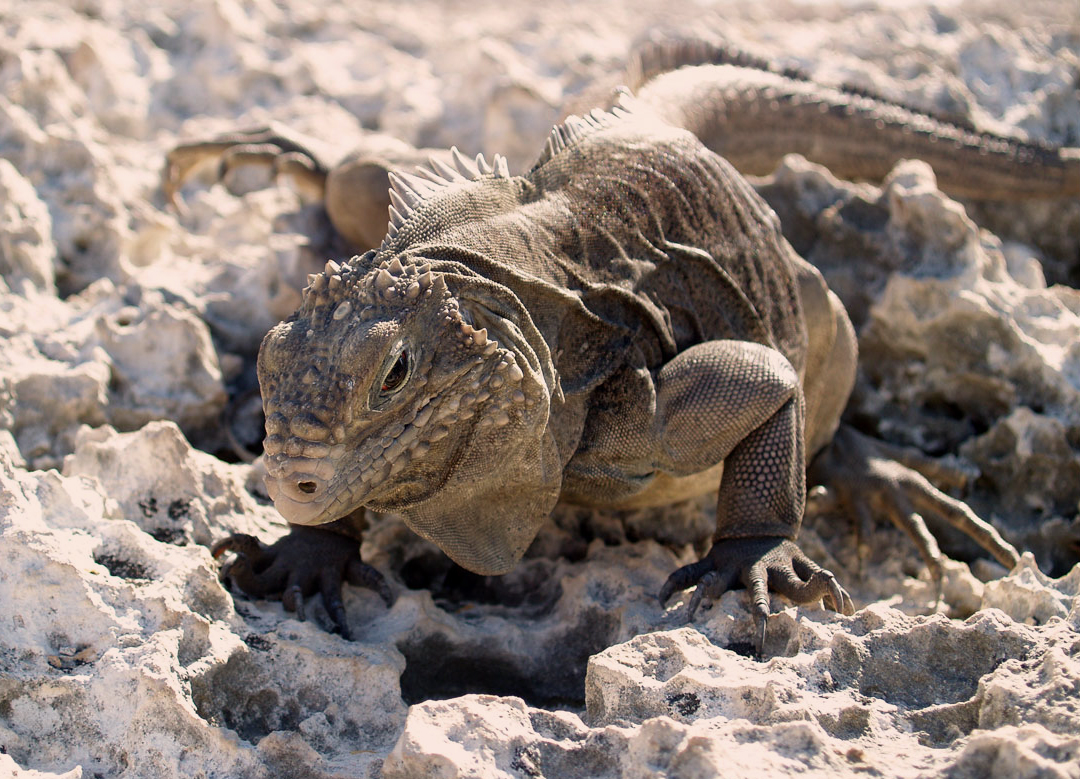
Licensed referenceStaselnik / CC BY-SA 3.0 · cc-by-sa
—observations
—countries
—peak records
VulnerableConservation statusIUCN Red List categoriesLCNTVUENCREWEXVulnerableRed List categories, explained →
Diet & prey
- Sea Grape Leaves
- Prickly Pear Fruit
- Coastal Flowers
Predators
- Feral Dogs
- Feral Cats
- Cuban Black Hawk
ThreatsHabitat destruction, invasive predators (feral dogs, cats, pigs)
HabitatsCoastal scrub, dry forests, limestone terraces, sandy beaches
Life span40–60 years
Size / weightNot available
Classification
- FamilyIguanidae
- SpeciesCyclura nubila
Range data is not available yet.
Interaction riskLow
- Low
- Moderate
- High
- Very high
- Why interaction risk is low
- Powerful jaws and sharp claws can inflict deep wounds; give basking individuals plenty of space.
- Why it is dangerous
- Tail whips, sharp claws, and immense jaw pressure can cause severe lacerations and tissue damage if cornered or handled.
- How to recognize a risky encounter
- Recognized by its large size, heavy body, dark grey-brown coloring, and prominent spiky dorsal crest.
- What to do
- Observe from a distance without cornering the lizard or stepping between it and its retreat crevice.
- What to notice
- Look for massive heavy-set iguanas basking along coastal limestone cliffs and sandy shoreline paths.
- Support conservation
- Remain on marked trails and avoid walking through loose sand dunes where eggs may be buried.
Responsible observation
- Safe Distance: Keep at least three meters away to avoid provoking defensive head bobs or tail whips.
- Feeding Caution: Never offer food, as hand feeding reduces wild caution and encourages aggression.
- Basking Etiquette: Approach slowly and quietly while animals warm themselves on sunny rock ledges.
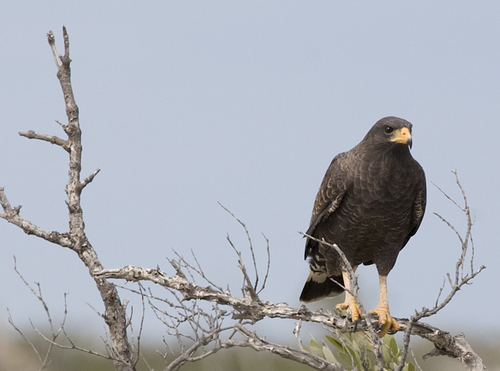
Predator (c) Laura Gooch, some rights reserved (CC BY-SA) · cc-by-sa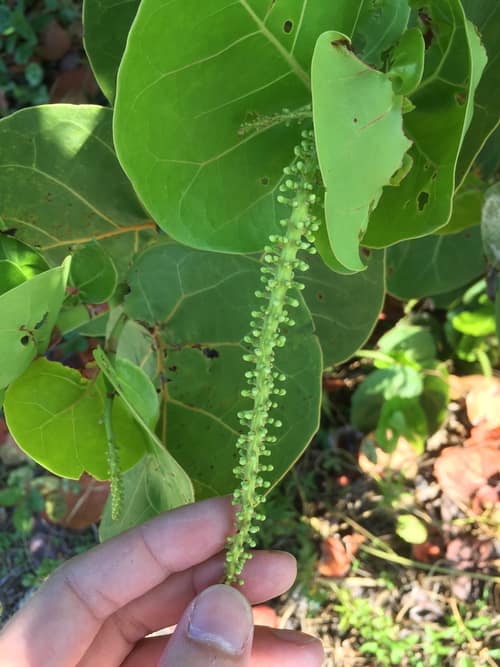
Host Plant (c) Ben Machado, some rights reserved (CC BY), uploaded by Ben Machado · cc-by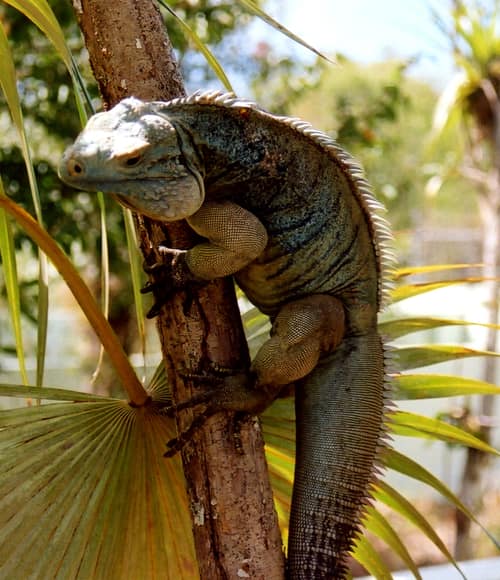
Close Relative Luke from Oxford, MS / CC BY-SA 2.0 · cc-by-sa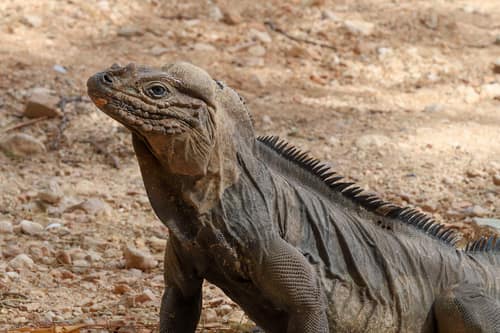
Close Relative (c) Kristof Zyskowski, some rights reserved (CC BY), uploaded by Kristof Zyskowski · cc-by
Help improve the field guideSomething wrong?
Checking your Fauna account…Report a name, category, or profile issue for review.