
Reptile · GBIF taxon 5789618
Southeastern Five-lined Skink
Plestiodon inexpectatusAlso known as Southeastern Skink
Southeastern five-lined skinks dart across sunlit forest floors and fallen logs in search of spiders and insects. Young individuals display striking cobalt blue tails alongside dark bodies lined with bright yellow stripes, which gradually fade into muted brown shades as they mature. Unlike their close relatives, this species tolerates dry, sandy soil environments, making them common inhabitants of coastal dunes and pine flatwoods.
DiurnalReptileFast-Moving
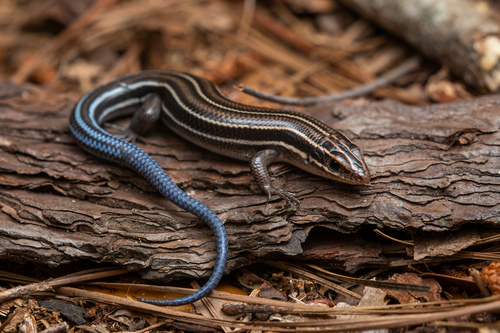
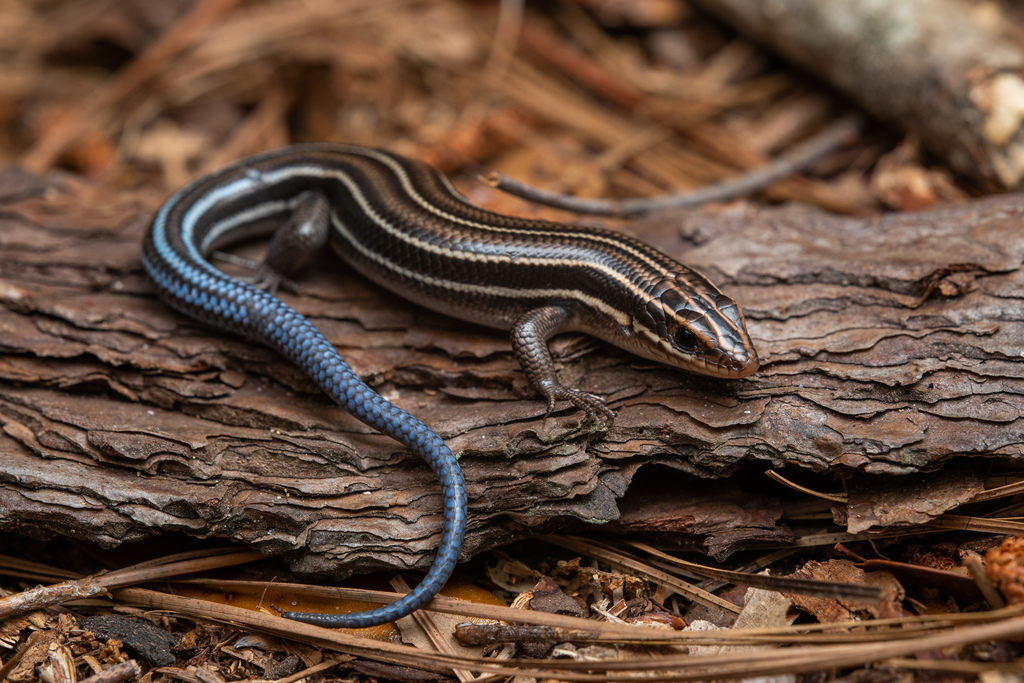 1 / 7
1 / 7—observations
—countries
—peak records
Least ConcernConservation statusIUCN Red List categoriesLCNTVUENCREWEXLeast ConcernRed List categories, explained →
Diet & prey
- Spiders
- Crickets
- Beetles
Predators
- Hawks
- Snakes
- Domestic Cats
ThreatsHabitat fragmentation, suburban development, and feral cat predation
HabitatsSandy pine flatwoods, dry upland oak forests, coastal dunes, and barrier islands
Life span6–10 years
Size / weightNot available
Classification
- FamilyScincidae
- GenusPlestiodon
- SpeciesPlestiodon inexpectatus
Range data is not available yet.
Interaction riskLow
- Low
- Moderate
- High
- Very high
- Why interaction risk is low
- Safe to observe at a normal distance.
Responsible observation
- Identify by tail scales: Look closely at the underside of the tail, where mid-ventral scales match adjacent rows in size.
- Approach slowly: Walk softly when observing basking skinks, as they retreat under cover at sudden vibrations.
- Never grab by the tail: Restraining the tail triggers autotomy, causing the lizard to drop its tail to escape.
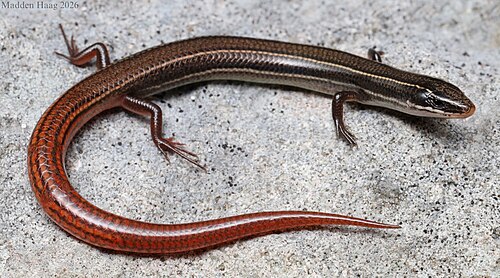
Sand Dweller MH Herpetology / CC BY 4.0 · cc-by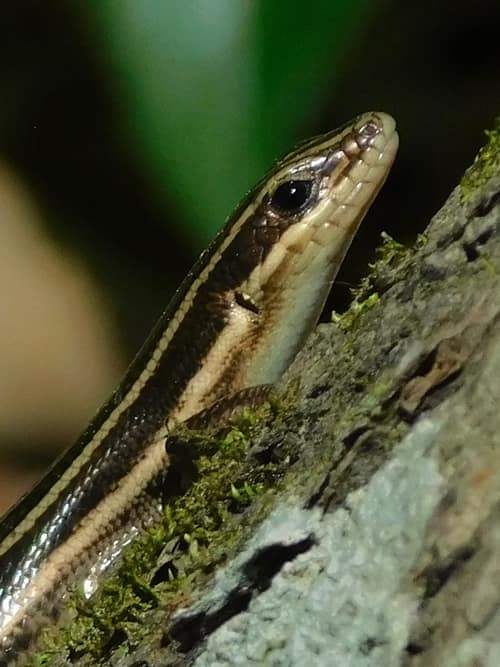
Look-Alike Relative (c) Michael J. Papay, some rights reserved (CC BY), uploaded by Michael J. Papay · cc-by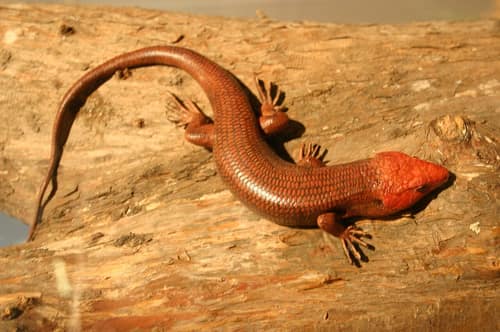
Close Relative Ryan Somma / CC BY-SA 2.0 · cc-by-sa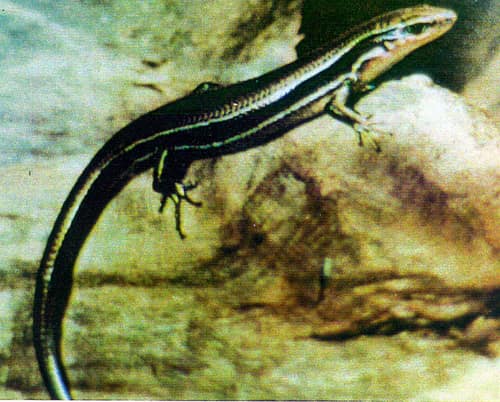
Regional Relative U.S. Army Corps of Engineers / Public domain · cc0
Help improve the field guideSomething wrong?
Checking your Fauna account…Report a name, category, or profile issue for review.