
Mammal · GBIF taxon 5786268
Sykes' Monkey
Cercopithecus mitis albogularisAlso known as Samango Monkey, White-throated Guenon, White-throated Monkey
Sykes' monkeys are arboreal primates easily recognized by their dark grizzled fur, distinctive white throat patch, and long reddish-tinted tail. Living in tight-knit, female-bonded social groups, they spend most of their time in the high canopy of East African forests foraging for fruits, foliage, and small invertebrates. Their resonant boom calls and high-pitched alarm chirps echo through coastal and montane woodlands, signaling group movements and warning of overhead predators.
ArborealSocialFrugivore
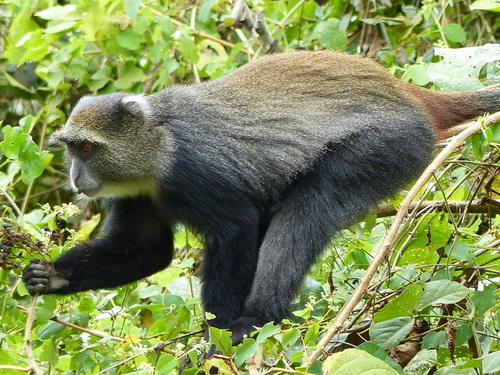
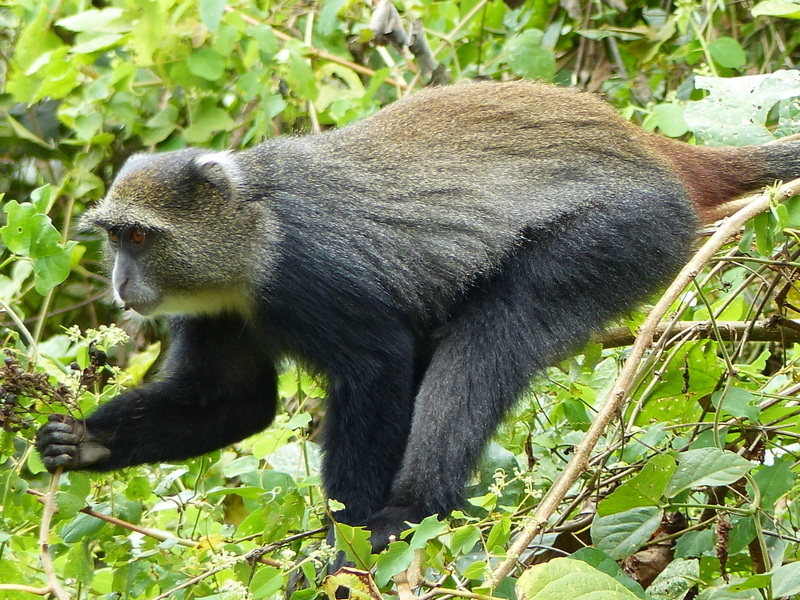
Licensed referenceno rights reserved, uploaded by Simon Tonge · cc0
—observations
—countries
—peak records
Least ConcernConservation statusIUCN Red List categoriesLCNTVUENCREWEXLeast ConcernRed List categories, explained →
Diet & prey
- Wild fruits
- Young leaves
- Insects
Predators
- Leopard
- Crowned Eagle
- African Rock Python
ThreatsHabitat loss, forest fragmentation, crop-raiding retaliation
HabitatsCoastal forests, montane woodlands, riverine forests
Life span15–20 years in the wild
Size / weightNot available
Classification
- FamilyCercopithecidae
- SpeciesCercopithecus mitis albogularis
Range data is not available yet.
Interaction riskLow
- Low
- Moderate
- High
- Very high
- Why interaction risk is low
- Capable of delivering a sharp defensive bite if cornered or habituated; observe from a safe distance.
- Why it is dangerous
- Equipped with strong jaws and long canine teeth that can inflict deep puncture wounds if cornered or habituated to human food.
- How to recognize a risky encounter
- Medium-sized primate with dark grizzled fur, a distinct white throat patch, and a long tail.
- What to do
- Maintain a distance of at least ten meters and never offer food or attempt to touch them.
Responsible observation
- Observation: Use binoculars to spot them foraging in the upper forest canopy during early morning hours.
- Feeding: Never feed wild monkeys, as habituation leads to aggressive behavior and human conflict.
- Vocalizations: Listen for the deep boom calls of adult males echoing through the forest.
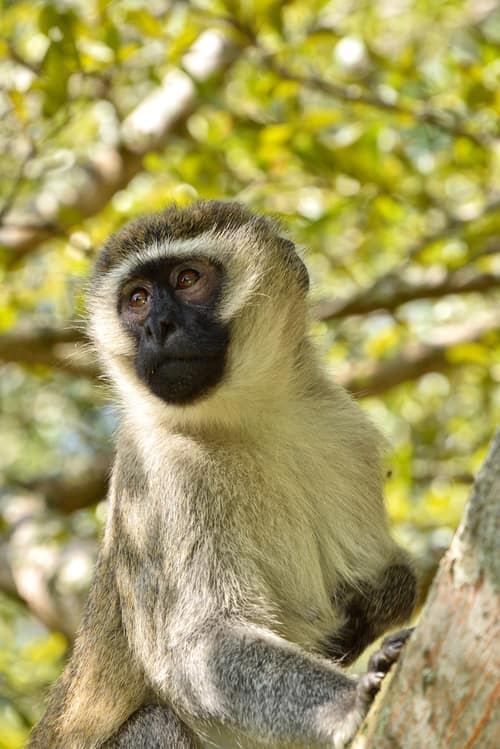
Competitor "Vervet Monkey, Uganda" by Rod Waddington is licensed under CC BY-SA 2.0. To view a copy of this license, visit https://creativecommons.org/licenses/by-sa/2.0/. · cc-by-sa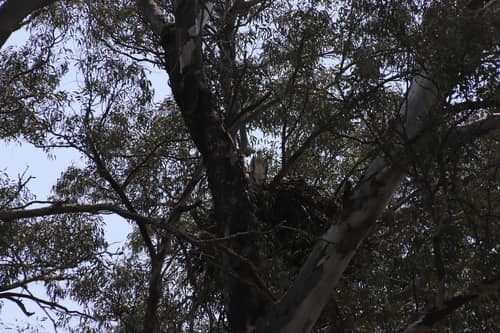
Predator (c) Suvarna Parbhoo Mohan, some rights reserved (CC BY-SA) · cc-by-sa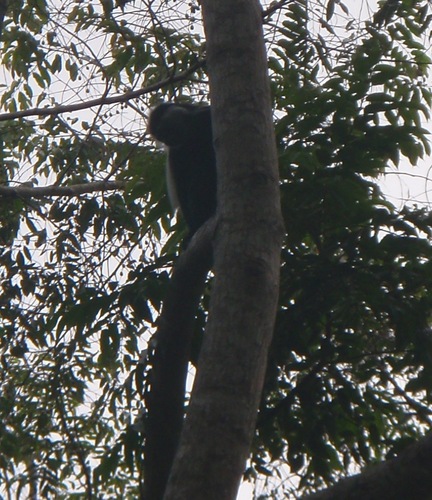
Frequent Companion (c) Carrie Seltzer, some rights reserved (CC BY) · cc-by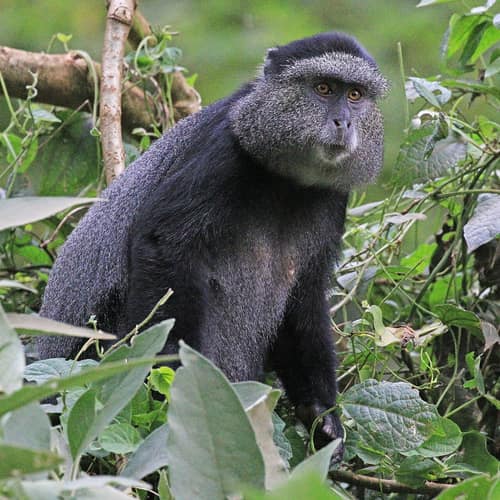
Close Relative Charles J. Sharp / CC BY-SA 4.0 · cc-by-sa
Help improve the field guideSomething wrong?
Checking your Fauna account…Report a name, category, or profile issue for review.