
Flower
Oleander-leaf Protea
Protea neriifoliaAlso known as Narrow-leaf Sugarbush, Oleander-leaved Sugarbush, Blue Sugarbush
Oleander-leaf Protea thrives in the nutrient-poor fynbos soils of South Africa's Western and Eastern Cape provinces. Its distinctive flower heads, enclosed by velvety beard-tipped bracts ranging from cream to deep rose-pink, attract native sugarbirds and sunbirds that feed on copious nectar while transferring pollen. After periodic fires sweep through the mountain slopes, this resilient shrub releases winged seeds stored safely inside woody serotinous cones to reseed the landscape.
FynbosFloweringBird-pollinated
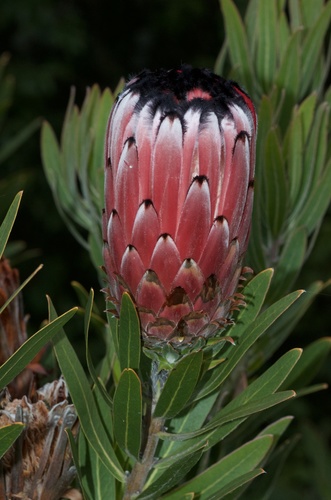
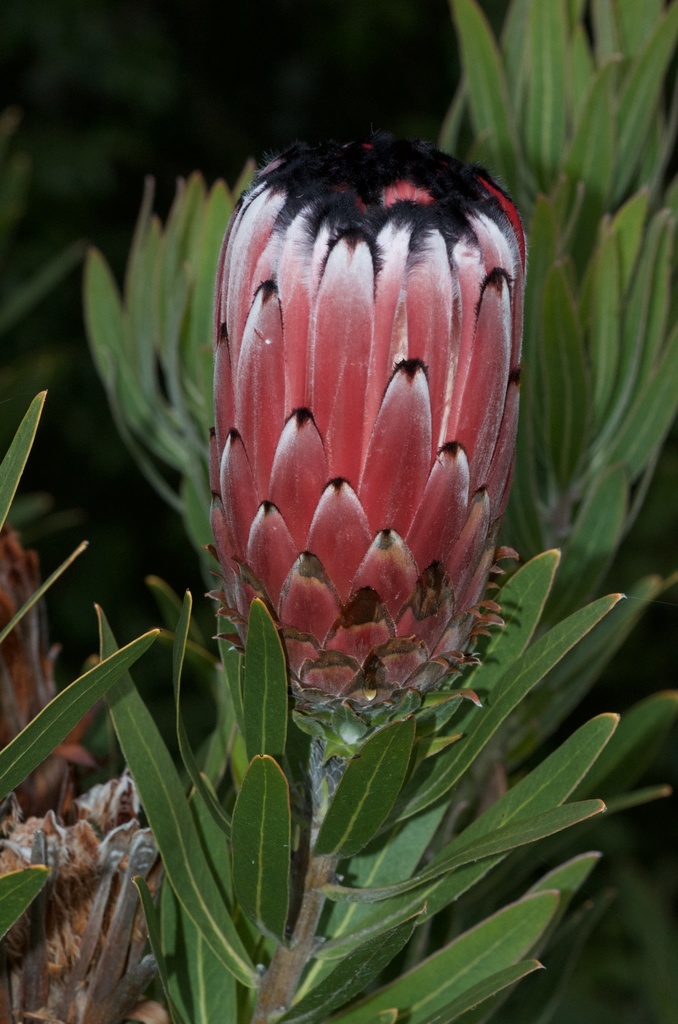
—observations
—countries
—peak records
Least ConcernConservation statusIUCN Red List categoriesLCNTVUENCREWEXLeast ConcernRed List categories, explained →
Diet & preySunlight, Water, Soil Nutrients
Predators
- Chacma Baboon
- Cape Rock Hyrax
- Protea Beetle
ThreatsInvasive plant encroachment, altered fire frequencies, coastal land development
HabitatsFynbos, montane shrubland, sandstone mountain slopes
Life span15–30 years
Classification
- OrderProteales
- FamilyProteaceae
- GenusProtea
- SpeciesProtea neriifolia
Range data is not available yet.
Interaction riskLow
- Low
- Moderate
- High
- Very high
- Why interaction risk is low
- Safe to observe at a normal distance.
Responsible observation
- Observation: Look for vibrant pink or cream bracts fringed with dark silky hairs during winter and spring.
- Photography: Capture visiting sugarbirds early in the morning when nectar production peaks.
- Trail Etiquette: Stick to designated hiking paths to avoid disturbing sensitive fynbos roots.
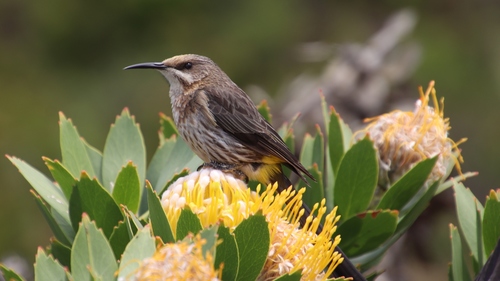
Pollinator (c) Tony Rebelo, some rights reserved (CC BY-SA), uploaded by Tony Rebelo · cc-by-sa
Pollinator (c) Steve Garvie, some rights reserved (CC BY-SA) · cc-by-sa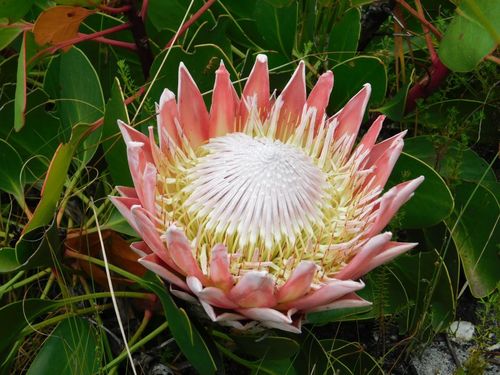
Close Relative no rights reserved, uploaded by Klaus Wehrlin · cc0
Help improve the field guideSomething wrong?
Checking your Fauna account…Report a name, category, or profile issue for review.