
Fungus
Plateful of Pyramids Lepidella
Amanita polypyramisAlso known as Pyramid Lepidella, Pyramid Amanita
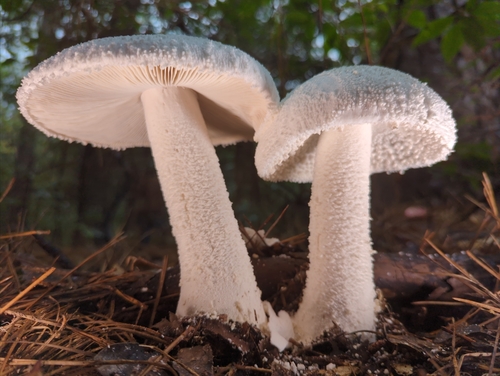
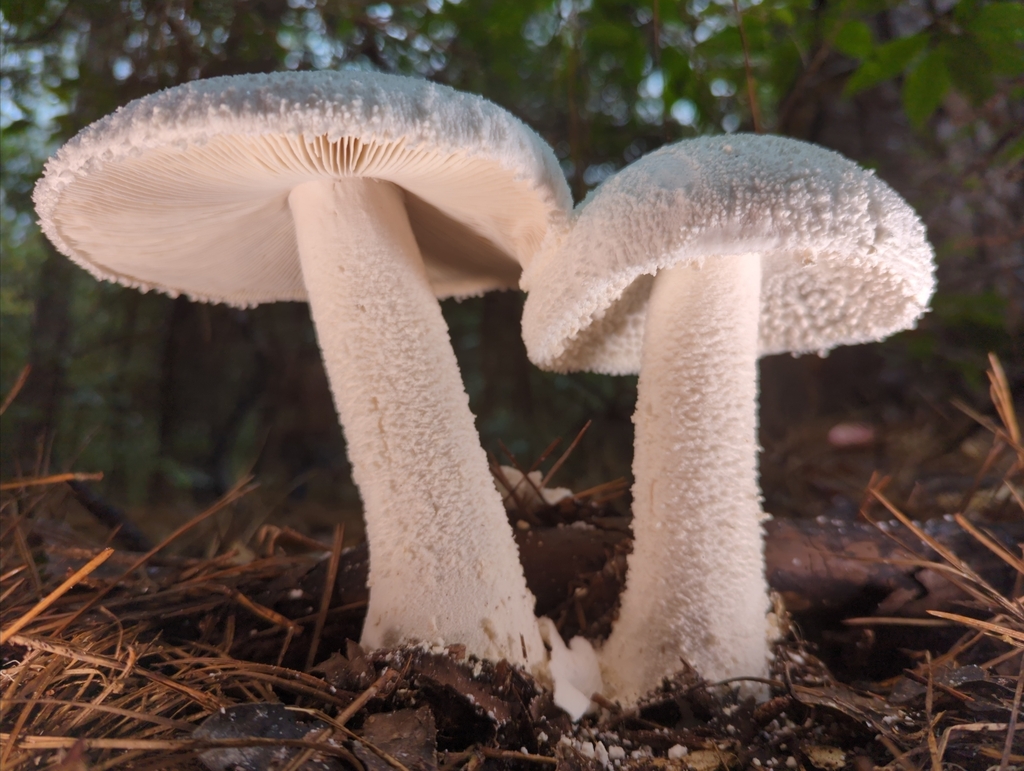
Plateful of Pyramids Lepidella emerges in eastern oak-pine forests as a striking, powdery-white mushroom covered in thick, pyramid-shaped warts. It emits a distinct, sweet chemical odor resembling chlorine or bleach, making it recognizable even before close inspection. Like many members of Amanita section Lepidella, it forms subterranean mycorrhizal partnerships with hardwoods and pines during warm summer and autumn months.
FungusWhite CapWoodland
—observations
—countries
—peak records
Not EvaluatedConservation statusIUCN Red List categoriesLCNTVUENCREWEXNot Evaluated — not placed on the risk ladderRed List categories, explained →
Diet & preyMycorrhizal (symbiotic with tree roots)
Predators
- Fungus gnats
- Slugs
- Box turtles
ThreatsForest clearing, soil compaction
HabitatsOak-pine forests, mixed deciduous woodlands, sandy soils
Life spanFruiting body lasts 3–7 days; underground mycelium lives for years
Classification
- FamilyAmanitaceae
- SpeciesAmanita polypyramis
Range data is not available yet.
Interaction riskHigh
- Low
- Moderate
- High
- Very high
- Why interaction risk is high
- Potentially toxic; wild mushrooms have dangerous look-alikes, so never eat wild fungi based on app identification alone.
- Why it is dangerous
- Belongs to Amanita section Lepidella, a fungal group containing species known to cause acute kidney injury if consumed.
- How to recognize a risky encounter
- Recognizable by its bone-white color, crowded pyamid-shaped cap warts, and strong bleach-like odor.
- What to do
- Do not ingest any portion of this mushroom; wash hands thoroughly if handled.
Responsible observation
- Smell safely: Waft air toward your nose to detect the sweet chlorine-like scent without picking the mushroom.
- Check cap surface: Look for crowded, prominent pyramid-shaped warts across the chalky white cap.
- Observe in place: Leave the fruiting body intact to let it disperse spores into the forest soil.
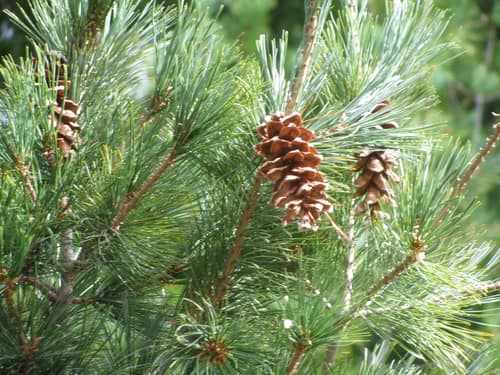
Mycorrhizal Partner (c) Forest and Kim Starr, some rights reserved (CC BY) · cc-by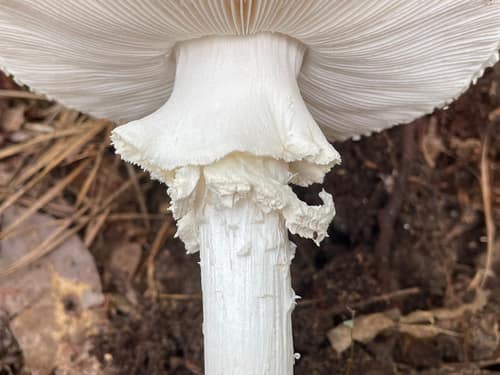
Close Relative (c) Bill Sheehan, some rights reserved (CC BY-SA) · cc-by-sa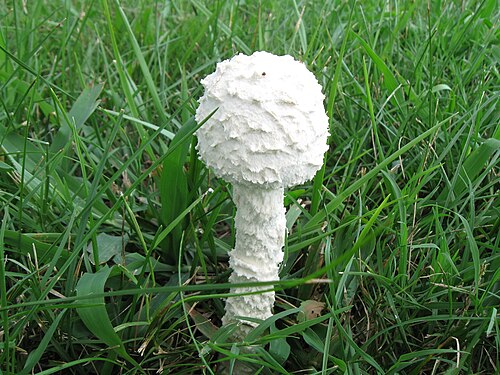
Close Relative This image was created by user Brian Adamo (adamo588) at Mushroom Observer, a source for mycological images.You can contact this user here. / CC BY-SA 3.0 · cc-by-sa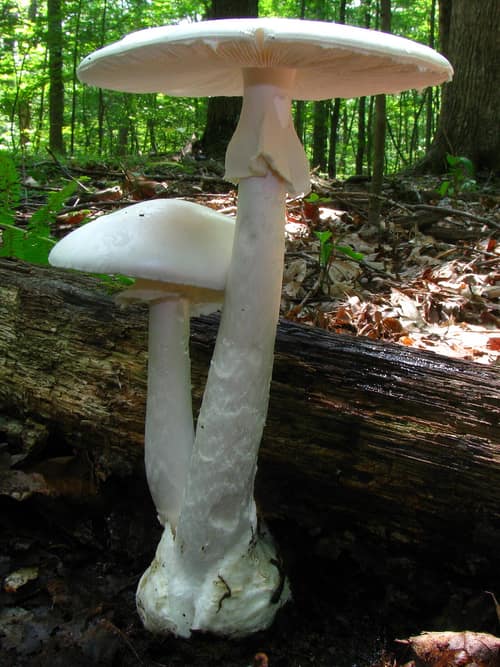
Deadly Relative Dan Molter (shroomydan) / CC BY-SA 3.0 · cc-by-sa
Help improve the field guideSomething wrong?
Checking your Fauna account…Report a name, category, or profile issue for review.