
Plant · GBIF taxon 5414250
Yaupon Holly
Ilex vomitoriaAlso known as Yaupon, Cassina, Emetic Holly
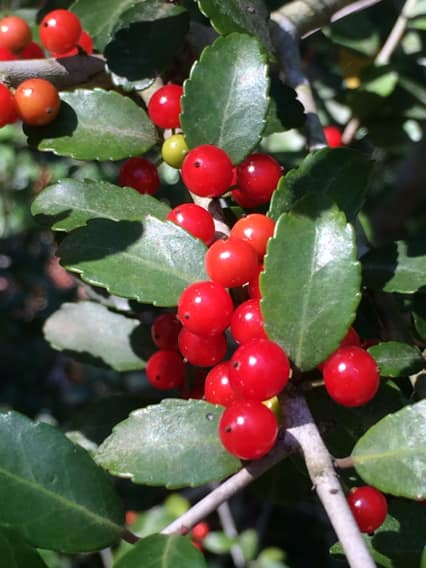
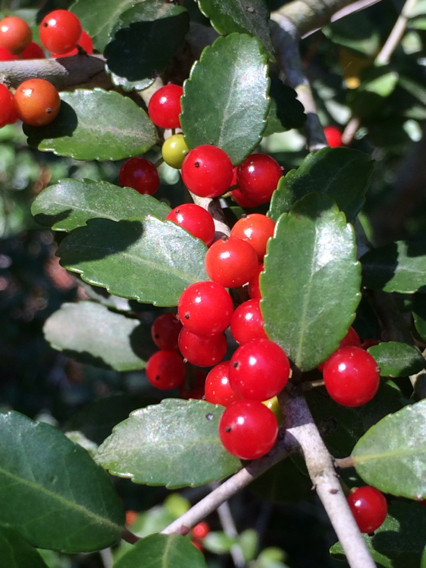
Yaupon holly forms dense evergreen thickets across the sandy coastal plains and maritime forests of the southeastern United States. Female plants produce bright, translucent red berries that persist through winter, serving as a critical food resource for songbirds. Indigenous peoples historically dried and roasted the caffeine-rich leaves to prepare a traditional tea.
EvergreenBerriesNative Plant
 1 / 7
1 / 7—observations
—countries
—peak records
Least ConcernConservation statusIUCN Red List categoriesLCNTVUENCREWEXLeast ConcernRed List categories, explained →
Diet & prey
- Autotrophic
Predators
- Cedar Waxwings
- Northern Mockingbirds
- White-tailed Deer
ThreatsLand clearing, fire suppression, coastal development
HabitatsMaritime forests, coastal dunes, pine flatwoods, swamp margins
Life span50–100 years
Size / weightNot available
Classification
- OrderAquifoliales
- FamilyAquifoliaceae
- GenusIlex
- SpeciesIlex vomitoria
Range data is not available yet.
Interaction riskHigh
- Low
- Moderate
- High
- Very high
- Why interaction risk is high
- Berries contain saponins that cause nausea if ingested; wild berries also have toxic look-alikes.
- Why it is dangerous
- Berries contain saponins and methylxanthines that cause severe stomach distress and vomiting if ingested.
- How to recognize a risky encounter
- Small oval leaves with scalloped margins and translucent red berries clustered tightly along pale gray branches.
- What to do
- Observe the plant safely from a distance and keep children and pets away from the berries.
Responsible observation
- Identification: Look for small, leathery leaves with dark green tops and pale gray bark on dense stems.
- Wildlife Watching: Observe berry-laden female bushes in late winter to spot flocks of hungry songbirds.
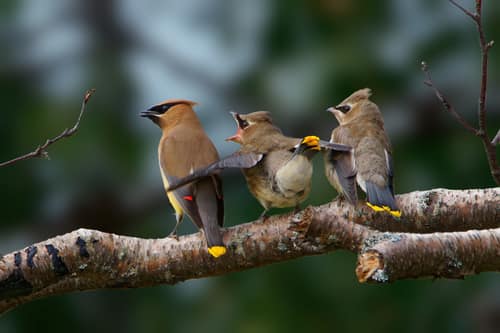
Seed Disperser (c) Christian Back, some rights reserved (CC BY), uploaded by Christian Back · cc-by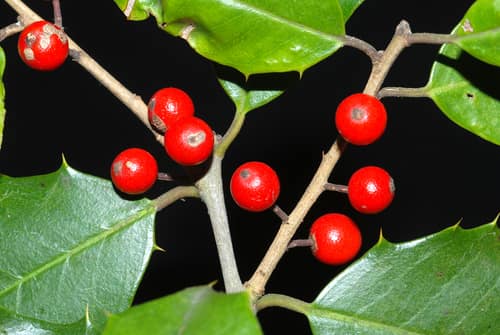
Close Relative (c) Douglas Goldman, some rights reserved (CC BY-SA), uploaded by Douglas Goldman · cc-by-sa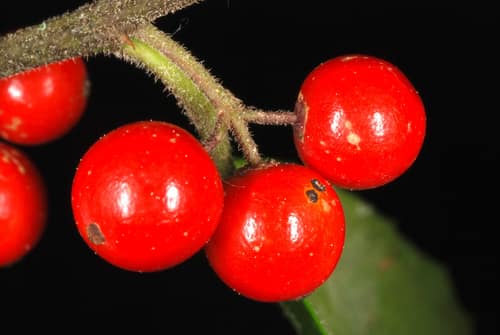
Close Relative (c) Douglas Goldman, some rights reserved (CC BY-SA) · cc-by-sa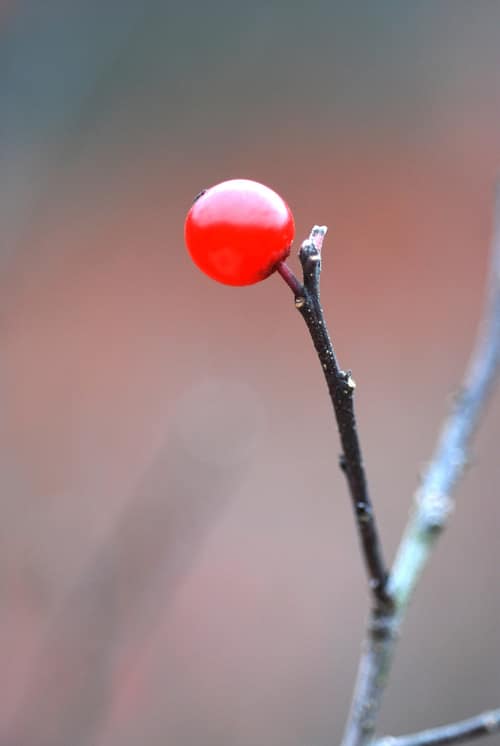
Close Relative (c) Douglas Goldman, some rights reserved (CC BY-SA), uploaded by Douglas Goldman · cc-by-sa
Help improve the field guideSomething wrong?
Checking your Fauna account…Report a name, category, or profile issue for review.