
Plant · GBIF taxon 5402625
Marsh Elder
Iva frutescensAlso known as Jesuit's Bark, Bigleaf Marsh-Elder, High-Tide Bush
Marsh elder forms dense, shrubby borders along the upper edges of coastal salt marshes, marking the boundary where high tide rarely reaches. Its fleshy, opposite leaves and tough woody stems trap floating organic debris, helping to stabilize fragile marsh shorelines against wave erosion. Small, greenish flower heads bloom at the branch tips in late summer, relying on the coastal wind rather than insects for pollination.
HalophyteCoastalShrub
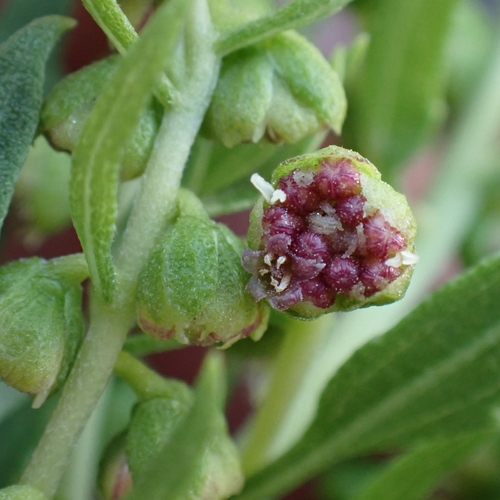
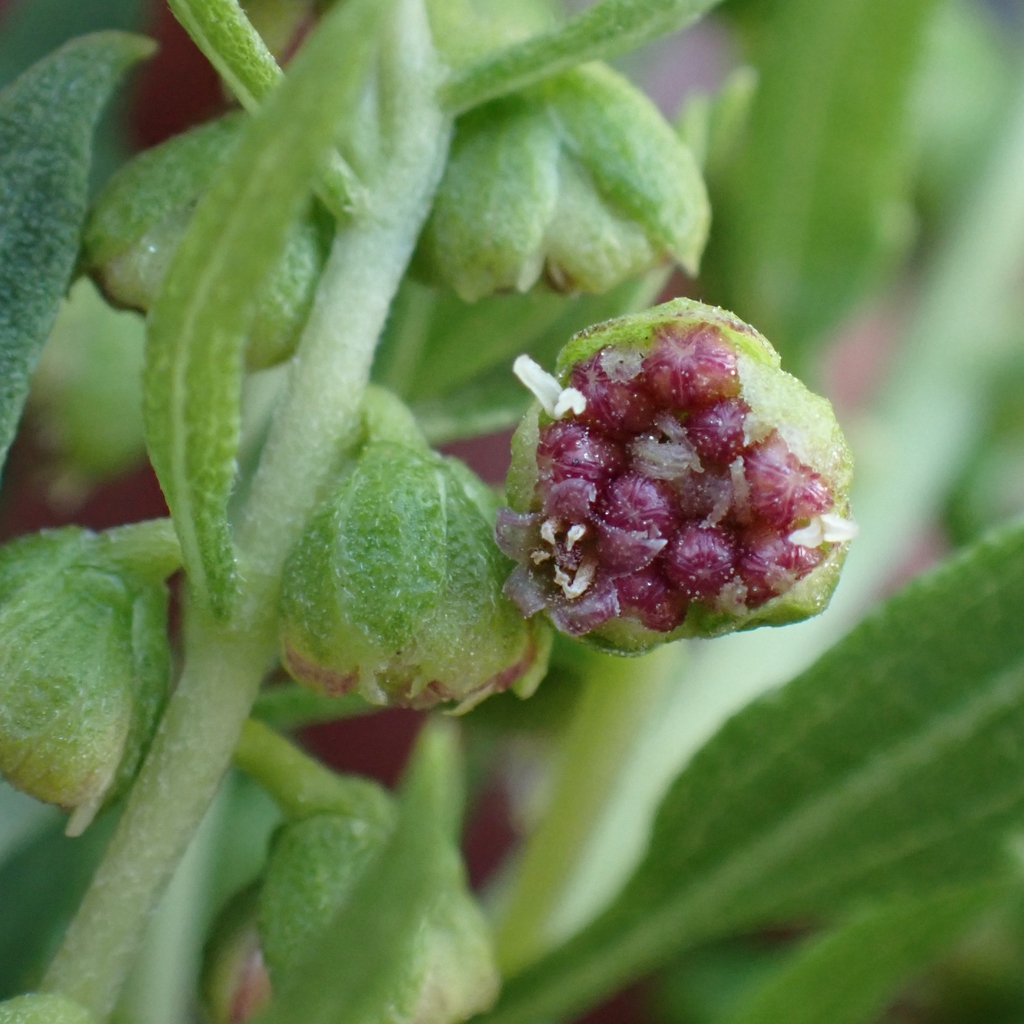 1 / 7
1 / 7—observations
—countries
—peak records
Least ConcernConservation statusIUCN Red List categoriesLCNTVUENCREWEXLeast ConcernRed List categories, explained →
Diet & prey
- Sunlight
- Water
- Soil Nutrients
Predators
- Marsh Rabbits
- Muskrats
- Plant-eating Insects
ThreatsSea-level rise, coastal development, shoreline hardening
HabitatsSalt marshes, coastal estuaries, tidal riverbanks
Life span10–30 years
Classification
- OrderAsterales
- FamilyAsteraceae
- GenusIva
- SpeciesIva frutescens
Range data is not available yet.
Interaction riskLow
- Low
- Moderate
- High
- Very high
- Why interaction risk is low
- Produces wind-borne pollen in late summer that may trigger severe hay fever allergies.
- Why it is dangerous
- Produces abundant wind-borne pollen during late summer and autumn, triggering severe allergic rhinitis in sensitive individuals.
- How to recognize a risky encounter
- Recognized by its woody base, fleshy greenish-gray opposite leaves with toothed margins, and inconspicuous greenish flowers.
- What to do
- Observe from an upwind distance during peak bloom periods in August and September if prone to pollen allergies.
Responsible observation
- Identification: Look for fleshy, lance-shaped leaves with distinct teeth along high-tide marsh margins.
- Allergy Awareness: Wind-borne pollen peaks in late summer, so sensitive individuals should take precautions.
- Coastal Etiquette: Access plants from established boardwalks to protect delicate marsh soils.
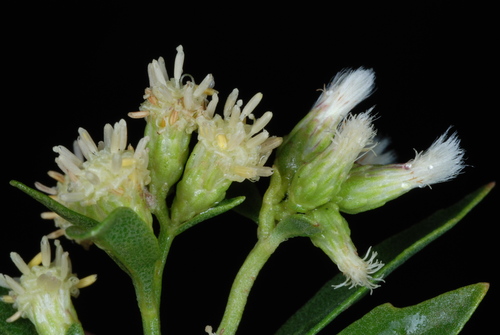
Frequent Companion (c) Douglas Goldman, some rights reserved (CC BY-SA), uploaded by Douglas Goldman · cc-by-sa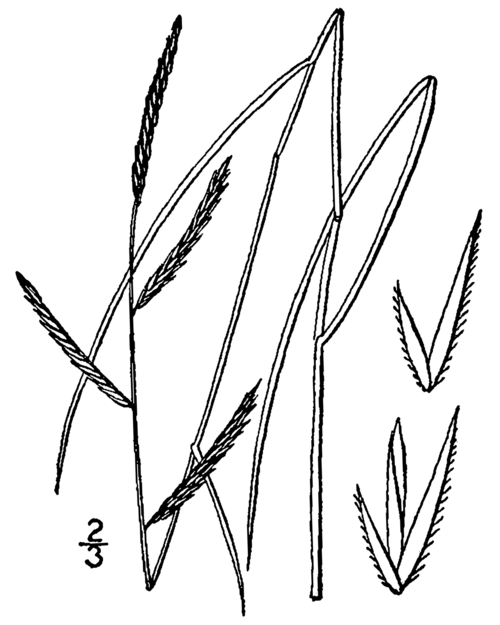
Frequent Companion Britton, N.L., and A. Brown. 1913. An illustrated flora of the northern United States, Canada and the British Possessions. 3 vols. Charles Scribner's Sons, New York. Vol. 1: 223. Courtesy of Kentucky Native Plant Society. Scanned by Omnitek Inc. / Public domain · cc0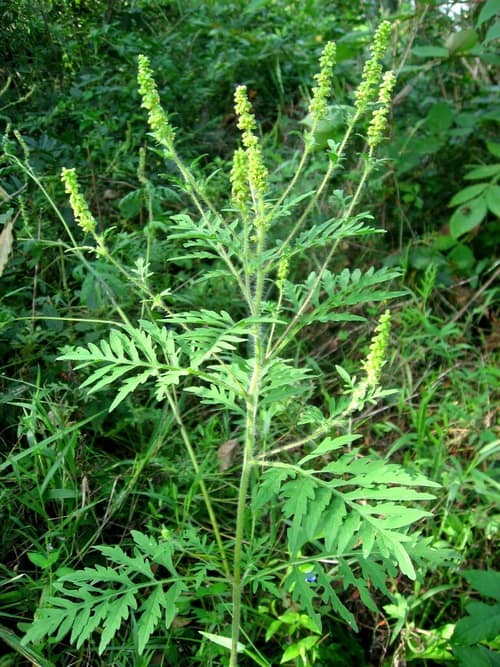
Close Relative (c) Qwert1234, some rights reserved (CC BY-SA) · cc-by-sa Image unavailable
Close Relative
Help improve the field guideSomething wrong?
Checking your Fauna account…Report a name, category, or profile issue for review.