
Plant
Brittle Pricklypear
Opuntia fragilisAlso known as Little Prickly Pear, Fragile Prickly Pear, Brittle Cactus
Brittle pricklypear forms low, creeping mats made of small, rounded stem segments that detach at the slightest touch. These prickly pads latch onto animal fur, footwear, or tires, allowing clonal fragments to hitch rides across vast distances to establish new colonies. In late spring to early summer, yellow to greenish flowers bloom atop the spiny cushions, making this hardy species the northernmost naturally occurring cactus in North America.
CactusDrought-TolerantSpiny
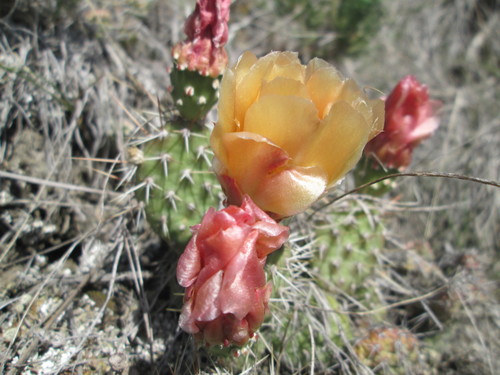
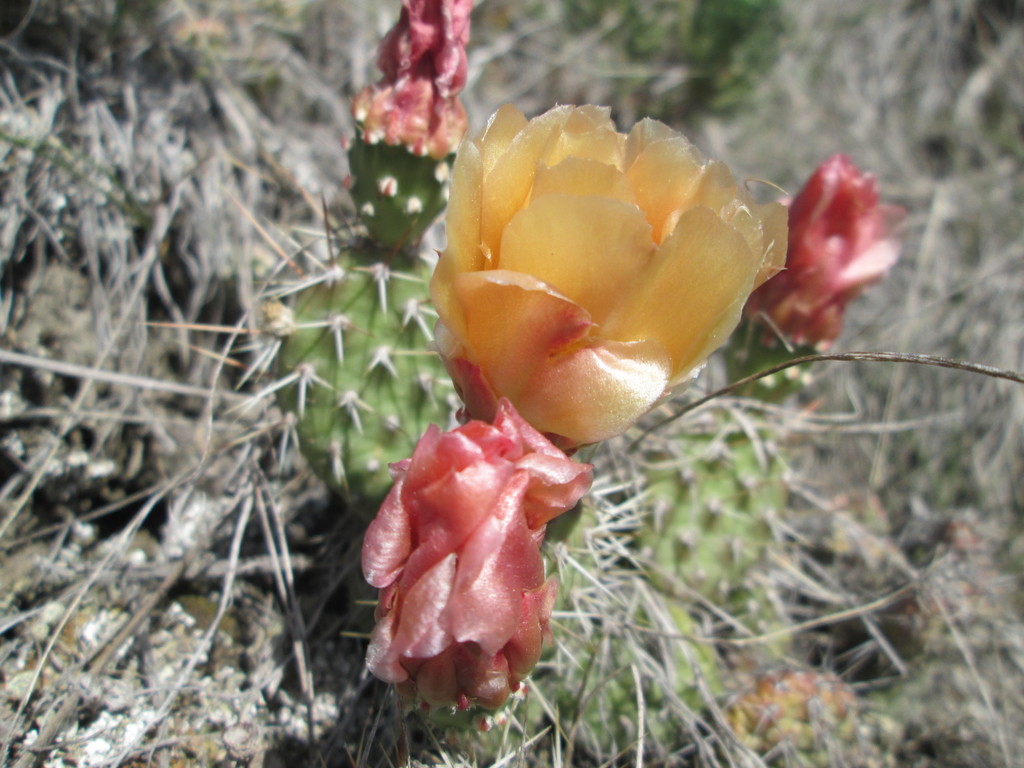
—observations
—countries
—peak records
Least ConcernConservation statusIUCN Red List categoriesLCNTVUENCREWEXLeast ConcernRed List categories, explained →
Diet & preyPhotosynthetic (autotroph)
Predators
- Cactus moth caterpillars
- Jackrabbits
- Rodents
ThreatsHabitat loss, invasive weed competition, overgrowth from fire suppression
HabitatsDry prairies, rocky outcrops, sandy barrens, and pine woodlands
Life spanPerennial (decades via clonal propagation)
Classification
- FamilyCactaceae
- SpeciesOpuntia fragilis
Range data is not available yet.
Interaction riskLow
- Low
- Moderate
- High
- Very high
- Why interaction risk is low
- Sharp spines and barbed glochids irritate skin, and wild fruits have look-alikes; avoid barehanded contact.
- Why it is dangerous
- Barbed spines and microscopic glochids detach upon light contact, embedding deeply in skin to cause painful inflammation.
- How to recognize a risky encounter
- Look for small, plump, easily detached oval stem segments forming low mats with yellowish-white spines.
- What to do
- Keep a safe distance on trail margins and use heavy leather gloves or mechanical tongs if handling is necessary.
Responsible observation
- Observation: Look for compact, prostrate mats creeping across rocky or sandy soils.
- Handling: Avoid touching barehanded because the tiny barbed glochids detach instantly.
- Footwear Check: Examine boot soles and clothing after walking through dry prairie habitats.
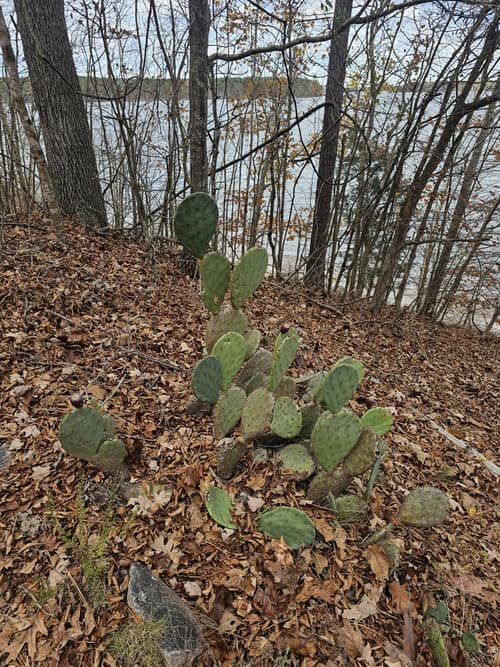
Genus Member (c) Daniel Washburn, some rights reserved (CC BY) · cc-by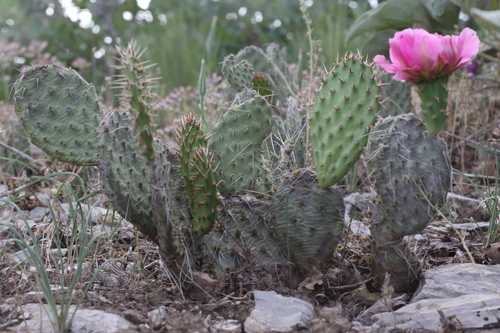
Close Relative (c) Andrey Zharkikh, some rights reserved (CC BY) · cc-by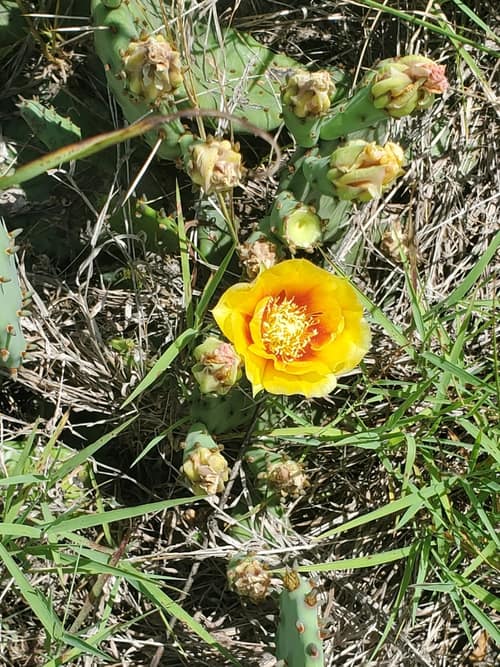
Close Relative (c) -Rorey-, some rights reserved (CC BY), uploaded by -Rorey- · cc-by
Help improve the field guideSomething wrong?
Checking your Fauna account…Report a name, category, or profile issue for review.