
Plant · GBIF taxon 5372394
Muscadine
Vitis rotundifoliaAlso known as Muscadine Grape, Bullace, Scuppernong, Southern Fox Grape
Muscadine vines climb high into the forest canopy using unbranched tendrils, anchoring firmly to trees along riverbanks and sunny woodland borders. Unlike most wild grapes, mature stems feature smooth, dark grey bark that stays tight to the trunk rather than peeling off in shaggy strips. Black bears, wild turkeys, and numerous songbirds feed heavily on the thick-skinned fruit in late summer, playing a vital role in seed dispersal across southeastern ecosystems.
Woody VineFruit BearingNative
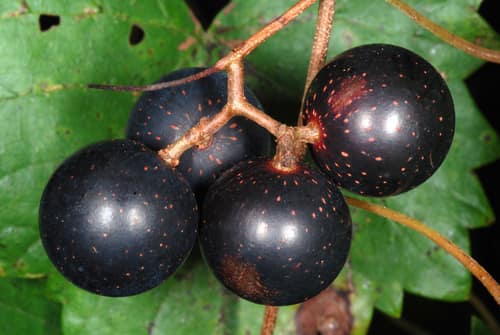
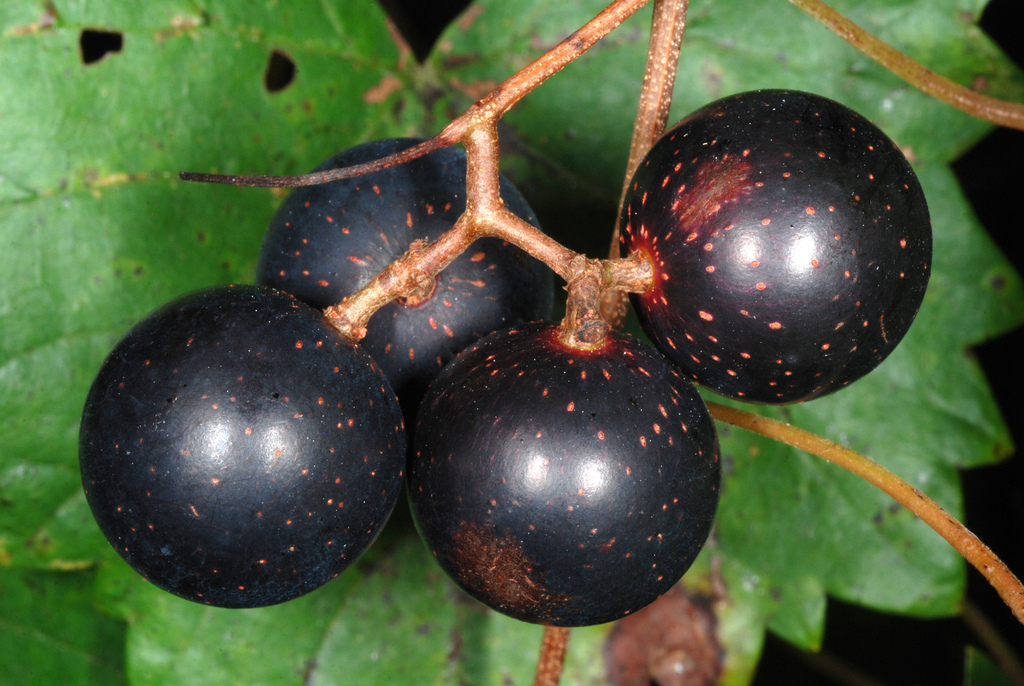 1 / 7
1 / 7—observations
—countries
—peak records
Least ConcernConservation statusIUCN Red List categoriesLCNTVUENCREWEXLeast ConcernRed List categories, explained →
Diet & prey
- Autotrophic (Photosynthetic)
Predators
- White-Tailed Deer
- Wild Turkey
- Black Bear
ThreatsHabitat conversion, competition from invasive exotic vines
HabitatsMoist woodlands, riverbanks, fence rows, sandy pine lands
Life span50–100+ years
Size / weightNot available
Classification
- OrderVitales
- FamilyVitaceae
- GenusVitis
- SpeciesVitis rotundifolia
Range data is not available yet.
Interaction riskHigh
- Low
- Moderate
- High
- Very high
- Why interaction risk is high
- Wild berries have toxic look-alikes; never eat based on app identification alone.
Responsible observation
- Identification: Distinguish from other wild grapes by checking for smooth, tight bark and unbranched tendrils.
- Habitat Spotting: Look along sunlit woodland borders, fence lines, and riverbanks in the southeastern region.
- Wildlife Watching: Observe canopy foliage in late summer to spot birds and mammals foraging on ripe fruit.
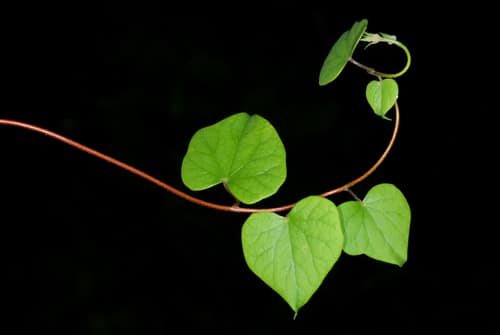
Toxic Look-Alike (c) Douglas Goldman, some rights reserved (CC BY-SA), uploaded by Douglas Goldman · cc-by-sa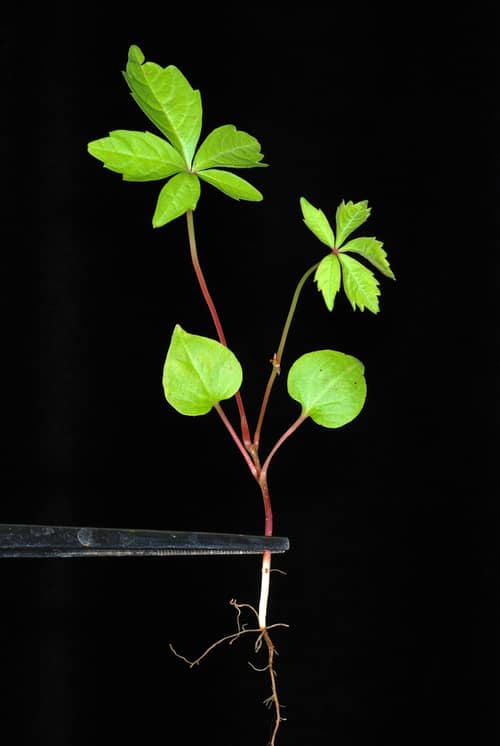
Frequent Companion (c) Douglas Goldman, some rights reserved (CC BY-SA), uploaded by Douglas Goldman · cc-by-sa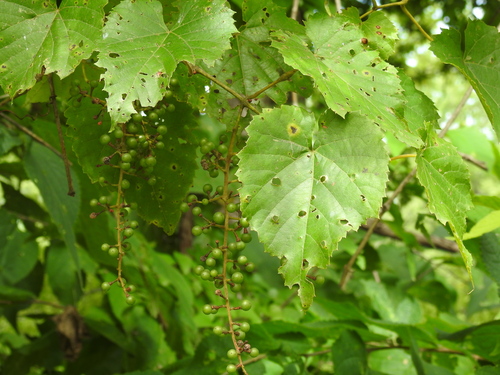
Close Relative no rights reserved · cc0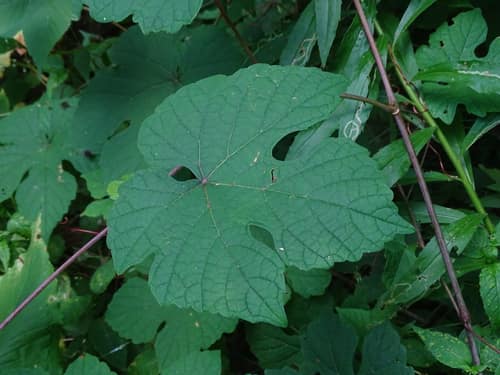
Close Relative no rights reserved, uploaded by Reuven Martin · cc0
Help improve the field guideSomething wrong?
Checking your Fauna account…Report a name, category, or profile issue for review.