Also known as Spotted Water Hemlock, Spotted Cowbane, Spotted Parsley, Musquash Root
Spotted water hemlock reaches impressive heights along sunny streambanks and marsh edges, unfolding delicate umbrellas of tiny white blossoms each summer. Beneath its airy beauty lies North America's most violently toxic native plant, concentrated with neurotoxic cicutoxin throughout its chambered roots and hollow stems. Native pollinators visit the flowers freely, as insects can safely feed on the nectar while avoiding the plant's deadly chemical defenses.
Extremely lethal if ingested; wild carrot family plants have dangerous look-alikes and should never be gathered.
Why it is dangerous
Contains cicutoxin, a potent neurotoxin that causes violent central nervous system disruption, severe convulsions, and rapid respiratory failure if ingested.
How to recognize a risky encounter
Recognizable by its tall stature, mottled purple stems, hollow chambered rootstock, and leaf veins terminating in the notches between leaf teeth rather than at the points.
What to do
Never touch with bare skin or attempt to dig up without heavy protective gloves; ensure livestock are fenced away from marshy pastures where it grows.
Responsible observation
Distance: Observe and photograph without touching or breaking the stems.
Identification: Notice purple stem mottling and leaf veins that end in blade notches.
Safety: Avoid foraging any white umbrella-shaped flowers in wet environments.

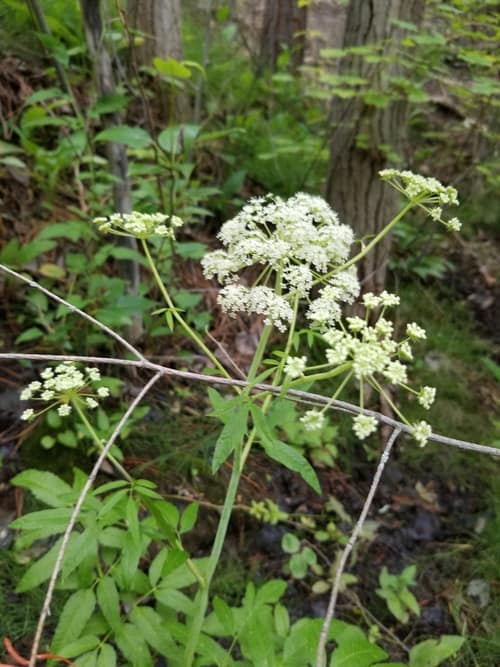
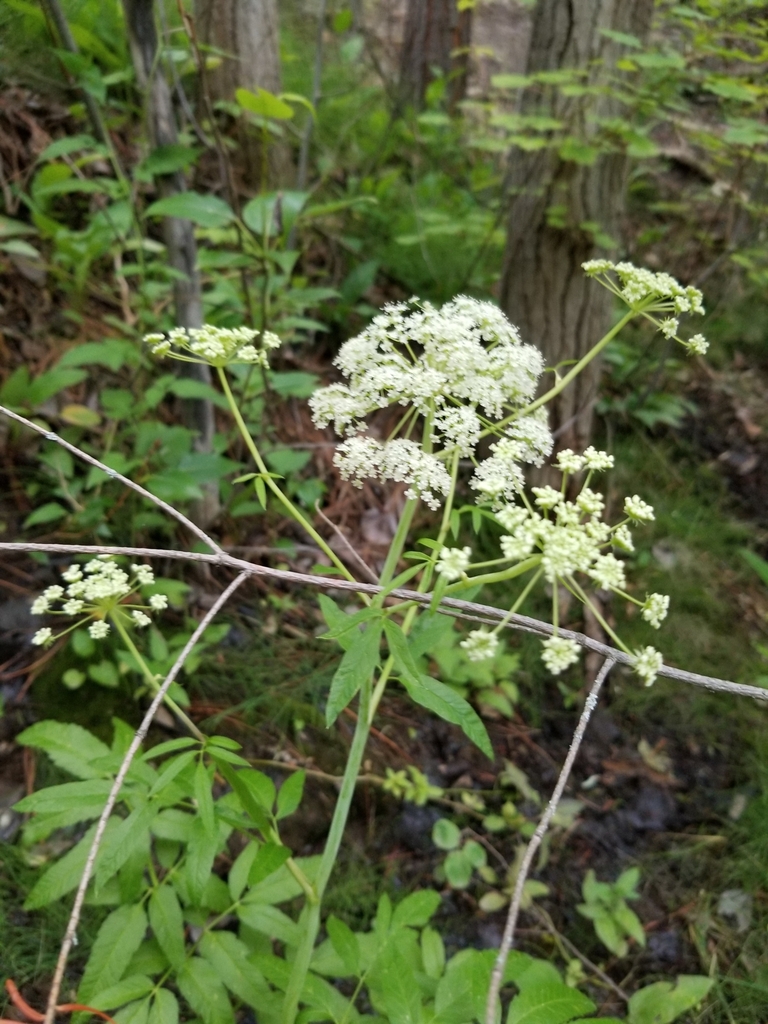
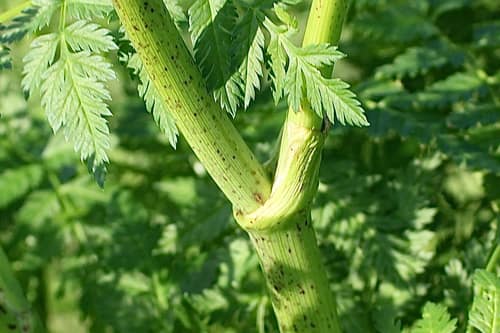
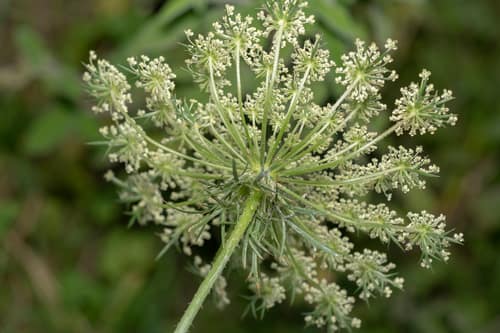
 Image unavailable