
Plant
Long-leaved Groundcherry
Physalis longifoliaAlso known as Common Groundcherry, Longleaf Groundcherry, Wild Tomatillo
Long-leaved groundcherry spreads through deep underground rhizomes, forming bushy colonies along prairies, pastures, and disturbed roadsides. In summer, five-lobed yellow flowers with distinctive dark purple centers yield small spherical berries encased within papery, lantern-like husks. Birds and small mammals aid in seed dispersal by consuming mature fallen fruits during autumn.
FloweringPerennialFruiting
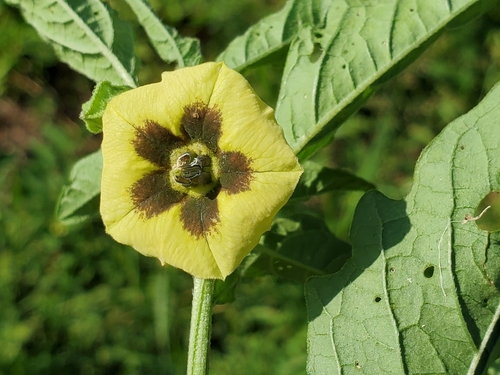
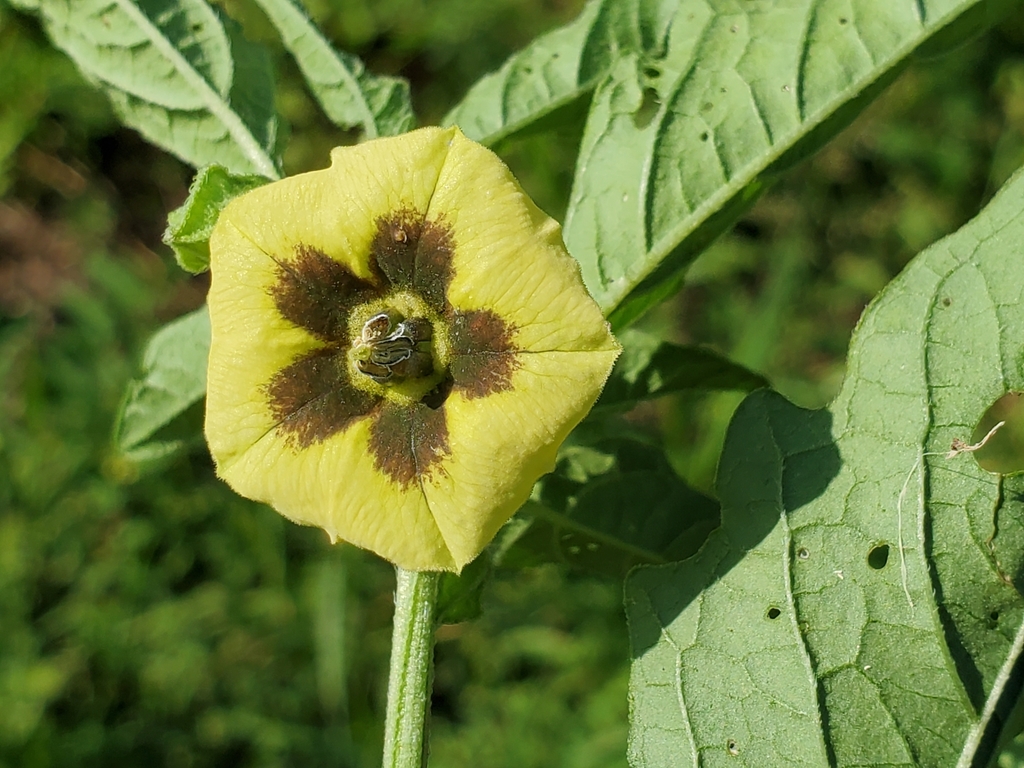
—observations
—countries
—peak records
Least ConcernConservation statusIUCN Red List categoriesLCNTVUENCREWEXLeast ConcernRed List categories, explained →
Diet & preySunlight, Water, Soil Nutrients
Predators
- Colorado Potato Beetle
- Flea Beetles
- Rodents
ThreatsHerbicides, intensive cultivation
HabitatsPrairies, pastures, roadsides, agricultural fields, disturbed soils
Life spanPerennial
Classification
- OrderSolanales
- FamilySolanaceae
- GenusPhysalis
- SpeciesPhysalis longifolia
Range data is not available yet.
Interaction riskHigh
- Low
- Moderate
- High
- Very high
- Why interaction risk is high
- Unripe berries and foliage contain toxic alkaloids, and wild fruit has dangerous look-alikes; do not ingest.
- Why it is dangerous
- Unripe berries, stems, and leaves contain toxic solanine alkaloids that cause severe stomach pain, nausea, and vomiting.
- How to recognize a risky encounter
- Look for drooping papery green lanterns enclosing a small berry along sprawling stems with smooth, lanceolate leaves.
- What to do
- Observe plants without damaging stems and avoid consuming any wild berries or plant parts.
Responsible observation
- Examining Husks: Gently peel back the papery green envelope to observe the developing spherical fruit inside.
- Habitat Spotting: Look for colonies along sunny pasture edges, gravelly roadsides, and agricultural borders.
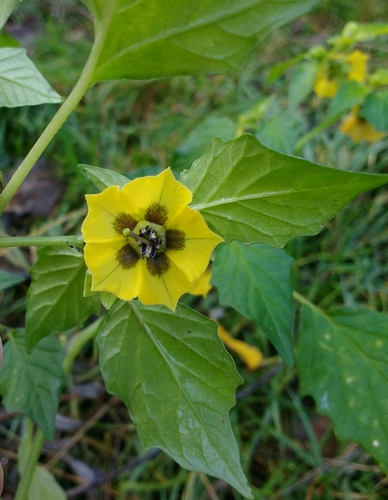
Close Relative (c) carnifex, some rights reserved (CC BY), uploaded by carnifex · cc-by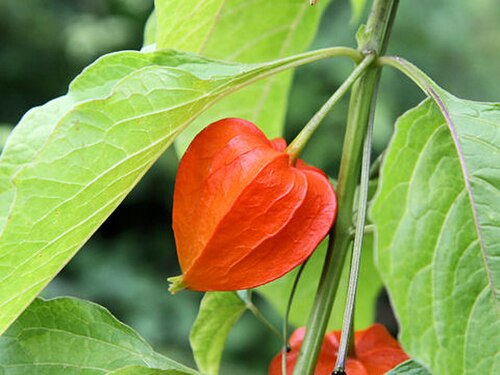
Close Relative Shu Suehiro / CC BY 3.0 · cc-by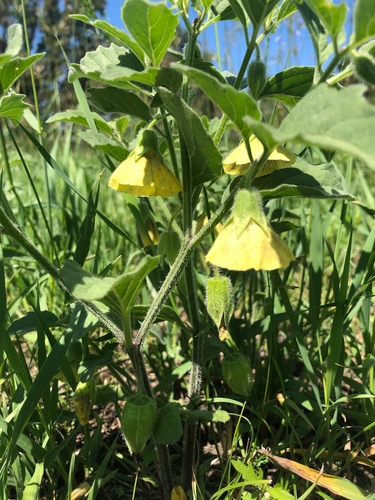
Close Relative no rights reserved, uploaded by Owen McElroy · cc0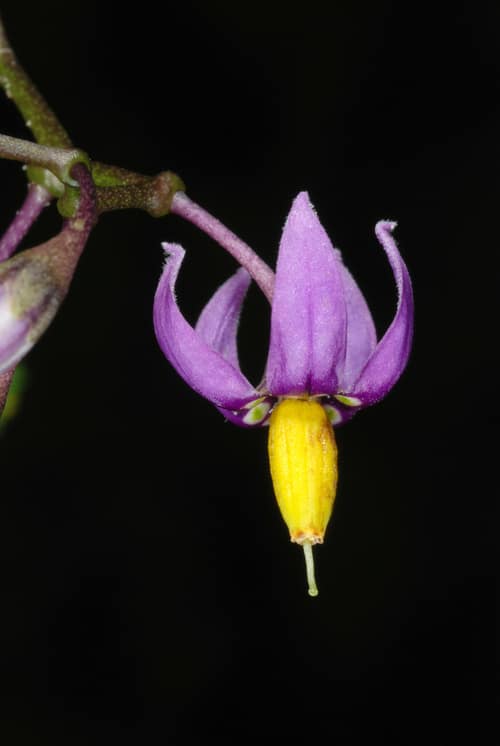
Family Relative (c) Douglas Goldman, some rights reserved (CC BY-SA), uploaded by Douglas Goldman · cc-by-sa
Help improve the field guideSomething wrong?
Checking your Fauna account…Report a name, category, or profile issue for review.