
Plant
Tatarian Honeysuckle
Lonicera tataricaAlso known as Tartarian Honeysuckle, Bush Honeysuckle, Russian Honeysuckle
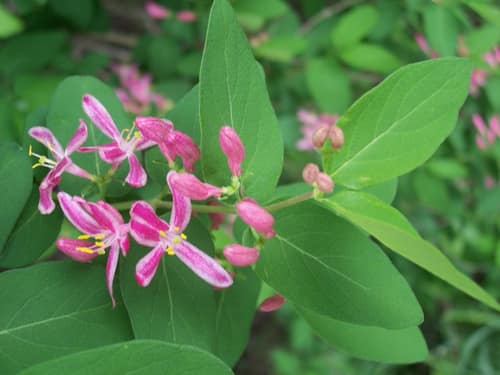
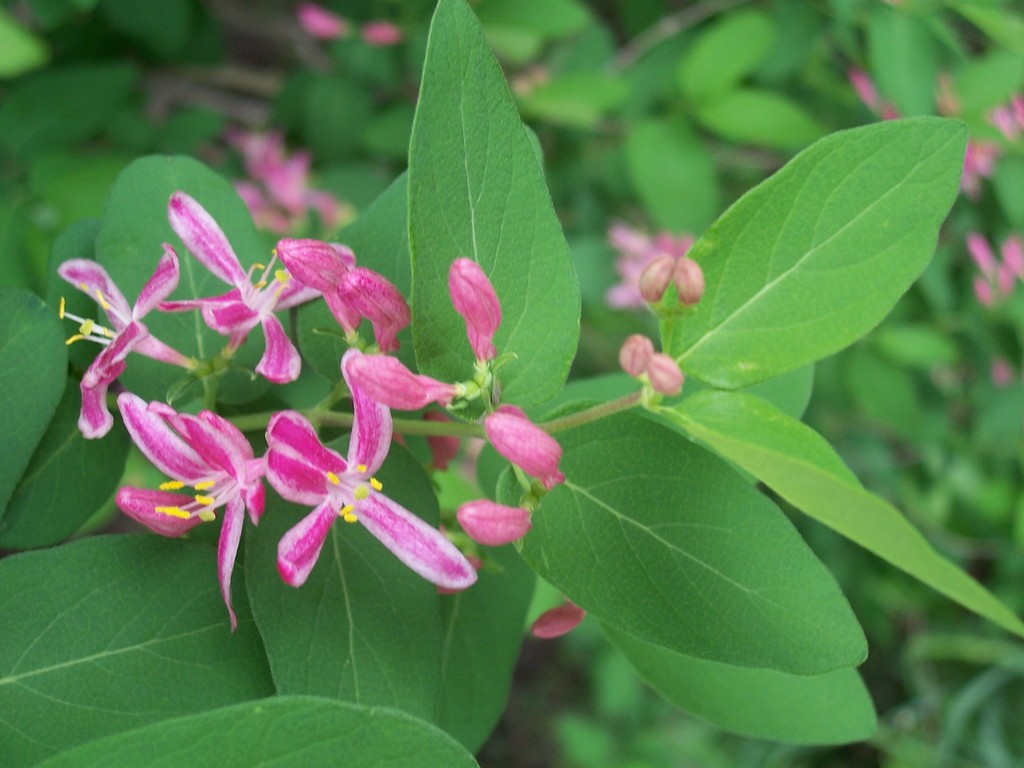
Tatarian honeysuckle forms dense, multi-stemmed deciduous shrubs that leaf out early in spring, shading out native forest understory vegetation. Fragrant tubular flowers bloom in shades of deep pink to white during late spring, followed by paired red or orange berries in summer. Highly adaptable, it rapidly invades woodlands, pastures, and disturbed soil across North America where it was introduced as an ornamental.
InvasiveDeciduousFlowering
—observations
—countries
—peak records
Not EvaluatedConservation statusIUCN Red List categoriesLCNTVUENCREWEXNot Evaluated — not placed on the risk ladderRed List categories, explained →
Diet & preyAutotrophic (Photosynthetic)
Predators
- White-Tailed Deer
- Aphids
- Fungal Pathogens
ThreatsMechanical clearing, prescribed fire, targeted herbicides
HabitatsOpen woodlands, forest edges, pastures, floodplains, roadsides
Life span20–50 years
Classification
- OrderDipsacales
- FamilyCaprifoliaceae
- GenusLonicera
- SpeciesLonicera tatarica
Range data is not available yet.
Interaction riskHigh
- Low
- Moderate
- High
- Very high
- Why interaction risk is high
- Berries are toxic if ingested by humans and pets, and wild berries have toxic look-alikes.
- Why it is dangerous
- Berries contain toxic saponins and iridoid glycosides that cause vomiting, abdominal pain, diarrhea, and lethargy when ingested.
- How to recognize a risky encounter
- Look for arching hollow stems, paired pinkish-red tubular flowers in spring, and bright red spherical berries in summer.
- What to do
- Do not consume the berries, and wash hands after handling or trimming the plant.
Responsible observation
- Stem Identification: Snap a twig to check the pith; exotic honeysuckles have hollow brown piths while native species have solid white piths.
- Invasive Control: Dig up small seedlings early in spring when their leaf-out makes them easy to spot before native plants emerge.
- Landscape Use: Replace ornamental plantings with native shrubs like American elderberry or native viburnums to support local birds.
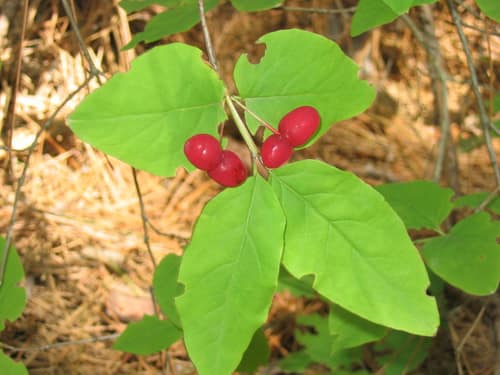
Native Look-Alike (c) Superior National Forest, some rights reserved (CC BY) · cc-by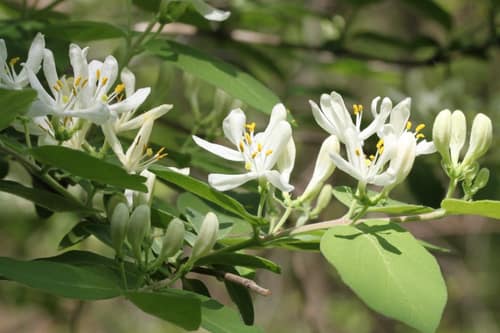
Invasive Relative (c) Fluff Berger, some rights reserved (CC BY-SA), uploaded by Fluff Berger · cc-by-sa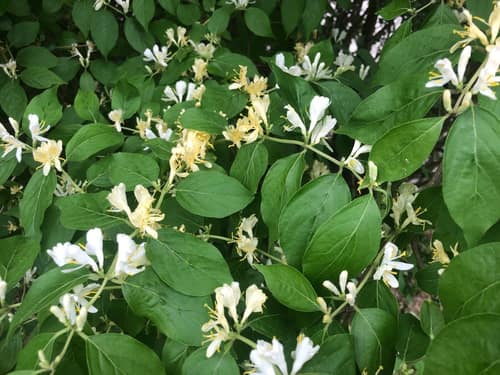
Invasive Relative (c) Andrew Conboy, some rights reserved (CC BY), uploaded by Andrew Conboy · cc-by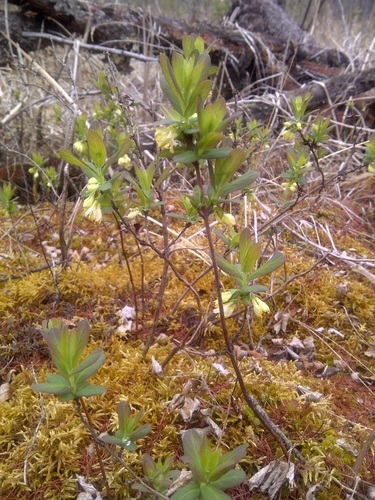
Native Relative (c) James Duncan, some rights reserved (CC BY) · cc-by
Help improve the field guideSomething wrong?
Checking your Fauna account…Report a name, category, or profile issue for review.