
Plant · GBIF taxon 5295375
Roundleaf Greenbrier
Smilax rotundifoliaAlso known as Common Greenbrier, Bamboo Vine, Catbrier, Horse Brier
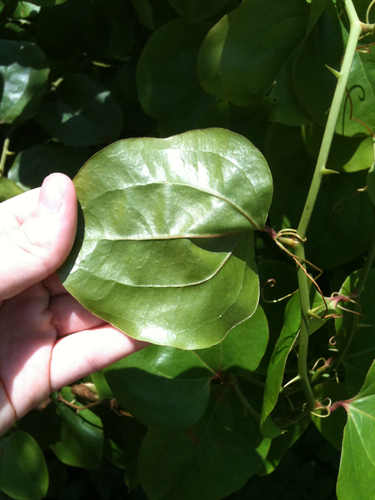
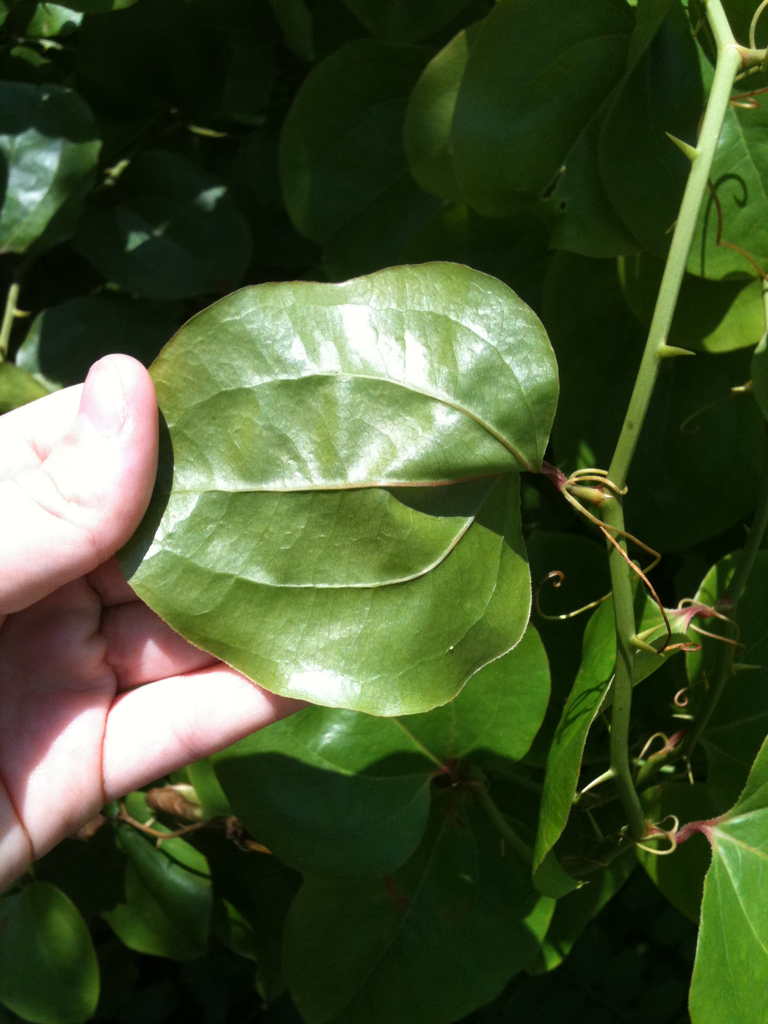
Roundleaf greenbrier forms impenetrable, prickly thickets throughout eastern woodlands, anchoring itself into the canopy via tough paired petiole tendrils. Its stout, woody stems remain bright green year-round, carrying out photosynthesis even when broad leaves drop in late autumn. The bluish-black berries persist well into winter, serving as a critical famine food for songbirds and small mammals when other forage is scarce.
NativeClimbingWoody Vine
 1 / 7
1 / 7—observations
—countries
—peak records
Least ConcernConservation statusIUCN Red List categoriesLCNTVUENCREWEXLeast ConcernRed List categories, explained →
Diet & prey
- Autotrophic (photosynthetic)
Predators
- White-tailed Deer
- Wild Turkey
- Northern Bobwhite
ThreatsHabitat destruction, though populations are exceptionally resilient and often thrive after forest disturbances
HabitatsDeciduous forests, pine barrens, floodplain swamps, clearings, and thickets
Life spanPerennial (rhizomes can survive for decades)
Size / weightNot available
Classification
- FamilySmilacaceae
- SpeciesSmilax rotundifolia
Range data is not available yet.
Interaction riskLow
- Low
- Moderate
- High
- Very high
- Why interaction risk is low
- Wild berries have toxic look-alikes; sharp prickles can scratch skin, so watch footing in dense brush.
Responsible observation
- Trail Etiquette: Step around sprawling runners to avoid snagging footwear, trousers, and exposed skin on stout prickles.
- Identification Clue: Look for green, square-angled stems with stout, flattened thorns and pairs of curling tendrils on the leaf stalks.
- Garden Management: Remove deep, woody tuberous rhizomes entirely if attempting to clear runners from cultivated woodland edges.
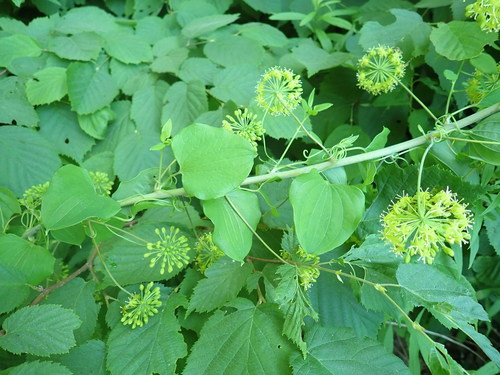
Same Genus no rights reserved, uploaded by Lynn Harper · cc0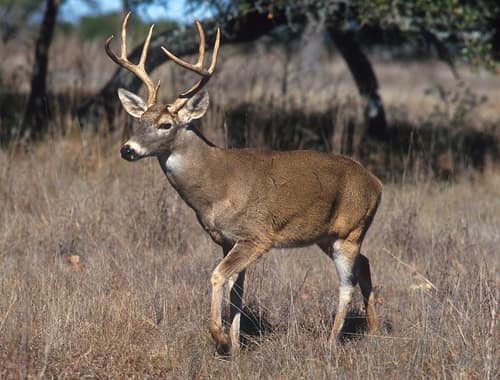
Herbivore USDA photo by Scott Bauer / Public domain · cc0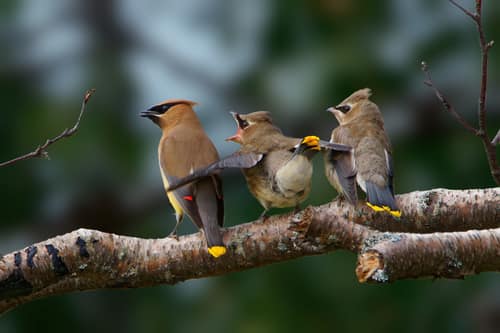
Seed Disperser (c) Christian Back, some rights reserved (CC BY), uploaded by Christian Back · cc-by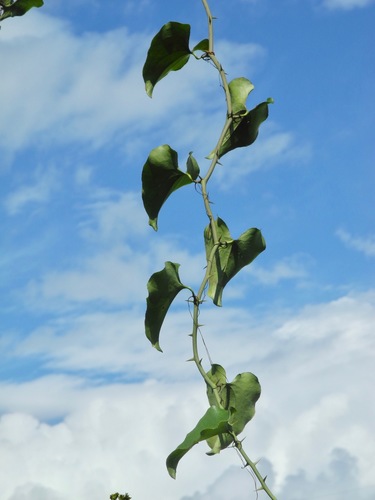
Close Relative (c) Michael J. Papay, some rights reserved (CC BY), uploaded by Michael J. Papay · cc-by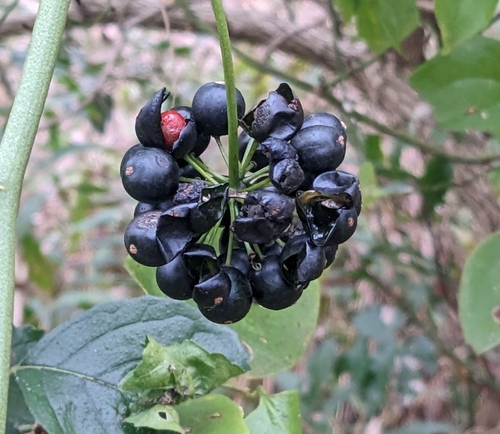
Close Relative (c) Ainsley, some rights reserved (CC BY), uploaded by Ainsley · cc-by
Help improve the field guideSomething wrong?
Checking your Fauna account…Report a name, category, or profile issue for review.