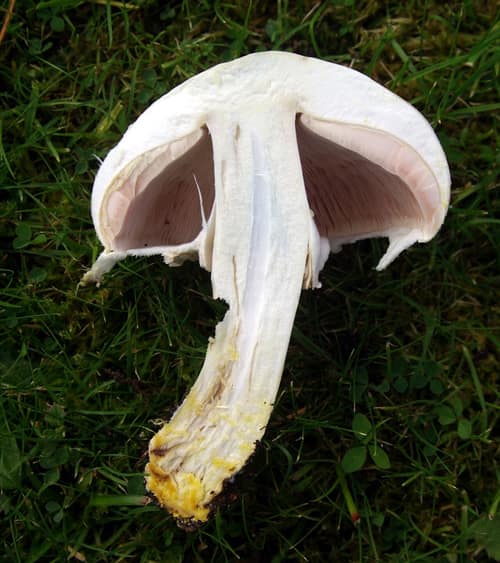
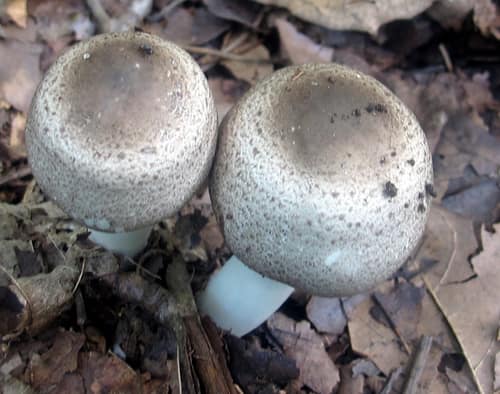
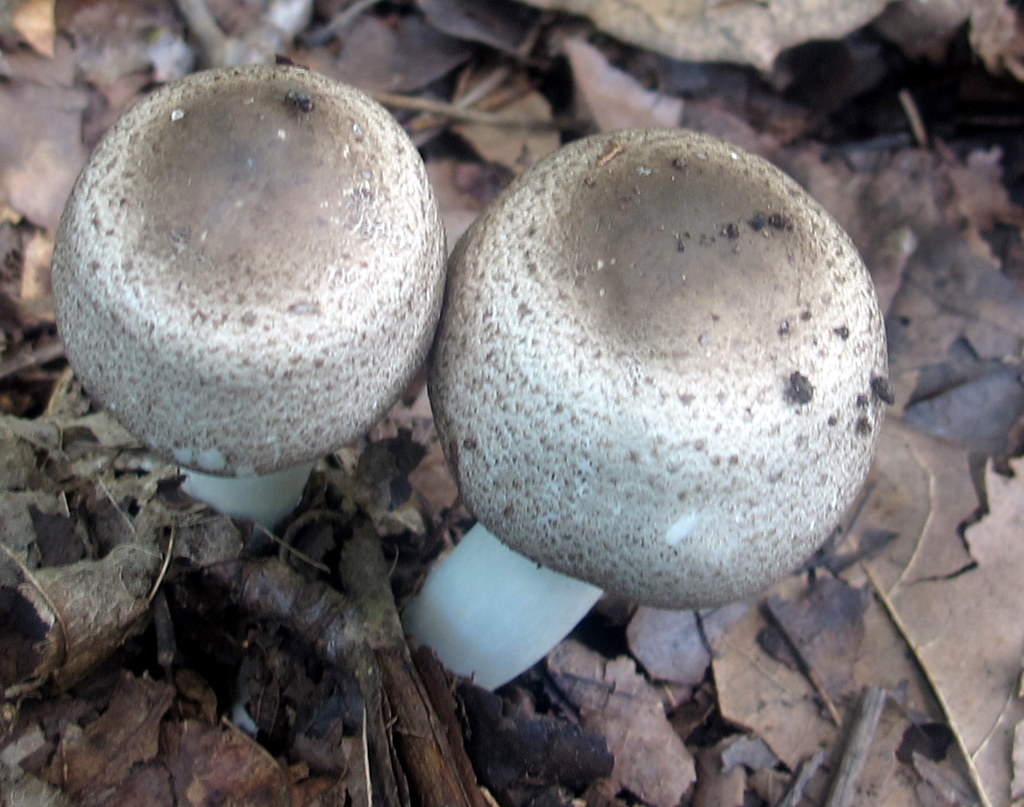
Agaricus placomyces emerges on forest floors and rich parklands across North America, decomposing leaf litter beneath deciduous and coniferous trees. Its pale caps are sprinkled with fine grayish-brown scales that contrast with crowded gills turning from pallid pink to deep chocolate brown as spores mature. When bruised or cut, especially at the bulbous stem base, the flesh flashes vibrant chrome yellow and emits a pungent, ink-like phenolic odor.
Not EvaluatedConservation statusIUCN Red List categoriesLCNTVUENCREWEXNot Evaluated — not placed on the risk ladderRed List categories, explained →
Key facts
Diet & prey
Saprobic (decomposes leaf litter and forest soil organics)
Predators
Slugs
Fungus gnat larvae
ThreatsHabitat fragmentation, severe soil compaction, and leaf litter removal
HabitatsDeciduous and coniferous woodlands, forest edges, and parklands
Life spanEphemeral fruiting bodies last 3–8 days; underground mycelium persists for decades
Size / weightNot available
Classification
OrderAgaricales
FamilyAgaricaceae
GenusAgaricus
SpeciesAgaricus placomyces
Range & activity
Range data is not available yet.
Safe observation
Interaction riskHigh
Low
Moderate
High
Very high
Why interaction risk is high
Contains gastrointestinal toxins and has look-alikes; never eat wild fungi based on app identification alone.
Why it is dangerous
Contains phenol and related phenolic compounds that cause rapid gastrointestinal distress, including severe nausea, abdominal cramps, vomiting, and diarrhea.
How to recognize a risky encounter
Recognizable by dark grayish-brown scales on a whitish cap and an immediate chrome-yellow stain when the stem base is scratched, paired with an ink-like chemical odor.
What to do
Never consume wild mushrooms; observe specimens in habitat and wash hands thoroughly after touching.
Responsible observation
Spore Printing: Place a mature cap gill-side down on white paper overnight to yield a chocolate-brown spore print.
Odor Check: Scratch the bulbous stem base and sniff for a chemical, carbolic ink-like aroma.
Observation Etiquette: Leave mushrooms undisturbed so spores can disperse freely across the forest floor.

 1 / 7
1 / 7
 Image unavailable