Also known as Gold Cap, Golden Halo, Bluestain Smoothcap, Cube
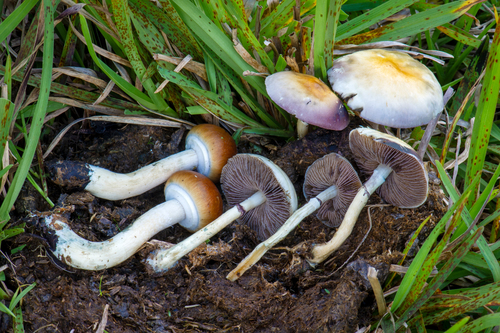
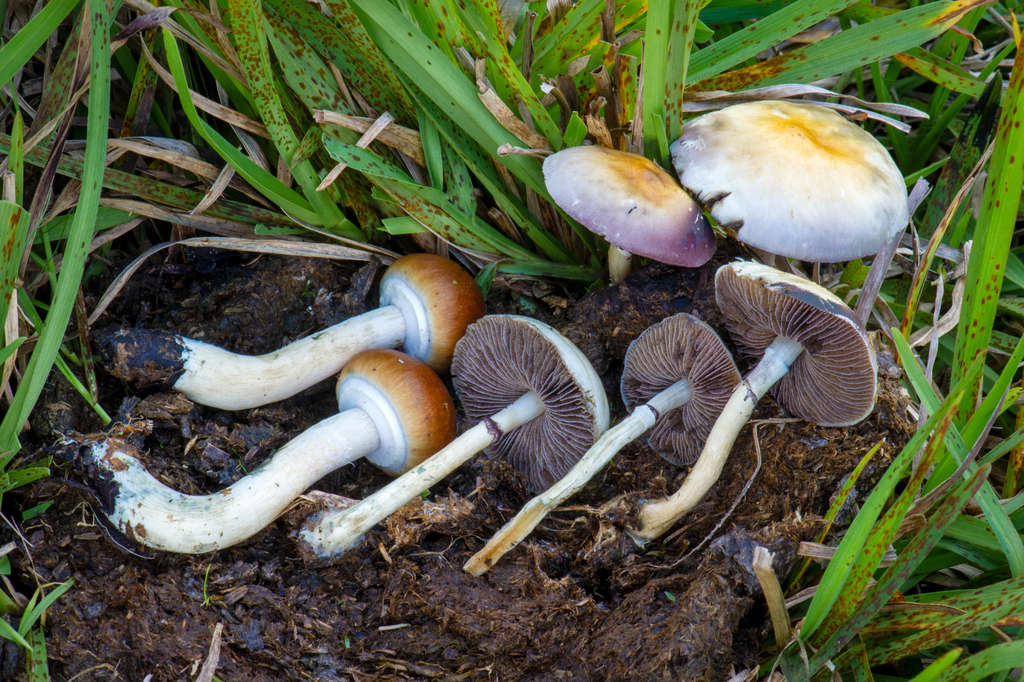
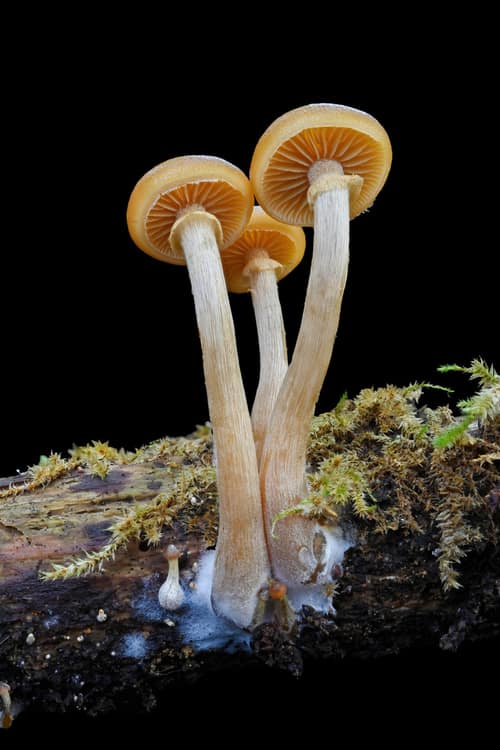
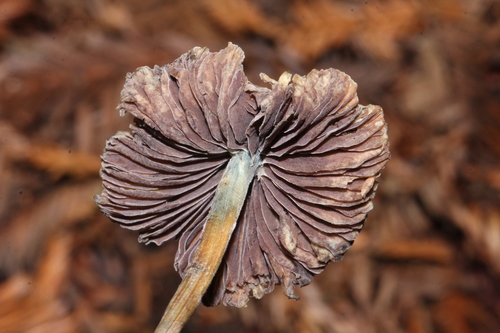
Golden cap mushrooms thrive in warm, humid pastures where herbivore dung provides an ideal nutrient substrate. Their fruiting bodies feature a smooth cap that shifts from conic to convex with age, supported by a pale stem bearing a membranous ring. When the mushroom tissue is bruised or damaged, enzymatic oxidation creates a distinctive blue-green discoloration across the injured area.
Not EvaluatedConservation statusIUCN Red List categoriesLCNTVUENCREWEXNot Evaluated — not placed on the risk ladderRed List categories, explained →
Key facts
Diet & prey
Herbivore Dung
Organic Matter
Plant Debris
Predators
Slugs
Fungus Gnats
Beetles
ThreatsHabitat conversion, agricultural chemical use
HabitatsTropical and subtropical grasslands, pastures, cattle dung
Life spanFruiting bodies last 3 to 7 days; mycelium lives for years
Classification
OrderAgaricales
FamilyHymenogastraceae
GenusPsilocybe
SpeciesPsilocybe cubensis
Range & activity
Range data is not available yet.
Safe observation
Interaction riskHigh
Low
Moderate
High
Very high
Why interaction risk is high
Contains potent psychoactive alkaloids. Many wild mushrooms have toxic look-alikes; never eat wild fungi based on app identification alone.
Why it is dangerous
Contains psilocybin and psilocin, which alter central nervous system function to induce hallucinations, panic, elevated heart rate, and severe disorientation.
How to recognize a risky encounter
Recognized by a golden-brown convex cap, a dark spore print, a prominent stem ring, and clear blue bruising.
What to do
Do not harvest or consume wild specimens, as lethal look-alikes frequently share the same habitat.
Responsible observation
Field Identification: Look for a yellowish-brown cap that stains blue where bruised or handled.
Habitat Awareness: Search pasture environments after warm rainfall where herbivore dung is present.
Safe Observation: Avoid picking wild fungi to prevent accidental poisoning from dangerous look-alikes.