
Bird
Great Auk
Pinguinus impennisAlso known as Garefowl, Northern Penguin, Geirfugl
Great auks were powerful, flightless pelagic divers that spent most of the year foraging across the frigid waters of the North Atlantic. Pairs formed monogamous lifetime bonds, reuniting each spring on isolated, predator-free rocky islands to incubate a single large, pyriform egg directly on bare stone. Ruthless overhunting by sailors for down, meat, oil, and collector specimens ultimately drove the species to extinction by the mid-nineteenth century.
FlightlessPelagic
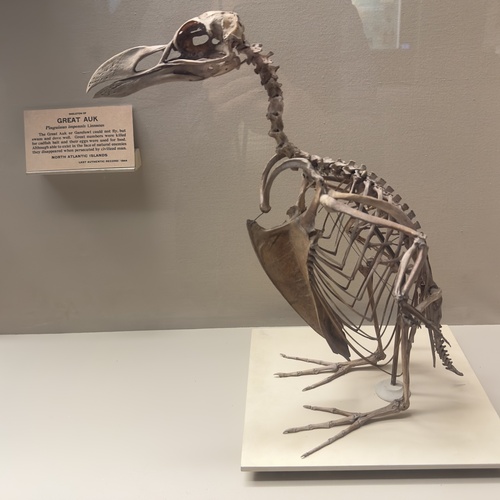
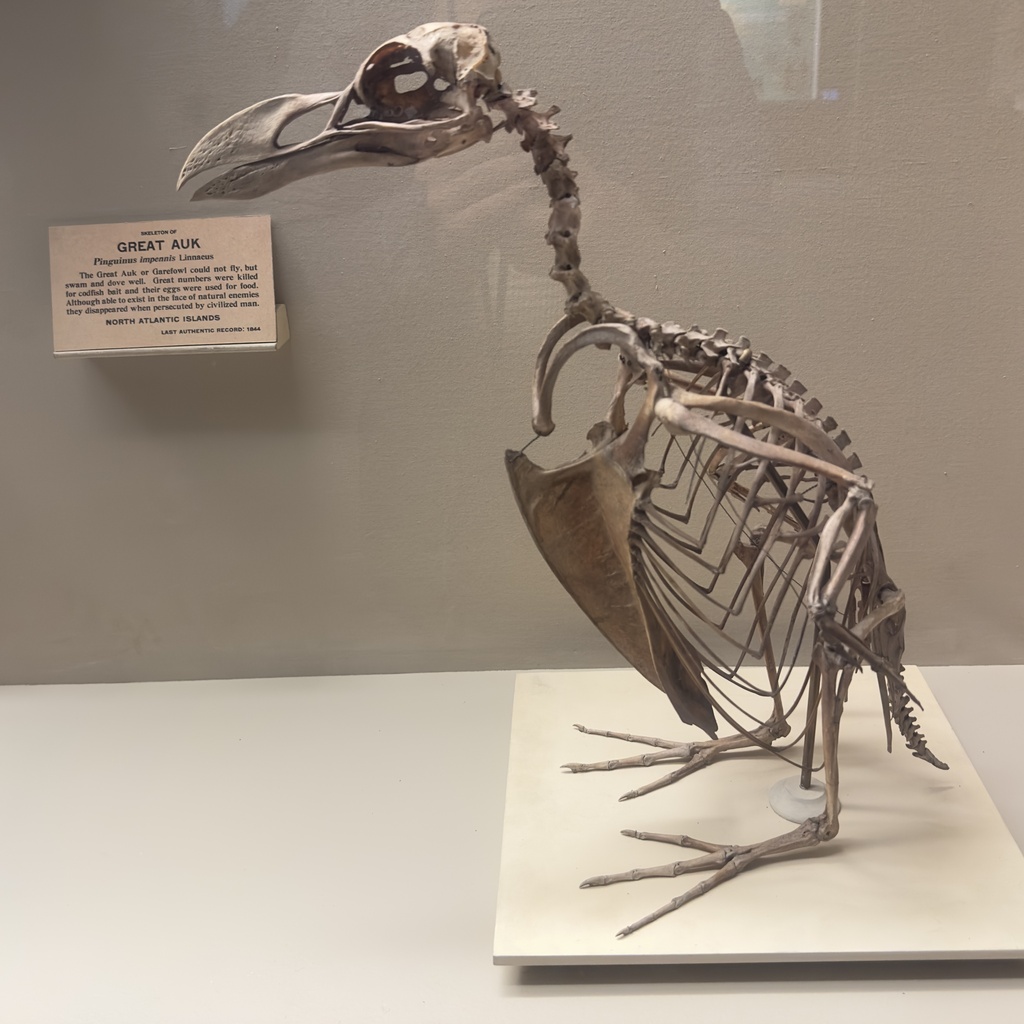
—observations
—countries
—peak records
ExtinctConservation statusIUCN Red List categoriesLCNTVUENCREWEXExtinctRed List categories, explained →
Diet & preyAtlantic Menhaden, Capelin, Sand Lance
Predators
- Humans
- Killer Whales
- White-tailed Eagles
ThreatsHistoric overharvesting by humans for feathers, food, fishing bait, and museum specimens
HabitatsCold open ocean waters and rocky, sloping offshore islands
Life spanApproximately 20–25 years
Classification
- OrderCharadriiformes
- FamilyAlcidae
- GenusPinguinus
- SpeciesPinguinus impennis
Range data is not available yet.
Interaction riskLow
- Low
- Moderate
- High
- Very high
- Why interaction risk is low
- Extinct since the mid-nineteenth century; historical mounts are viewable only in museums.
Responsible observation
- Museum Specimens: Visit natural history museums to view historical taxidermy mounts and egg casts.
- Pelagic Observing: Watch for living alcid relatives like razorbills and murres on North Atlantic coastal pelagics.
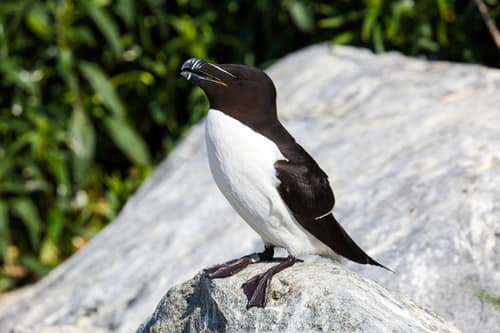
Close Relative (c) Melissa McMasters, some rights reserved (CC BY) · cc-by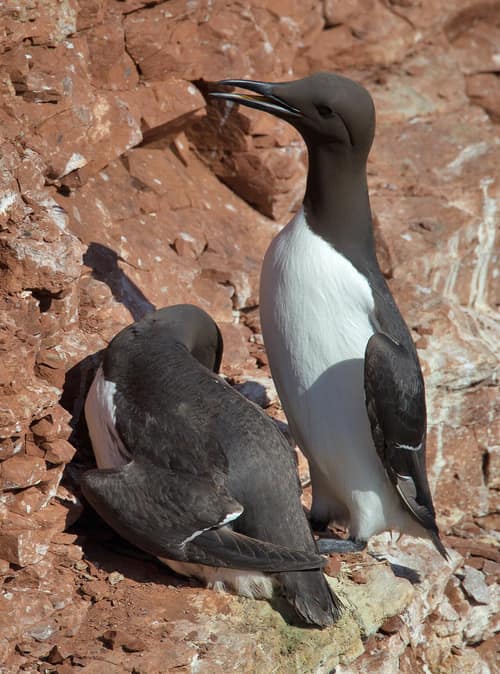
Same Family Andreas Trepte / CC BY-SA 2.5 · cc-by-sa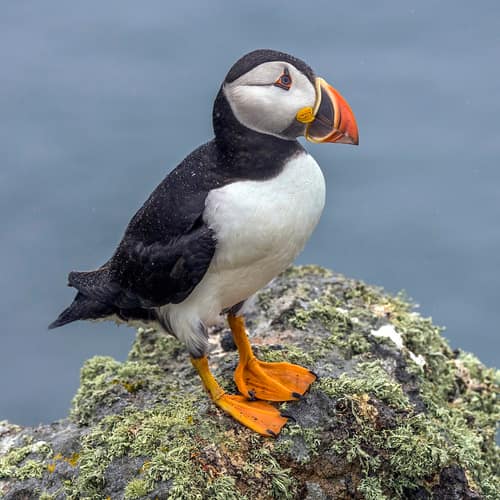
Same Family Charles J. Sharp / CC BY-SA 4.0 · cc-by-sa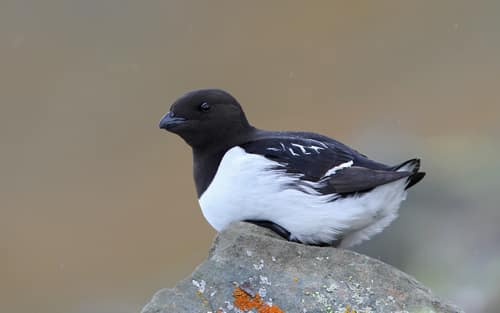
Same Family (c) Christoph Moning, some rights reserved (CC BY), uploaded by Christoph Moning · cc-by
Help improve the field guideSomething wrong?
Checking your Fauna account…Report a name, category, or profile issue for review.