
Bird · GBIF taxon 5227966
Silver Pheasant
Lophura nycthemeraAlso known as Silver Kalij Pheasant, Chinese Silver Pheasant
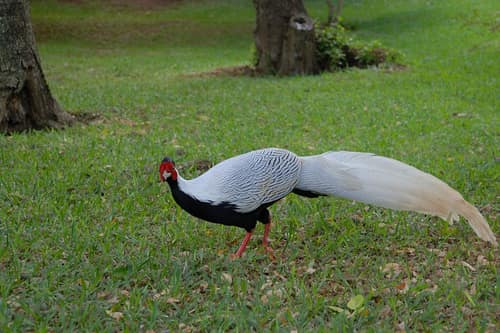
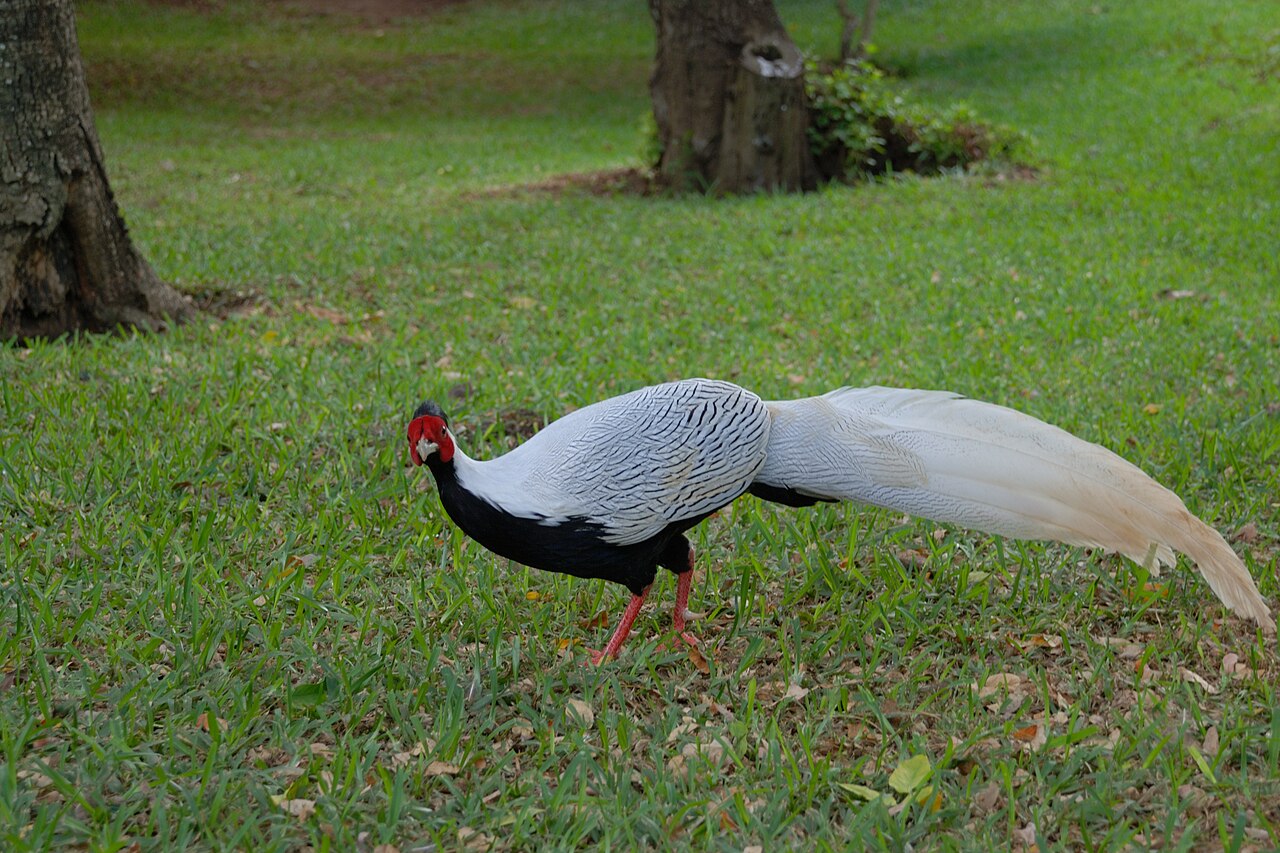
Male silver pheasants boast striking white upperparts with fine black lattice patterns, deep blue-black underparts, and long cascading tail feathers. Females sport cryptic brown plumage that provides ideal camouflage among forest leaf litter while incubating clutches of eggs. Active around dawn and dusk, small family groups forage along mountain slopes, turning over fallen leaves with strong red legs to reveal food.
MontaneDimorphicGround-dwelling
—observations
—countries
—peak records
Least ConcernConservation statusIUCN Red List categoriesLCNTVUENCREWEXLeast ConcernRed List categories, explained →
Diet & prey
- Acorns
- Insects
- Berries
Predators
- Leopards
- Dholes
- Large birds of prey
ThreatsHabitat loss, deforestation, hunting pressure
HabitatsMontane evergreen forests, bamboo thickets, scrubland
Life span10–15 years in the wild
Size / weightNot available
Classification
- FamilyPhasianidae
- SpeciesLophura nycthemera
Range data is not available yet.
Interaction riskLow
- Low
- Moderate
- High
- Very high
- Why interaction risk is low
- Safe to observe at a distance; males possess sharp leg spurs if cornered.
Responsible observation
- Observation Distance: Maintain a quiet distance along forest trails to avoid startling foraging coveys.
- Listening Cues: Listen for loud leaf-scratching or harsh crowing calls near dawn and dusk.
- Time of Day: Focus sightings around sunrise when birds forage near mountain trail edges.
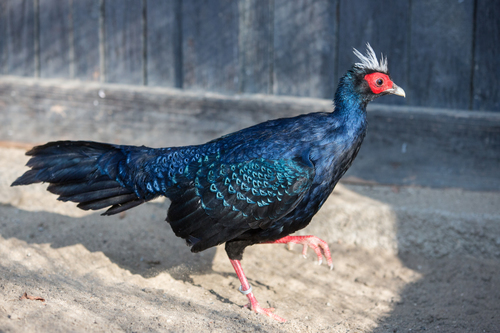
Genus Member (c) Václav Šilha, some rights reserved (CC BY-SA) · cc-by-sa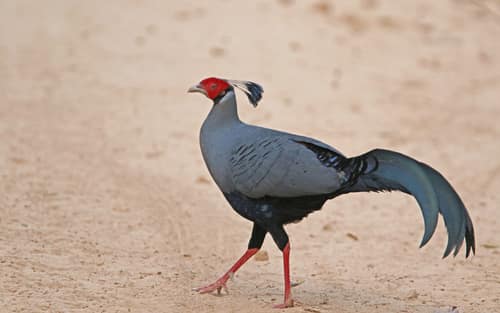
Genus Member (c) Christoph Moning, some rights reserved (CC BY), uploaded by Christoph Moning · cc-by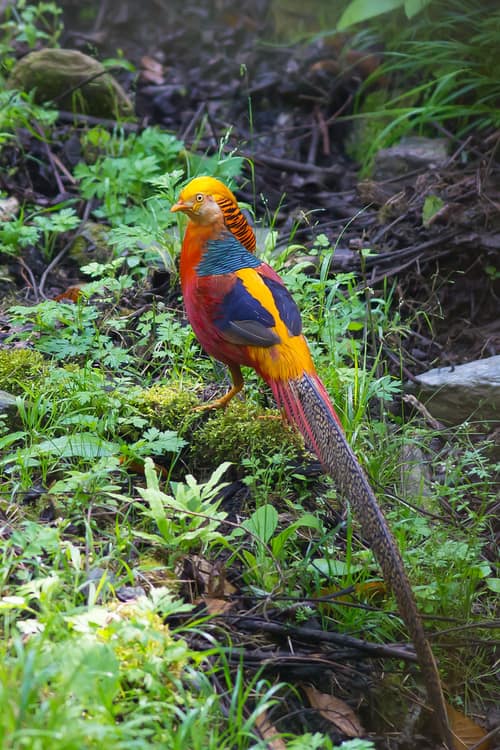
Co-occurring Gamebird "Golden Pheasant, Tangjiahe Nature Reserve, Sichuan, China" by jmhullot is licensed under CC BY 2.0. To view a copy of this license, visit https://creativecommons.org/licenses/by/2.0/. · cc-by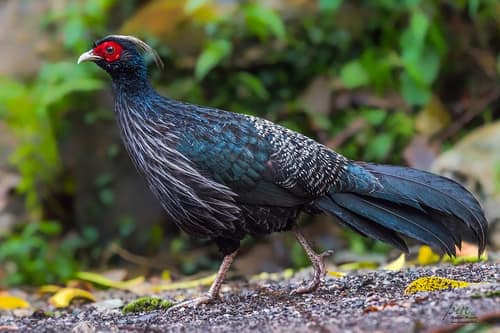
Close Relative Mprasannak / CC BY-SA 4.0 · cc-by-sa
Help improve the field guideSomething wrong?
Checking your Fauna account…Report a name, category, or profile issue for review.