
Bird · GBIF taxon 5227753
Cheer Pheasant
Catreus wallichiiAlso known as Wallich's Pheasant, Chir Pheasant
Cheer pheasants inhabit precipitous, grass-covered cliffs and ravine edges across the western Himalayas, where their mottled buff plumage offers immaculate camouflage against dry tussocks. Unlike many ornate pheasants, pairs form monogamous bonds and frequently announce territories at sunrise with loud, shrieking duet calls that reverberate across deep montane valleys. They forage actively by excavating roots, tubers, and buried invertebrates from steep rocky slopes using heavy, downcurved bills.
HimalayanMontaneMonogamous
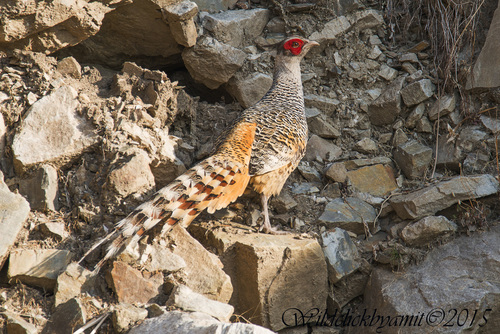
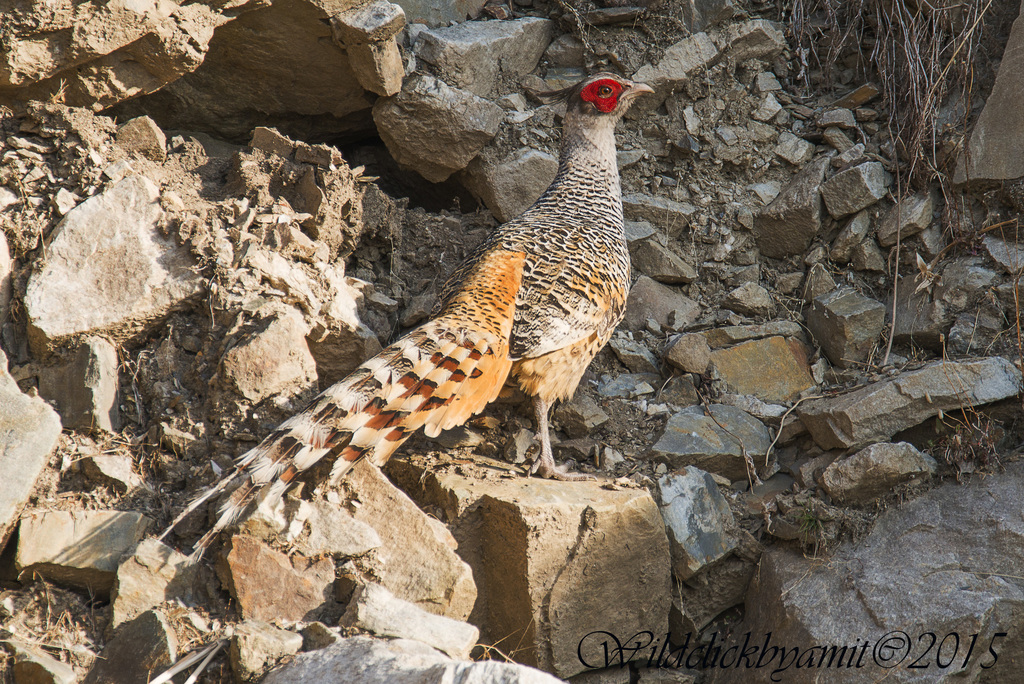
Licensed reference(c) Amit3333in, some rights reserved (CC BY-SA) · cc-by-sa
—observations
—countries
—peak records
VulnerableConservation statusIUCN Red List categoriesLCNTVUENCREWEXVulnerableRed List categories, explained →
Diet & prey
- Wild roots and tubers
- Grass seeds
- Ground beetles
Predators
- Golden Eagle
- Red Fox
- Himalayan Wolf
ThreatsHabitat loss from overgrazing, grass burning, human disturbance, and hunting
HabitatsSteep rocky crags, scrubby ravine banks, and grassy montane slopes (1,200–3,000 m)
Life span5–8 years (wild), up to 12 years (captivity)
Classification
- FamilyPhasianidae
- SpeciesCatreus wallichii
Range data is not available yet.
Interaction riskLow
- Low
- Moderate
- High
- Very high
- Why interaction risk is low
- Safe to observe at a normal distance.
- What to notice
- Look for a slender, buff-and-grey barred body, an exceptionally long pointed tail, and vivid red facial skin.
- Support conservation
- Maintain distance using a spotting scope, remain strictly on marked trails, and avoid playing playback calls during breeding season.
Responsible observation
- Listen at Dawn: Scan steep grassy cliffs early in the morning when pairs emit loud, echoing chorus calls.
- Watch from Above: Search rugged, south-facing slopes with binoculars to avoid flushing birds down inaccessible ravines.
- Respect Nesting Season: Keep clear of steep grass tussocks in spring where females conceal ground clutches.
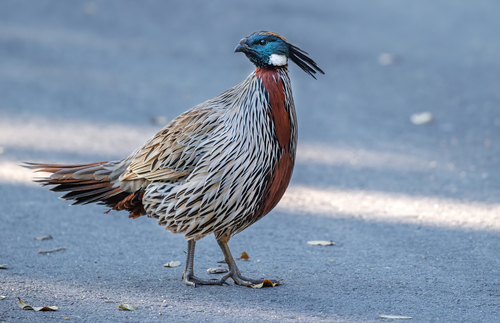
Neighbor (c) Morten Ross, some rights reserved (CC BY), uploaded by Morten Ross · cc-by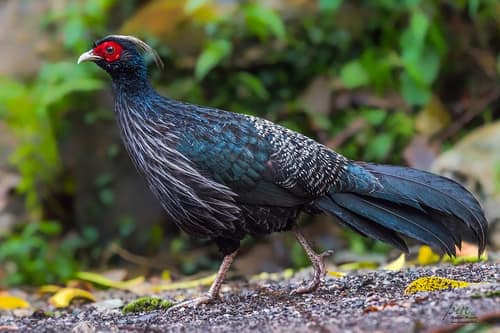
Same Family Mprasannak / CC BY-SA 4.0 · cc-by-sa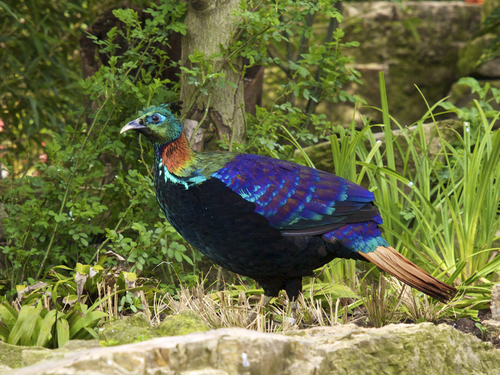
Same Family (c) Jörg Hempel, some rights reserved (CC BY-SA) · cc-by-sa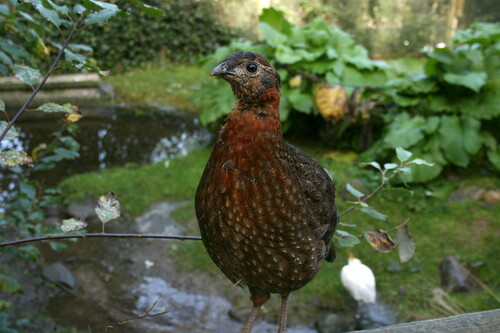
Same Family (c) Frank Vincentz, some rights reserved (CC BY-SA) · cc-by-sa
Help improve the field guideSomething wrong?
Checking your Fauna account…Report a name, category, or profile issue for review.