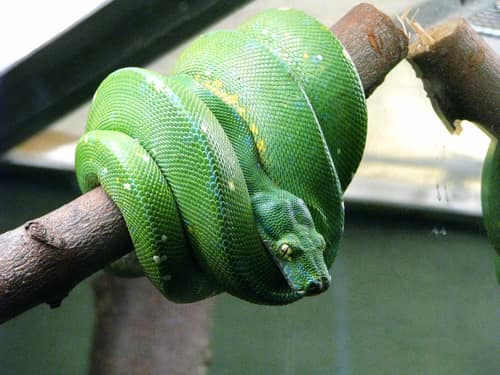
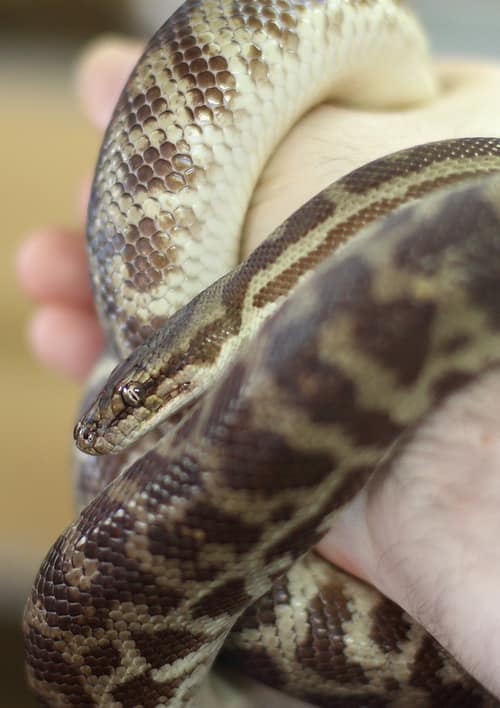
Also known as Carpet Snake, Diamond Python, Coastal Carpet Python, Jungle Carpet Python
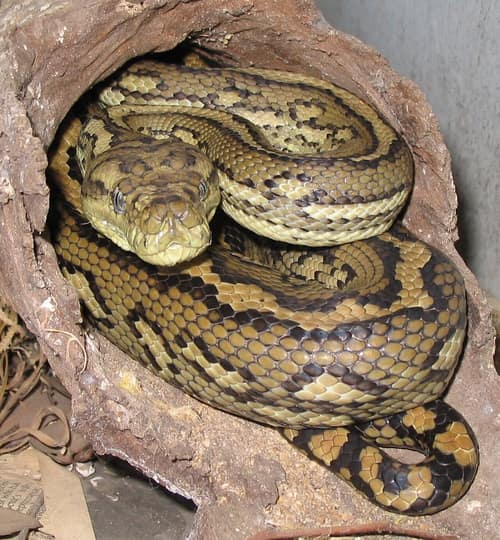
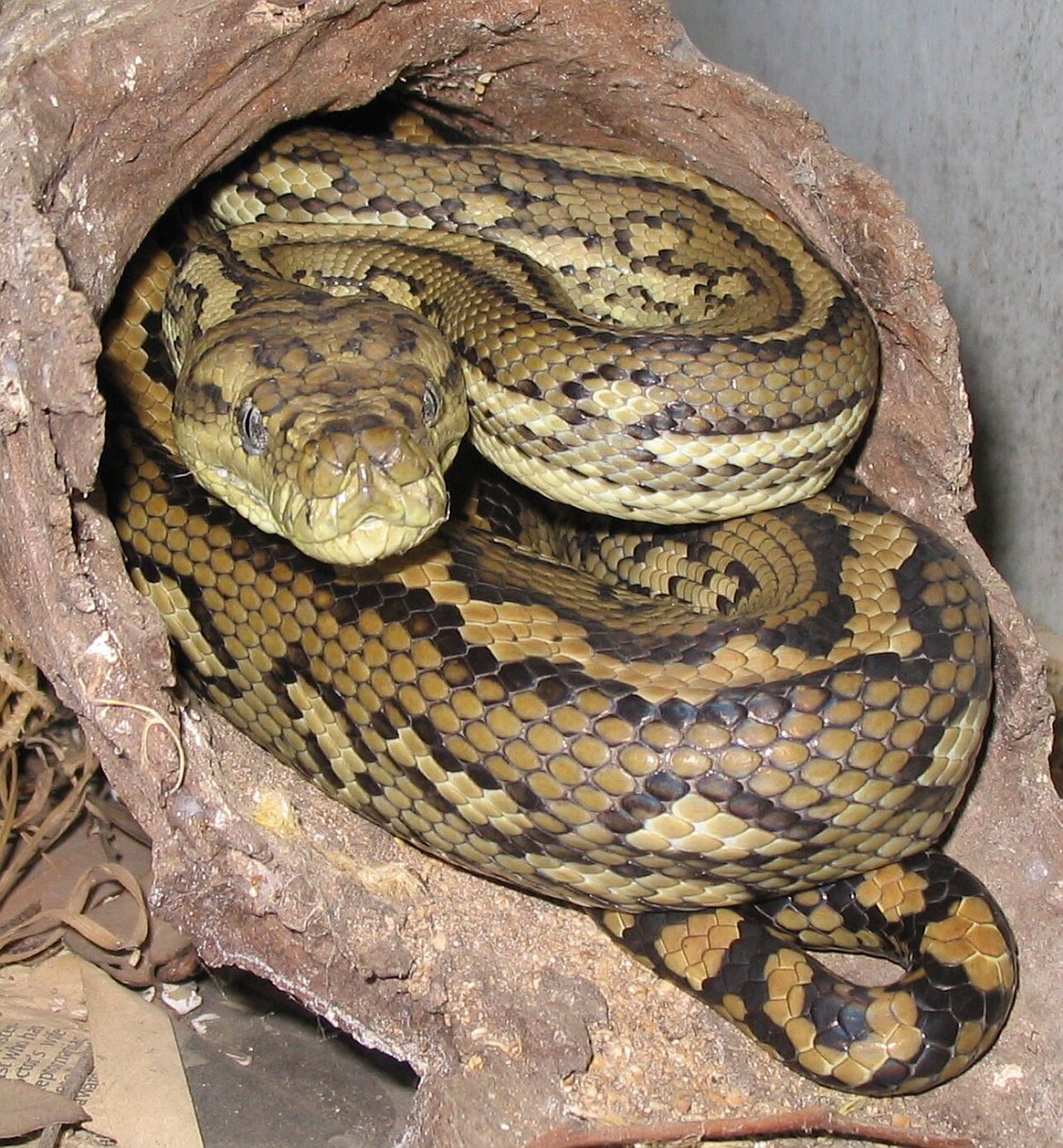
Carpet pythons are highly adaptable, semi-arboreal constrictors famous for their intricate, carpet-like markings that provide excellent camouflage in forest canopies and rocky outcrops. These nocturnal hunters spend their days coiled in tree hollows, rafters, or rock crevices, emerging at night to ambush warm-blooded prey using heat-sensing pits along their lips. They are incredibly resilient, frequently coexisting with humans in suburban areas where they help control rodent populations.
ThreatsHabitat destruction, road mortality, cane toad ingestion, and persecution by humans
HabitatsRainforests, dry sclerophyll forests, woodlands, shrublands, and suburban areas
Life span15 to 20 years in the wild, up to 30 years in captivity
Size / weightNot available
Classification
FamilyPythonidae
SpeciesMorelia spilota
Range & activity
Range data is not available yet.
Safe observation
Interaction riskLow
Low
Moderate
High
Very high
Why interaction risk is low
Non-venomous but can deliver a painful defensive bite; observe from a respectful distance.
Why it is dangerous
Equipped with dozens of sharp, backward-curving teeth designed to hold prey, which can inflict deep, lacerating bites that easily become infected.
How to recognize a risky encounter
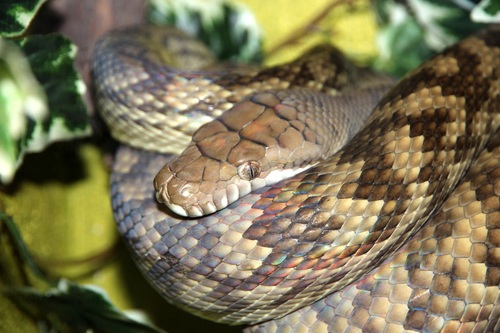
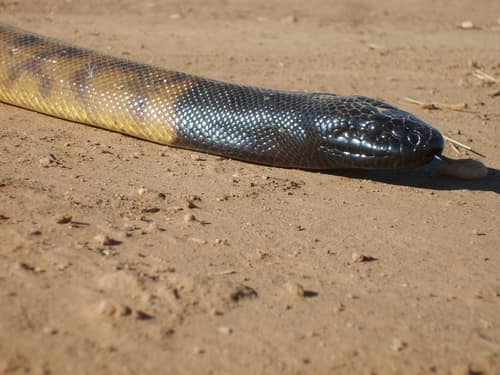
Look for a thick-bodied snake with highly variable, intricate dark and light patterns, heat-sensing pits on the lower jaw, and a distinct triangular head.
What to do
Never attempt to catch, corner, or handle a wild python; contact a licensed snake catcher for relocation if necessary.
Responsible observation
Give them space: Coiled snakes in roof spaces or trees are best left alone to move on naturally.
Watch for warning signs: A snake holding its neck in an S-curve is feeling threatened and ready to strike.
Secure your pets: Keep small domestic pets indoors at night if a resident python is nearby.