
Reptile
Alligator Snapping Turtle
Macrochelys temminckiiAlso known as Alligator Snapper
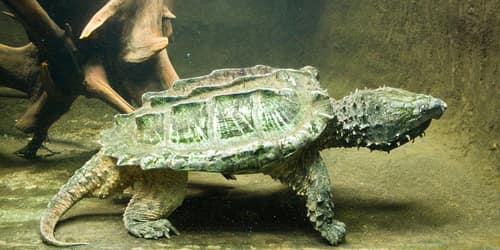
Alligator snapping turtles feature massive heads, hooked beaks, and three distinct spiked keels along their rough carapaces that give them a prehistoric appearance. Resting motionless on muddy river bottoms, these sit-and-wait predators open their jaws to display a pink, worm-like lure on the tip of their tongue to draw curious fish directly into range. Although formidable in water, females emerge onto land only once a year to dig deep sand nests and deposit their eggs.
AquaticCarnivorousReptile

—observations
—countries
—peak records
EndangeredConservation statusIUCN Red List categoriesLCNTVUENCREWEXEndangeredRed List categories, explained →
Diet & preyFish, Freshwater Mussels, Crayfish
Predators
- American Alligator
- Raccoon (eggs and hatchlings)
- Human
ThreatsHistoric commercial harvesting, habitat destruction, egg predation, and illegal collection
HabitatsDeep rivers, lakes, canals, and cypress swamps
Life span40–100 years
Classification
- FamilyChelydridae
- GenusMacrochelys
- SpeciesMacrochelys temminckii
Range data is not available yet.
Interaction riskHigh
- Low
- Moderate
- High
- Very high
- Why interaction risk is high
- Powerful jaws can cause severe bone-breaking injuries; keep a safe distance and never attempt to handle.
- Why it is dangerous
- Strong jaw muscles paired with a sharp, hooked beak create enormous crushing force capable of severing fingers or causing severe tissue lacerations.
- How to recognize a risky encounter
- Distinguished by three high, jagged ridges along the shell, a huge head with a strongly hooked beak, and a rough tail.
- What to do
- Observe from riverbanks or boats, and never approach or pick up an individual on land or in water.
- What to notice
- Look for a dark gray to brown, heavily armored turtle resting quietly on submerged logs or river bottoms in the southeastern United States.
- Support conservation
- Keep boat propellers clear of shallow sunning spots and avoid sharing exact location coordinates online.
Responsible observation
- Observation Etiquette: Watch quietly from a riverbank or boat without making sudden splashes that might startle or lure the turtle.
- Boating Safety: Exercise caution when navigating shallow channels where adults may swim near the surface or rest on submerged logs.
- Handling Warning: Do not attempt to move or rescue adults on land, as their long necks can strike far across their carapace.
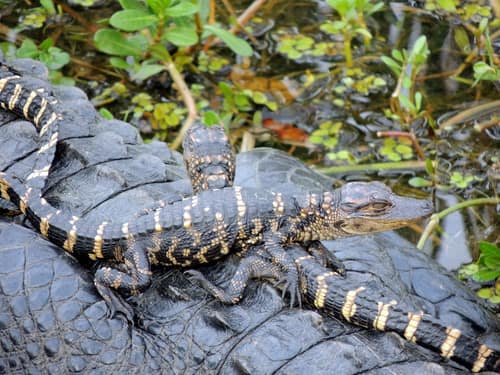
Co-occurring Predator no rights reserved, uploaded by Vijay Barve · cc0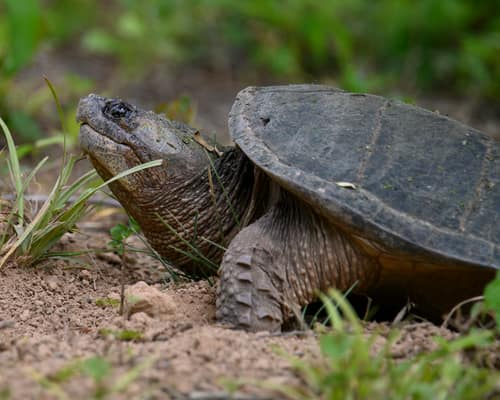
Close Relative (c) lwolfartist, some rights reserved (CC BY) · cc-by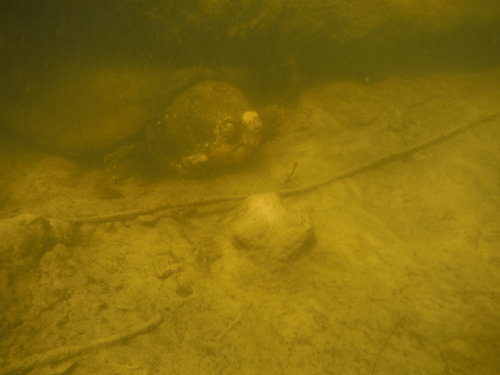
Genus Relative (c) Maddie Castilla, some rights reserved (CC BY) · cc-by
Help improve the field guideSomething wrong?
Checking your Fauna account…Report a name, category, or profile issue for review.