
Reptile
Common Snapping Turtle
Chelydra serpentinaAlso known as Snapper, Common Snapper
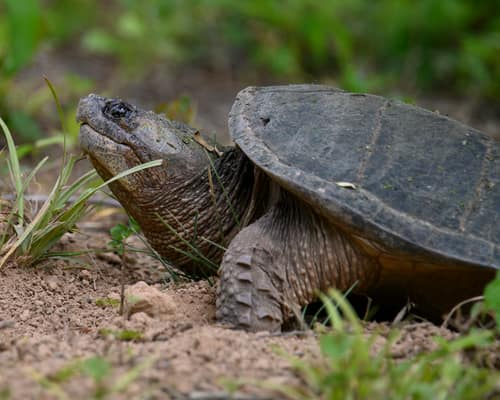
Common snapping turtles spend most of their lives submerged in muddy freshwater habitats, lying in wait for prey or scavenging along the lakebed. On land, particularly during late spring when females trek to find sandy nesting sites, their small lower shell leaves them feeling exposed and quick to strike defensively. A long, saw-toothed tail and muscular neck give them a prehistoric appearance as effective aquatic predators.
FreshwaterReptileAquatic

—observations
—countries
—peak records
Least ConcernConservation statusIUCN Red List categoriesLCNTVUENCREWEXLeast ConcernRed List categories, explained →
Diet & preyFish, Aquatic Plants, Crayfish
Predators
- Raccoons
- Crows
- Large Fish
ThreatsRoad mortality, habitat destruction, egg predation
HabitatsPonds, lakes, slow rivers, and marshes
Life span30–50 years
Classification
- FamilyChelydridae
- GenusChelydra
- SpeciesChelydra serpentina
Range data is not available yet.
Interaction riskLow
- Low
- Moderate
- High
- Very high
- Why interaction risk is low
- Delivers a powerful bite with a surprisingly long neck reach; keep well back from land-crossing individuals.
- Why it is dangerous
- Powerful jaw pressure combined with a flexible neck reaching past mid-body can cause severe lacerations or fractures.
- How to recognize a risky encounter
- Identified by a dark rough carapace, saw-toothed tail ridge, reduced cross-shaped belly shell, and large triangular head.
- What to do
- Never lift by the tail; keep a safe distance or use a thick snow shovel to push them across roads in their direction of travel.
Responsible observation
- Observe from Water: In water, these turtles are docile and usually swim away rather than confront humans.
- Assist on Land: If moving one off a road, nudge gently from behind using a shovel or heavy board.
- Avoid the Tail: Never pick up a snapper by its tail, which can severely dislocate its vertebrae.
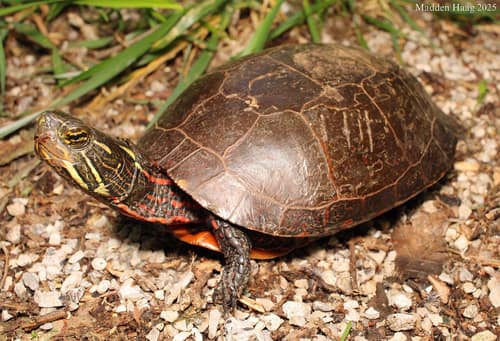
Frequent Companion MH Herpetology / CC BY-SA 4.0 · cc-by-sa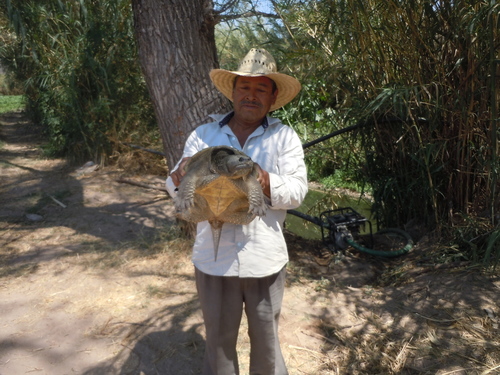
Close Relative (c) Eugenio Padilla, some rights reserved (CC BY-SA), uploaded by Eugenio Padilla · cc-by-sa
Help improve the field guideSomething wrong?
Checking your Fauna account…Report a name, category, or profile issue for review.