
Reptile · GBIF taxon 5220318
Alligator Snapping Turtle
Macrochelys temminckiiAlso known as Alligator Snapper
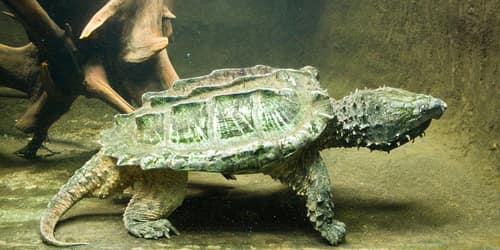
Alligator snapping turtles feature massive heads, hooked beaks, and three distinct spiked keels along their rough carapaces that give them a prehistoric appearance. Resting motionless on muddy river bottoms, these sit-and-wait predators open their jaws to display a pink, worm-like lure on the tip of their tongue to draw curious fish directly into range. Although formidable in water, females emerge onto land only once a year to dig deep sand nests and deposit their eggs.
AquaticCarnivorousReptile

—observations
—countries
—peak records
EndangeredConservation statusIUCN Red List categoriesLCNTVUENCREWEXEndangeredRed List categories, explained →
Diet & prey
- Fish
- Freshwater Mussels
- Crayfish
Predators
- American Alligator
- Raccoon (eggs and hatchlings)
- Human
ThreatsHistoric commercial harvesting, habitat destruction, egg predation, and illegal collection
HabitatsDeep rivers, lakes, canals, and cypress swamps
Life span40–100 years
Size / weightNot available
Classification
- FamilyChelydridae
- GenusMacrochelys
- SpeciesMacrochelys temminckii
Range data is not available yet.
Interaction riskHigh
- Low
- Moderate
- High
- Very high
- Why interaction risk is high
- Powerful jaws can cause severe bone-breaking injuries; keep a safe distance and never attempt to handle.
- Why it is dangerous
- Strong jaw muscles paired with a sharp, hooked beak create enormous crushing force capable of severing fingers or causing severe tissue lacerations.
- How to recognize a risky encounter
- Distinguished by three high, jagged ridges along the shell, a huge head with a strongly hooked beak, and a rough tail.
- What to do
- Observe from riverbanks or boats, and never approach or pick up an individual on land or in water.
- What to notice
- Look for a dark gray to brown, heavily armored turtle resting quietly on submerged logs or river bottoms in the southeastern United States.
- Support conservation
- Keep boat propellers clear of shallow sunning spots and avoid sharing exact location coordinates online.
Responsible observation
- Observation Etiquette: Watch quietly from a riverbank or boat without making sudden splashes that might startle or lure the turtle.
- Boating Safety: Exercise caution when navigating shallow channels where adults may swim near the surface or rest on submerged logs.
- Handling Warning: Do not attempt to move or rescue adults on land, as their long necks can strike far across their carapace.
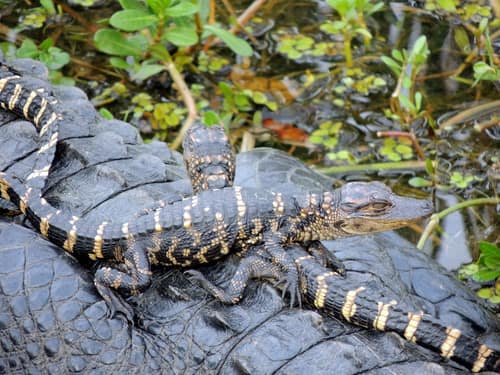
Co-occurring Predator no rights reserved, uploaded by Vijay Barve · cc0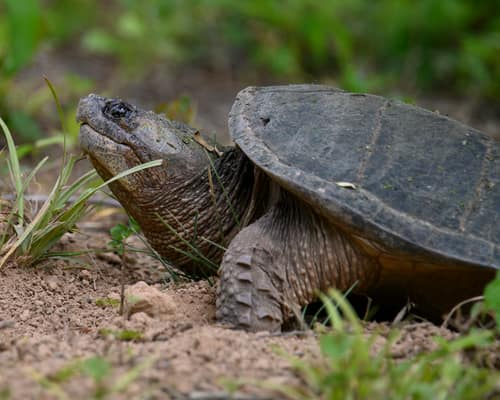
Close Relative (c) lwolfartist, some rights reserved (CC BY) · cc-by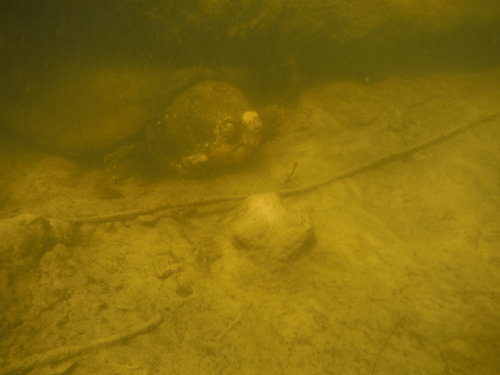
Genus Relative (c) Maddie Castilla, some rights reserved (CC BY) · cc-by
Help improve the field guideSomething wrong?
Checking your Fauna account…Report a name, category, or profile issue for review.