
Mammal
Bongo
Tragelaphus eurycerusAlso known as Eastern Bongo, Western Bongo, Forest Antelope
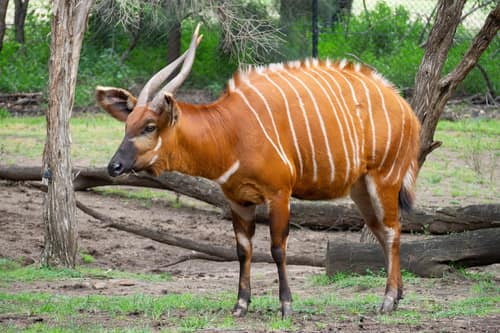
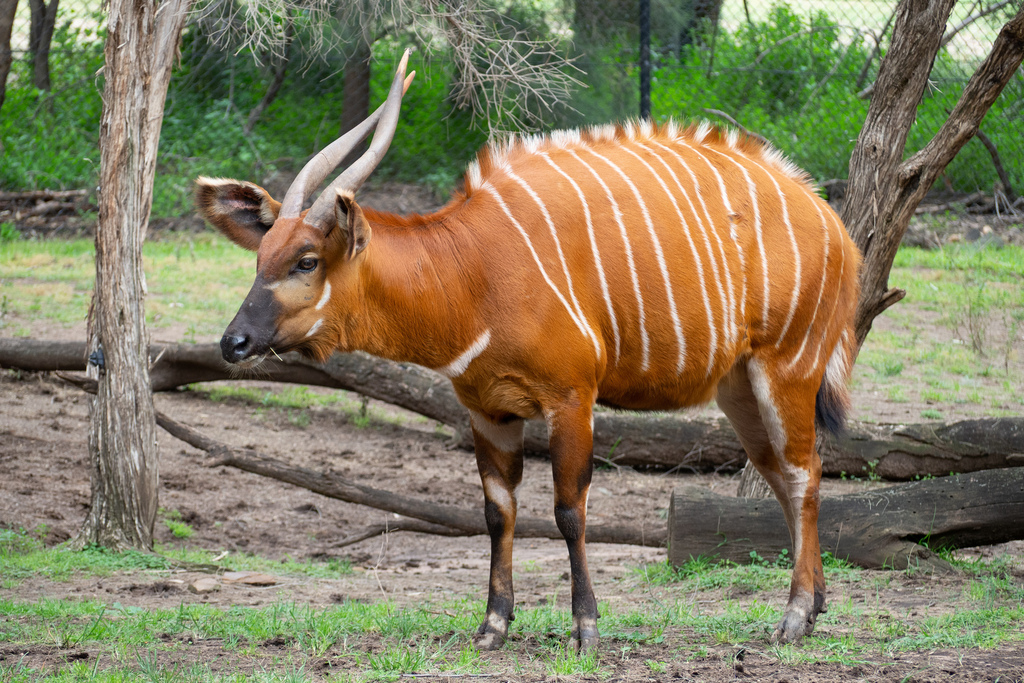
Bongos are the largest forest antelopes in the world, gliding through tangled equatorial undergrowth with their heads tilted back so their spiraled horns lie flat along their spines. They browse primarily at night and during twilight hours, using their long, prehensile tongues to strip leaves, tender shoots, and fallen fruit. While adult bulls live mostly solitary lives, females and young form nomadic nursery herds that communicate through soft grunts, bleats, and snorts deep within the forest canopy.
NocturnalForest DwellerHerbivore
—observations
—countries
—peak records
Near ThreatenedConservation statusIUCN Red List categoriesLCNTVUENCREWEXNear ThreatenedRed List categories, explained →
Diet & preyTree leaves, Bamboo shoots, Forest vines
Predators
- Leopard
- Spotted Hyena
- African Golden Cat
ThreatsHabitat fragmentation, deforestation, illegal bushmeat hunting, and disease transmission from livestock
HabitatsDense lowland tropical rainforests and montane bamboo forests
Life span15–20 years in the wild
Classification
- OrderArtiodactyla
- FamilyBovidae
- GenusTragelaphus
- SpeciesTragelaphus eurycerus
Range data is not available yet.
Interaction riskHigh
- Low
- Moderate
- High
- Very high
- Why interaction risk is high
- Large, powerful antelope with sharp spiraled horns; maintain distance and avoid cornering them.
- Why it is dangerous
- Weighing up to 400 kg and armed with heavy spiraled horns, a frightened or cornered bongo can gore or trample perceived threats.
- How to recognize a risky encounter
- Look for a bright chestnut coat patterned with 10 to 15 vertical white torso stripes and long spiraled lyrate horns present on both sexes.
- What to do
- Never approach closely or corner an animal on narrow forest pathways; retreat calmly if one shows agitation.
- What to notice
- Recognizable by large rounded ears, vivid auburn hide, and distinctive white facial chevrons in dense African highland or lowland jungle.
- Support conservation
- Stick to designated wildlife tracks with licensed guides to prevent disturbing sensitive feeding grounds and mineral licks.
Responsible observation
- Observation Timing: Scan dense forest clearings and natural salt licks during dawn and dusk hours.
- Distance: Maintain a respectful buffer of at least 30 meters, as startled adults can charge.
- Noise Level: Move silently on forest trails, since their exceptionally large ears detect faint sounds easily.
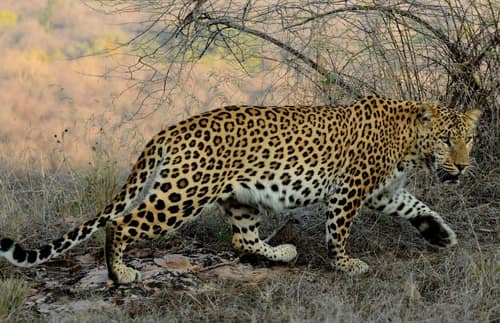
Predator (c) Raja bandi, some rights reserved (CC BY), uploaded by Raja bandi · cc-by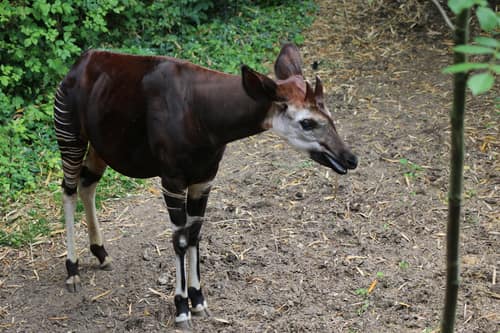
Neighbor (c) Melvin TOULLEC, some rights reserved (CC BY-SA) · cc-by-sa
Close Relative (c) 116916927065934112165, some rights reserved (CC BY), uploaded by 116916927065934112165 · cc-by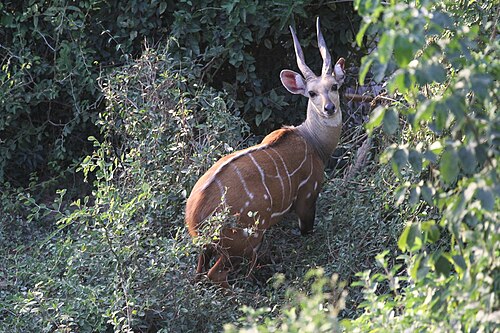
Close Relative Lucy Keith-Diagne / CC BY 4.0 · cc-by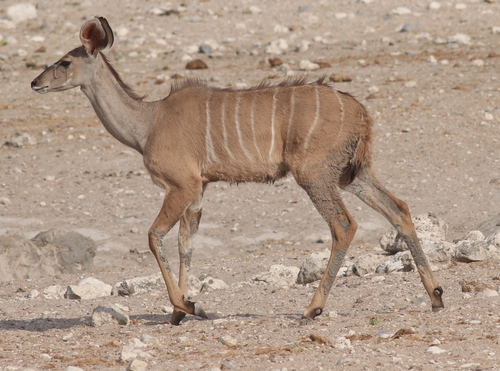
Close Relative (c) Jan Ebr & Ivana Ebrová, some rights reserved (CC BY), uploaded by Jan Ebr & Ivana Ebrová · cc-by
Help improve the field guideSomething wrong?
Checking your Fauna account…Report a name, category, or profile issue for review.