
Mammal · GBIF taxon 5220177
Lesser Kudu
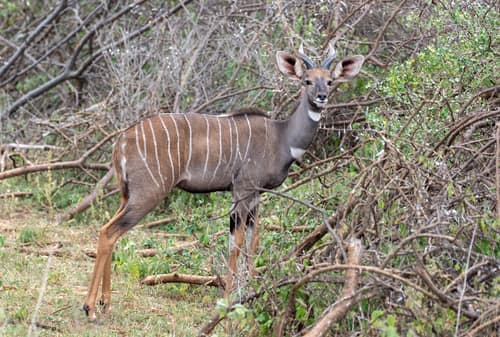
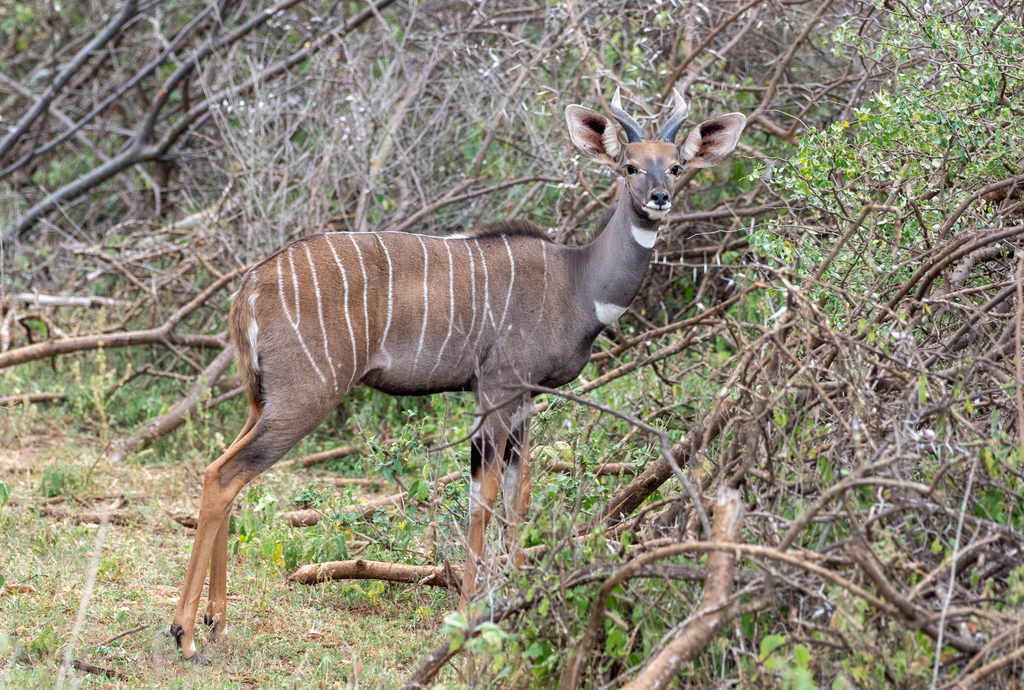
Tragelaphus imberbisLesser kudus move like ghosts through dense East African thornbush, relying on 11 to 14 vivid white vertical stripes to break up their outline in dappled sunlight. Males sport elegant spiral horns and two conspicuous white patches on the throat and neck, while remaining mostly solitary or forming small bachelor herds. Extremely alert and shy, these browsers leap over high obstacles with graceful bounds when alarmed, giving off a sharp bark to warn others.
AntelopeStripedCrepuscular
—observations
—countries
—peak records
Near ThreatenedConservation statusIUCN Red List categoriesLCNTVUENCREWEXNear ThreatenedRed List categories, explained →
Diet & prey
- Herbivorous (leaves, shoots, fruits, and foliage)
Predators
- Leopards
- Lions
- Wild Dogs
ThreatsPoaching, habitat loss, and competition with livestock
HabitatsArid acacia bushland and dry thorn scrub
Life span10–15 years
Size / weightNot available
Classification
- OrderArtiodactyla
- FamilyBovidae
- GenusTragelaphus
- SpeciesTragelaphus imberbis
Range data is not available yet.
Interaction riskHigh
- Low
- Moderate
- High
- Very high
- Why interaction risk is high
- Maintain a safe distance during wildlife encounters; wild ungulates may defend themselves with sharp horns if cornered.
- What to notice
- Recognized by slender build, 11 to 14 bright white side stripes, and twisted male horns.
- Support conservation
- Stay on designated roads in national parks and avoid approaching animals on foot.
Responsible observation
- Scan the Thickets: Look for white stripes and throat patches motionless inside shady acacia brush.
- Watch the Twilight: Search along scrubland edges at dawn and dusk when browsing activity peaks.
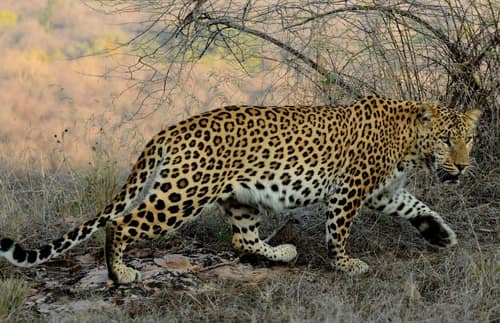
Predator (c) Raja bandi, some rights reserved (CC BY), uploaded by Raja bandi · cc-by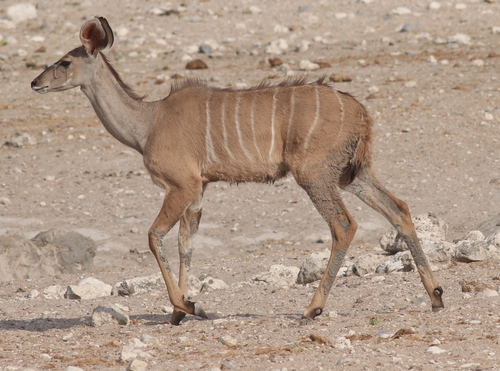
Close Relative (c) Jan Ebr & Ivana Ebrová, some rights reserved (CC BY), uploaded by Jan Ebr & Ivana Ebrová · cc-by
Help improve the field guideSomething wrong?
Checking your Fauna account…Report a name, category, or profile issue for review.