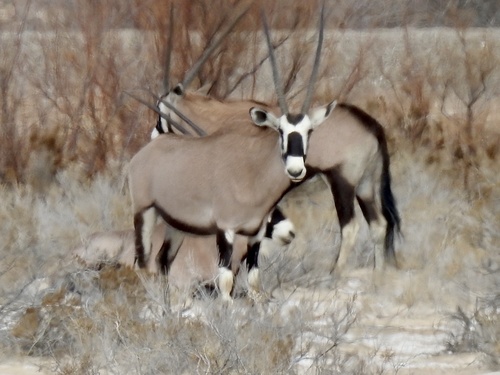
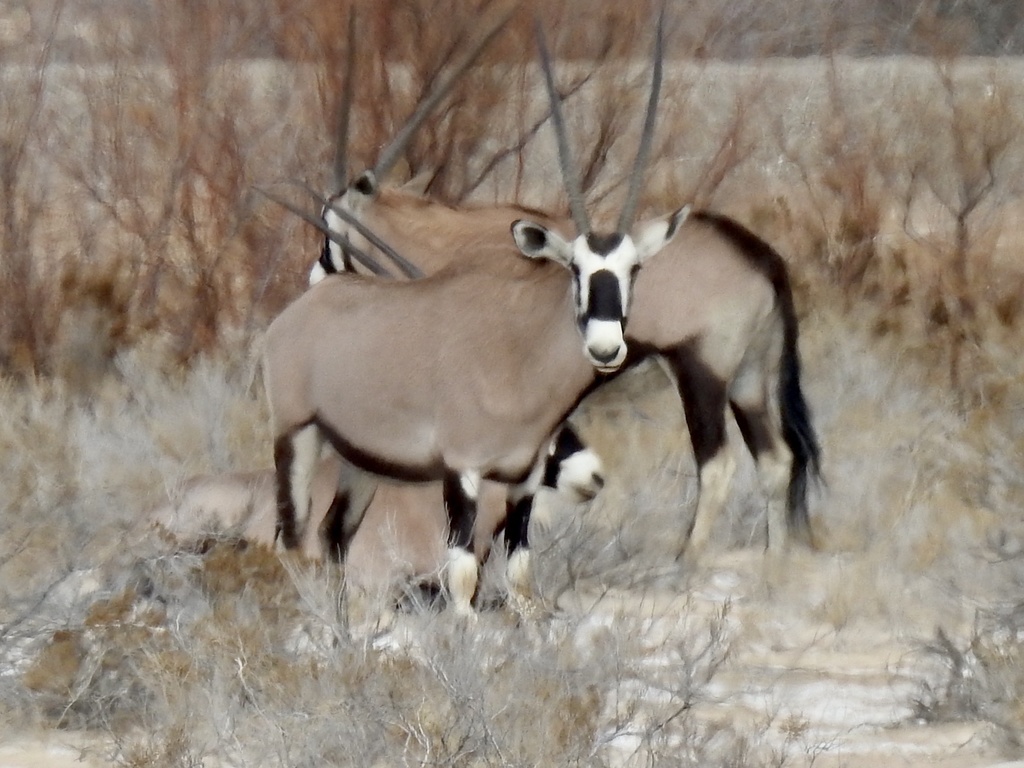
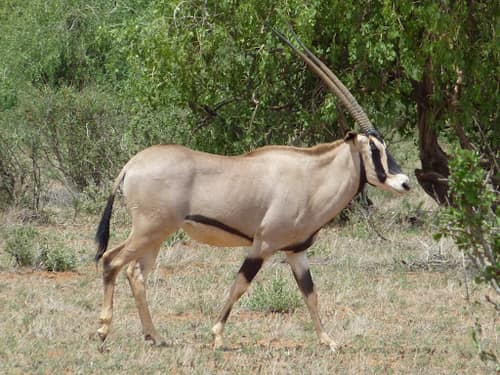
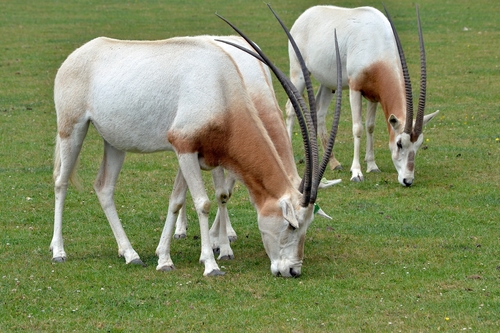
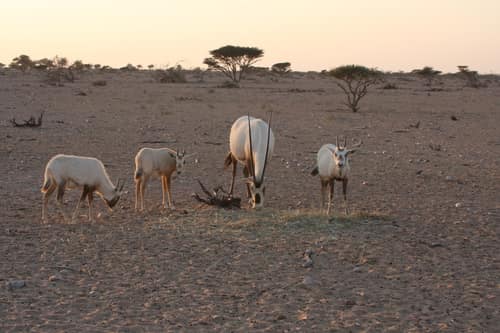
Gemsbok thrive in hyper-arid desert terrain by extracting moisture from wild melons and succulent roots, allowing them to survive for weeks without drinking surface water. Both sexes carry formidable, spear-like horns that can exceed eighty centimeters in length, which they use with lethal precision against large predators. In extreme heat, specialized blood vessels in their nasal passages cool circulating blood before it reaches the brain, keeping core body functions stable during scorching desert afternoons.
ThreatsFencing that blocks nomadic migration routes, localized hunting, and prolonged severe drought
HabitatsArid savanna, sand dunes, desert shrubland, and gravel plains
Life span15–20 years
Classification
FamilyBovidae
SpeciesOryx gazella
Range & activity
Range data is not available yet.
Safe observation
Interaction riskHigh
Low
Moderate
High
Very high
Why interaction risk is high
Powerful horns can cause fatal puncture wounds: keep a generous distance and remain inside vehicles.
Why it is dangerous
Adult gemsbok weigh over two hundred kilograms and wield razor-sharp, straight horns capable of piercing skin and skewering large predators like lions.
How to recognize a risky encounter
Recognizable by dramatic black-and-white facial markings, a fawn-gray coat, black flank stripes, and long, straight rapier horns on both sexes.
What to do
Never approach on foot, and if a gemsbok lowers its head or turns side-on in a threat display, back away slowly without running.
Responsible observation
Vehicle Etiquette: Stay inside your safari vehicle, as gemsbok perceive open cars as neutral objects but view upright humans as threats.
Binocular Spotting: Scan dune ridges early in the morning, where herds stand silhouetted to catch cool breezes.
Breeding Season Space: Give solitary territorial bulls a wide berth, especially when they display side-on postures or thrash brush.