
Mammal · GBIF taxon 5220164
Arabian Oryx
Oryx leucoryxAlso known as White Oryx
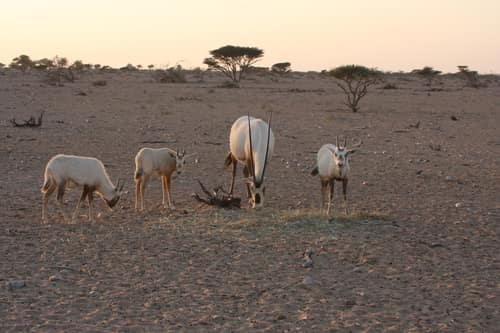
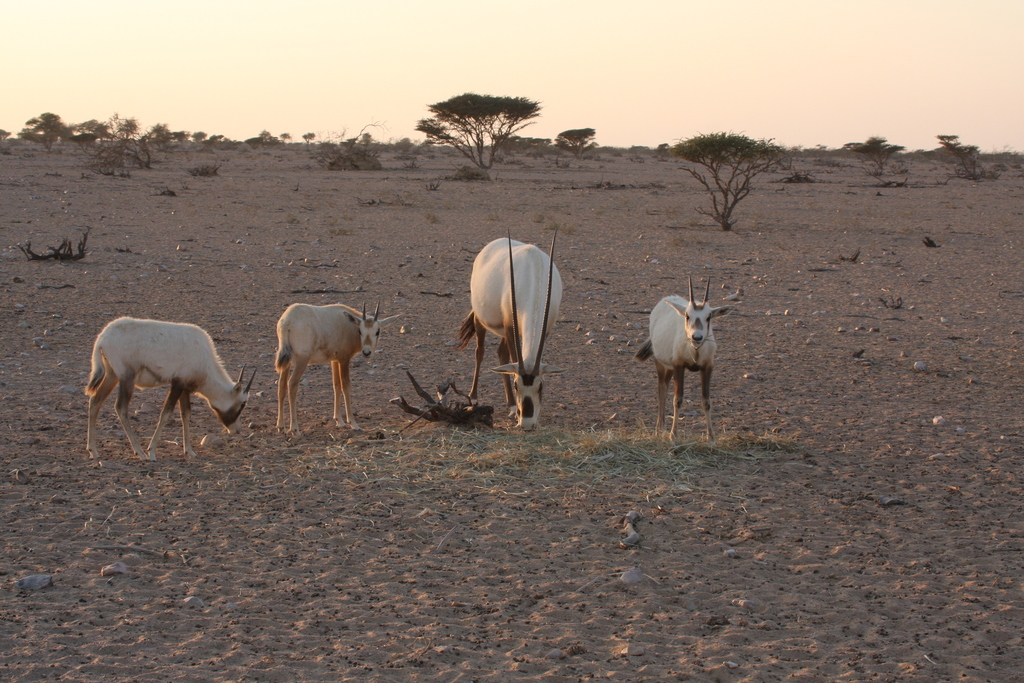
Luminous white coats reflect intense desert heat, while dark facial markings and long, spear-like horns give the Arabian oryx a striking silhouette across arid dunes. Highly adapted for hyper-arid survival, these antelopes can detect distant rainfall and travel tens of kilometers to feed on fresh plant growth. Herds move mostly during cooler night and dawn hours, resting under sparse acacia shade during the heat of the day.
DesertReintroducedHorned
—observations
—countries
—peak records
VulnerableConservation statusIUCN Red List categoriesLCNTVUENCREWEXVulnerableRed List categories, explained →
Diet & prey
- Desert grasses
- Tubers and roots
- Acacia leaves
Predators
- Arabian wolf
- Striped hyena
- Caracal
ThreatsHistorical overhunting, illegal poaching, habitat loss, and severe drought
HabitatsGravel plains, sand dunes, and arid steppe deserts
Life span15–20 years
Size / weightNot available
Classification
- FamilyBovidae
- SpeciesOryx leucoryx
Range data is not available yet.
Interaction riskHigh
- Low
- Moderate
- High
- Very high
- Why interaction risk is high
- Long sharp horns can inflict serious wounds if defensive; keep a respectful distance when observing.
- Why it is dangerous
- Possesses sharp, meter-long straight horns capable of inflicting deep puncture wounds when threatened or defending young.
- How to recognize a risky encounter
- Brilliant white body with long, needle-sharp parallel horns pointing backward over the shoulders.
- What to do
- Maintain a generous distance, never corner an individual, and remain inside guided vehicles during reserve visits.
- What to notice
- Distinctive white coat, contrasting black facial mask, dark leg boots, and long ringed horns up to one meter long.
- Support conservation
- Stay on marked roads in protected reserves, keep sound levels low, and never approach mothers with young calves.
Responsible observation
- Reserve Viewing: Search for herds early in the morning when individuals actively forage across open plains.
- Binoculars First: Maintain a distance of at least 50 meters to avoid startling resting groups.
- Vehicle Etiquette: Remain inside vehicles on designated tracks to avoid flushing animals into extreme heat.
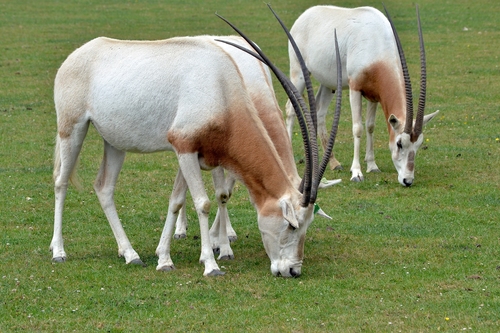
Close Relative (c) Chris K, some rights reserved (CC BY-SA) · cc-by-sa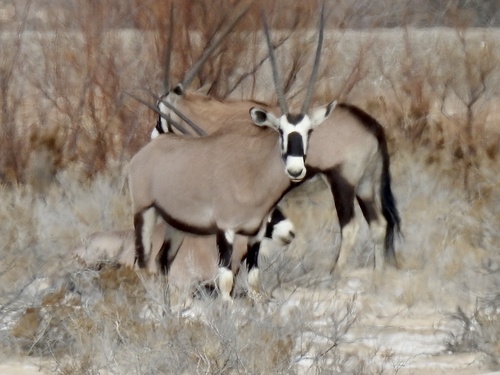
Close Relative (c) CK2AZ, some rights reserved (CC BY), uploaded by CK2AZ · cc-by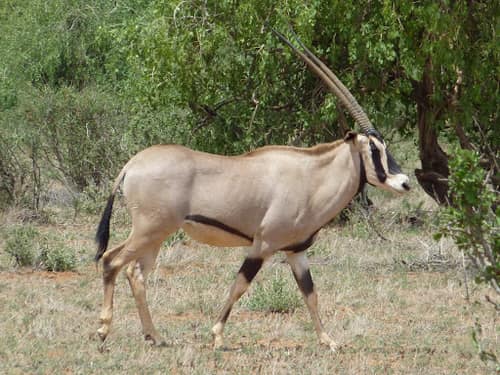
Close Relative (c) 116916927065934112165, some rights reserved (CC BY), uploaded by 116916927065934112165 · cc-by
Help improve the field guideSomething wrong?
Checking your Fauna account…Report a name, category, or profile issue for review.