
Mammal
Speke's Gazelle
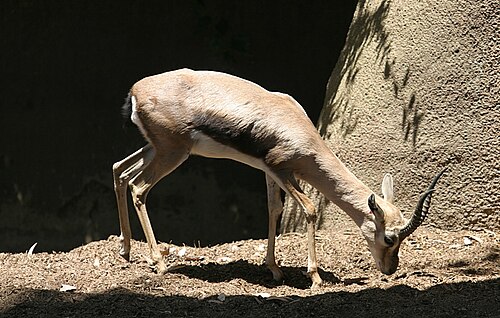
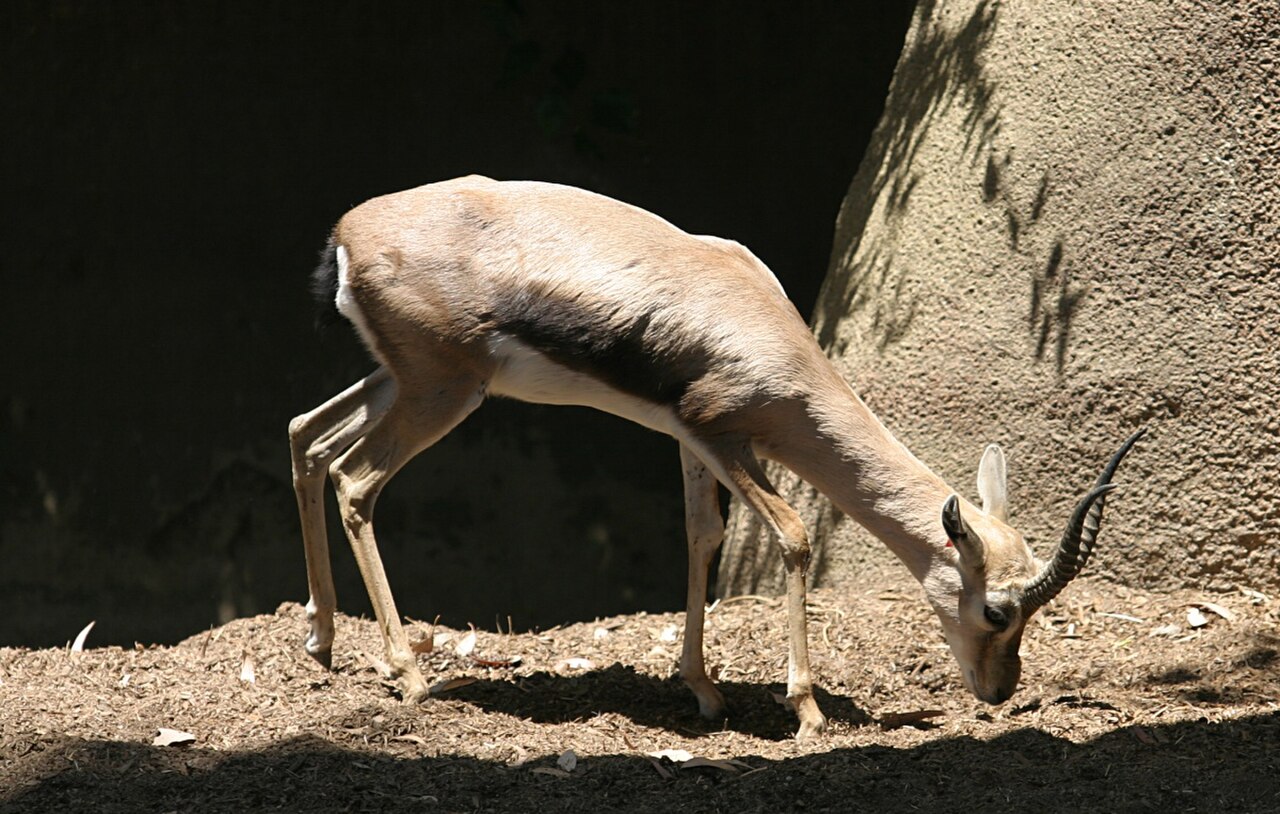
Gazella spekeiSpeke's gazelles adapt masterfully to the harsh, arid landscapes of the Horn of Africa, relying on moisture-rich vegetation to survive long dry spells. Unique among gazelles, both sexes possess an inflatable nasal sac that expands to produce loud, trumpet-like alarm calls when danger threatens. Small herds navigate stony brush and steppes, continuously scanning the open terrain for approaching predators.
Desert DwellerHerbivore
—observations
—countries
—peak records
EndangeredConservation statusIUCN Red List categoriesLCNTVUENCREWEXEndangeredRed List categories, explained →
Diet & preyDesert grasses, Acacia foliage, Low shrubs
Predators
- Cheetah
- Leopard
- Caracal
ThreatsHabitat fragmentation, overgrazing, hunting
HabitatsStony brush, grass steppes, semi-deserts
Life span10–12 years
Classification
- FamilyBovidae
- SpeciesGazella spekei
Range data is not available yet.
Interaction riskLow
- Low
- Moderate
- High
- Very high
- Why interaction risk is low
- Safe to observe at a normal distance.
- What to notice
- Recognized as the smallest gazelle, featuring ringed horns, a dark lateral stripe, and loose skin folds on the snout.
- Support conservation
- Observe from inside a vehicle or established path, avoiding any sudden movements that scatter herds.
Responsible observation
- Observation Distance: Maintain a respectful distance to avoid triggering herd alarm flights.
- Vocalization Cues: Listen for the resonant honking sound produced through their unique nasal sacs.
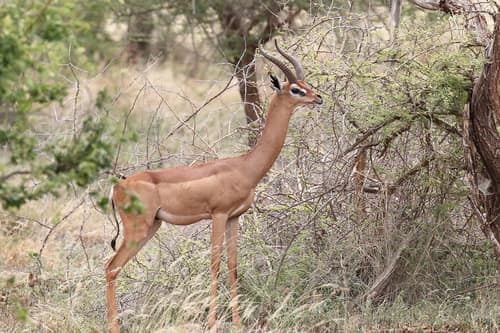
Frequent Companion (c) Fabrice Stoger, some rights reserved (CC BY-SA) · cc-by-sa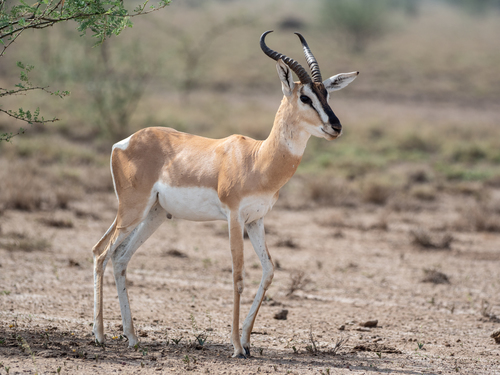
Competitor (c) Forest Botial-Jarvis, some rights reserved (CC BY), uploaded by Forest Botial-Jarvis · cc-by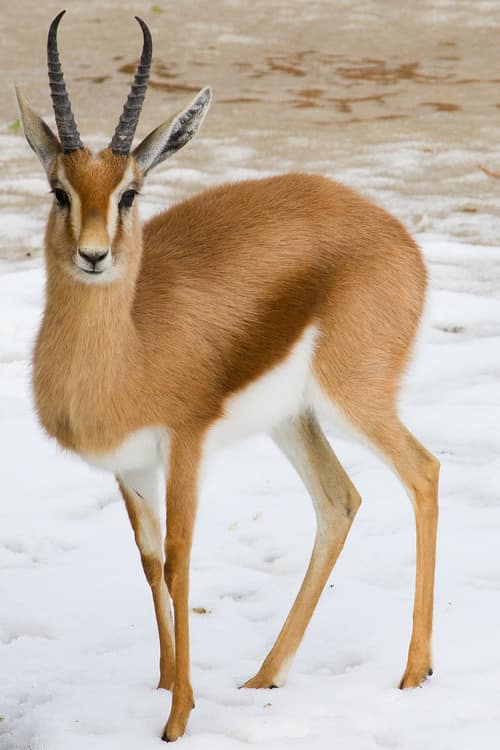
Close Relative Khendon / CC BY-SA 3.0 · cc-by-sa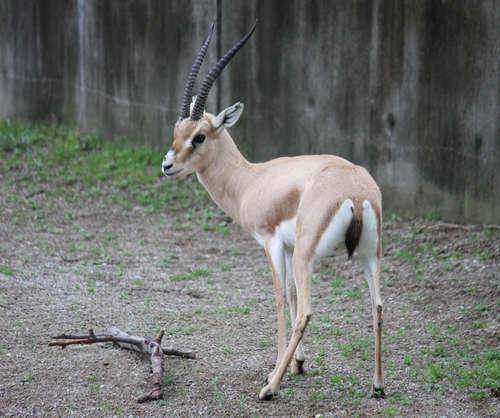
Close Relative (c) Ltshears, some rights reserved (CC BY-SA) · cc-by-sa
Help improve the field guideSomething wrong?
Checking your Fauna account…Report a name, category, or profile issue for review.