
Mammal · GBIF taxon 5219955
Water Opossum
Chironectes minimusAlso known as Yapok
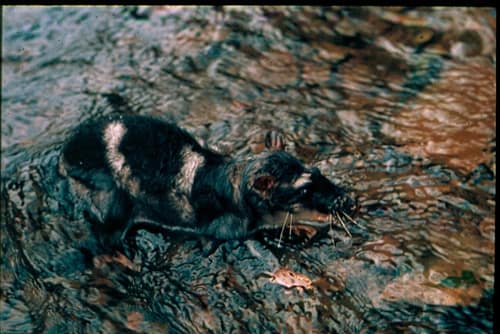
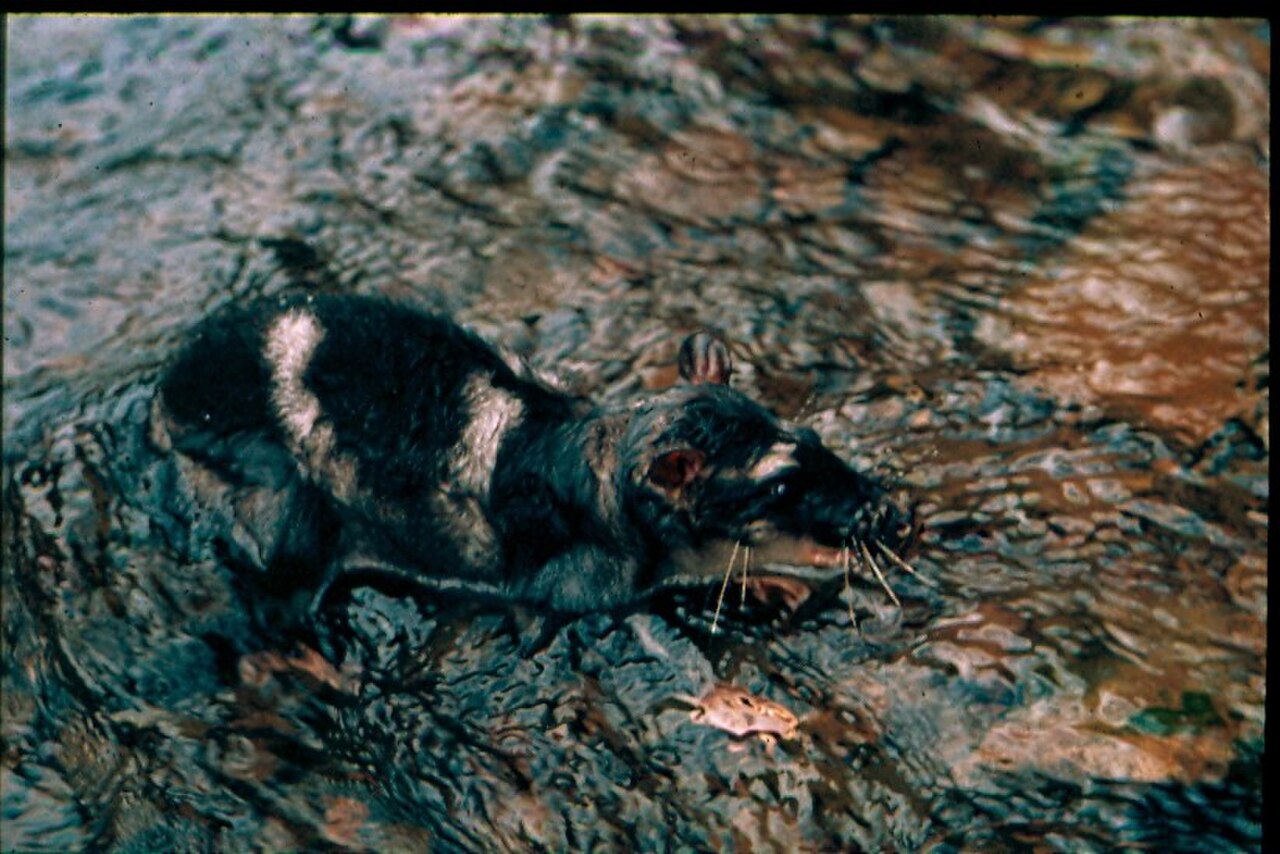
Water opossums navigate fast-flowing tropical streams using dense, water-repellent fur and broad, webbed hind feet. Females possess a specialized muscular sphincter that seals their pouch watertight, shielding altricial young even during extended underwater dives. Males also possess a unique pouch used to enclose and protect their external genitalia while swimming and foraging along rocky river bottoms.
SemiaquaticNocturnalCarnivore
—observations
—countries
—peak records
Least ConcernConservation statusIUCN Red List categoriesLCNTVUENCREWEXLeast ConcernRed List categories, explained →
Diet & prey
- Freshwater Crabs
- River Shrimp
- Small Fish
Predators
- Boa Constrictor
- Ocelot
- Spectacled Caiman
ThreatsRiver pollution, siltation, deforestation, and freshwater habitat disruption
HabitatsClear, fast-flowing freshwater streams, rivers, and lake margins in tropical rainforests
Life span3–5 years in the wild
Classification
- FamilyDidelphidae
- SpeciesChironectes minimus
Native
Interaction riskLow
- Low
- Moderate
- High
- Very high
- Why interaction risk is low
- Can inflict a defensive bite if cornered or handled; observe quietly from the stream bank.
- Why it is dangerous
- Possesses sharp teeth and claws capable of delivering painful punctures and lacerations if restrained.
- How to recognize a risky encounter
- Recognizable by striking broad black-and-grey saddle bands, fully webbed pink hind feet, and hairless tail.
- What to do
- Maintain distance along stream banks and never attempt to net or grasp animals in the water.
Responsible observation
- Night Spotting: Scan clear forest streams with a red light, watching for rhythmic surface ripples.
- Stream Bank Caution: Avoid trampling undercut riverbanks where daytime nesting burrows are concealed.
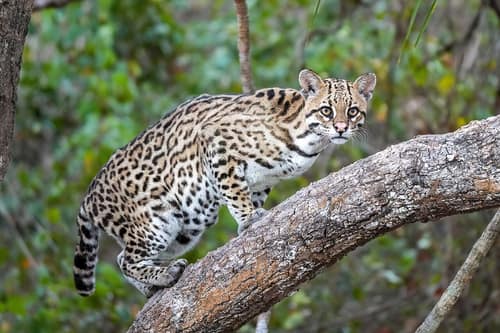
Predator Giles Laurent / CC BY-SA 4.0 · cc-by-sa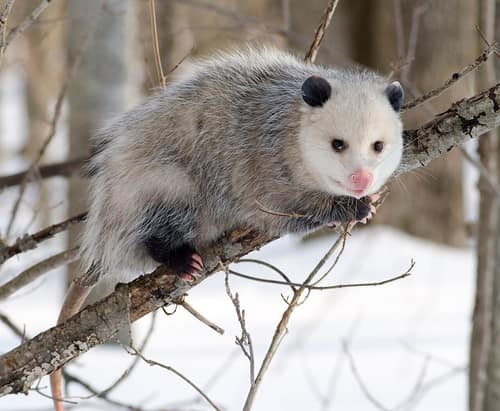
Same Family Cody Pope / CC BY-SA 2.5 · cc-by-sa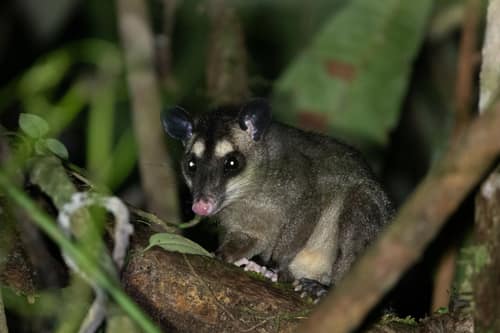
Same Family "black four-eyed opossums, gray four-eyed opossums" by Demian Hiß is licensed under CC BY 4.0. To view a copy of this license, visit http://creativecommons.org/licenses/by/4.0/. · cc-by
Help improve the field guideSomething wrong?
Checking your Fauna account…Report a name, category, or profile issue for review.