
Mammal · GBIF taxon 2439923
Virginia Opossum
Didelphis virginianaAlso known as North American Opossum, Possum
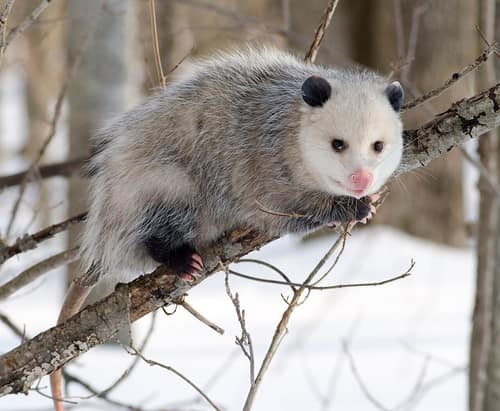
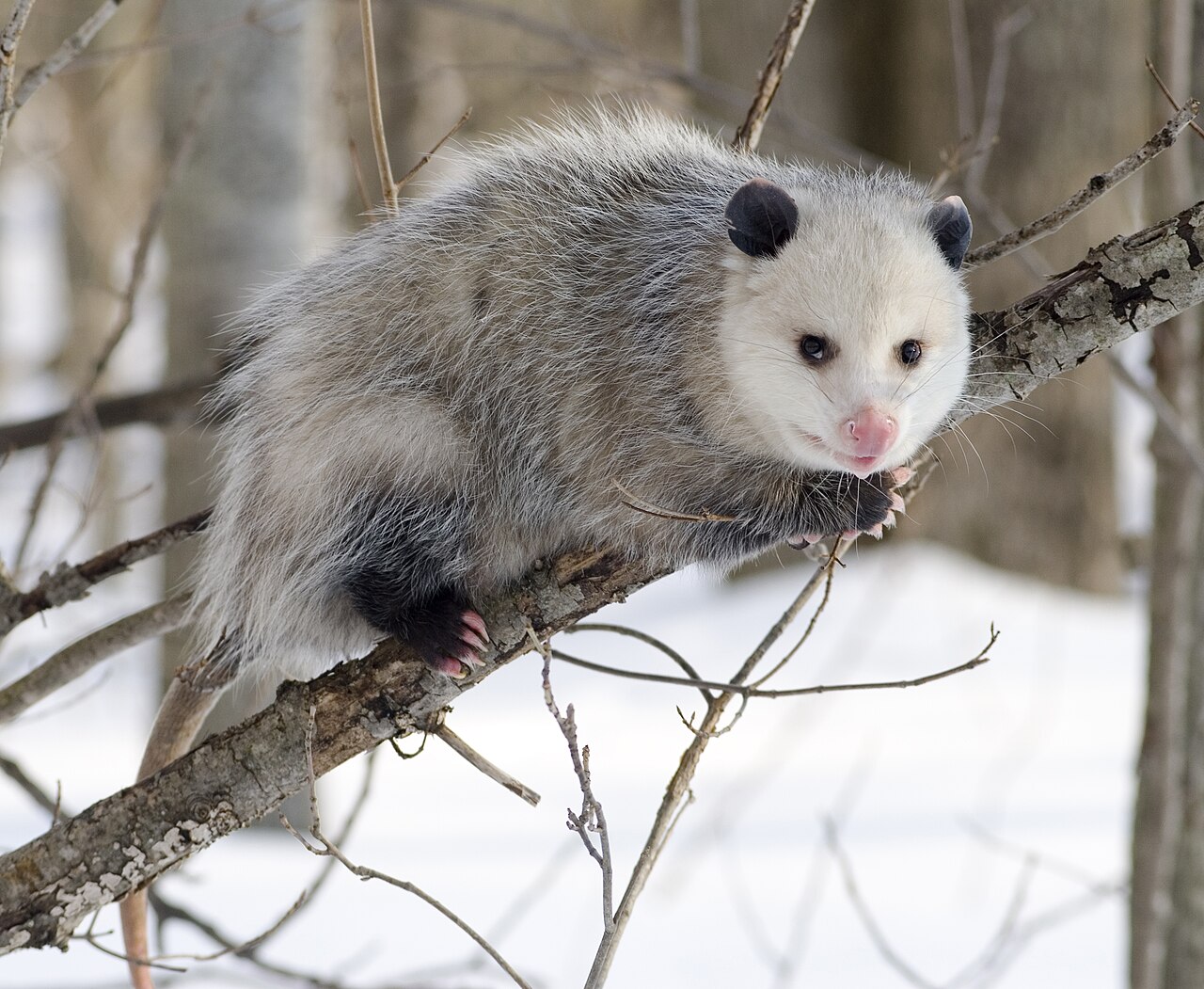
Virginia opossums are North America's only native marsupials, highly adaptable omnivores famous for their prehensile tails and unusual immunity to pit viper venom. Solitary and strictly nocturnal, females raise up to thirteen tiny joeys in a belly pouch before the young transition to riding on their mother's back. When faced with extreme stress or threats, they enter an involuntary, catatonic state known as playing dead to deter predators.
NocturnalMarsupialOmnivore
—observations
—countries
—peak records
Least ConcernConservation statusIUCN Red List categoriesLCNTVUENCREWEXLeast ConcernRed List categories, explained →
Diet & prey
- Blacklegged Tick
- June Beetle
- Meadow Vole
Predators
- Coyote
- Great Horned Owl
- Domestic Dog
ThreatsVehicular collisions, frostbite, predation by domestic dogs and coyotes
HabitatsDeciduous forests, suburban neighborhoods, agricultural fields, wetlands
Life span1–2 years in the wild
Classification
- OrderDidelphimorphia
- FamilyDidelphidae
- GenusDidelphis
- SpeciesDidelphis virginiana
Native
Interaction riskLow
- Low
- Moderate
- High
- Very high
- Why interaction risk is low
- May hiss and bare teeth or bite if cornered; observe from a safe distance without handling.
- Why it is dangerous
- Possesses fifty sharp teeth and powerful jaw muscles capable of inflicting painful bite wounds when threatened or seized.
- How to recognize a risky encounter
- Recognizable by a pointed white face, coarse grey fur, dark hairless ears, and a scaly prehensile tail.
- What to do
- Maintain a safe distance and allow the animal an unobstructed route to slip away into cover.
Responsible observation
- Garden ally: Welcome them in yards, as a single opossum can consume thousands of ticks every summer.
- Give space: If an opossum open-mouth hissed or played dead, back away and let it recover in peace.
- Pet precautions: Bring pet food indoors overnight and keep dogs leashed during evening walks.
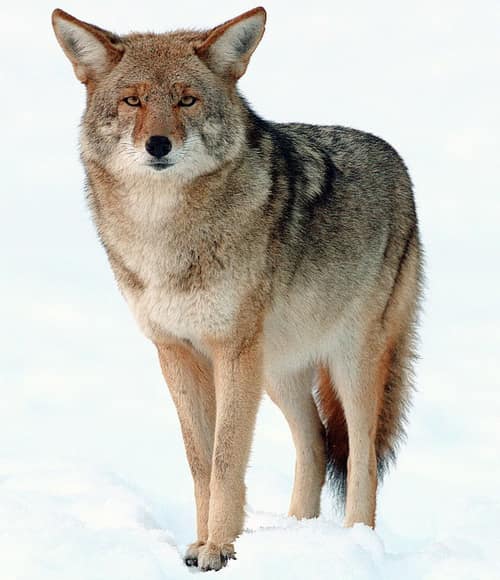
Predator Yathin S Krishnappa / CC BY-SA 3.0 · cc-by-sa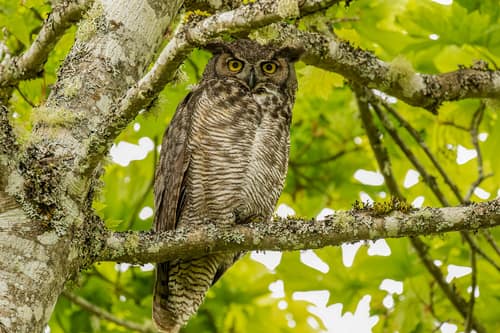
Predator "Great Horned Owl, the first I've seen in decent light this year. Didn't want to disturb it for too long so we continued along the trail" by island deborah- is licensed under CC BY-SA 2.0. To view a copy of this license, visit https://creativecommons.org/licenses/by-sa/2.0/. · cc-by-sa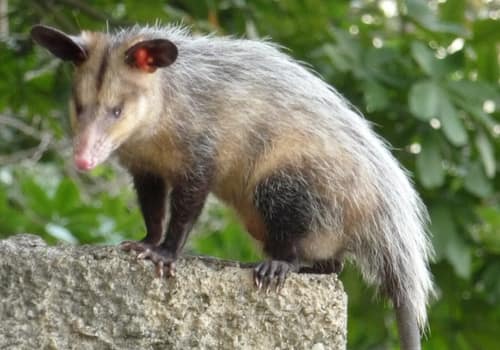
Close Relative Rabipelao.jpg: Juan Tello derivative work: WolfmanSF (talk) / CC BY 2.0 · cc-by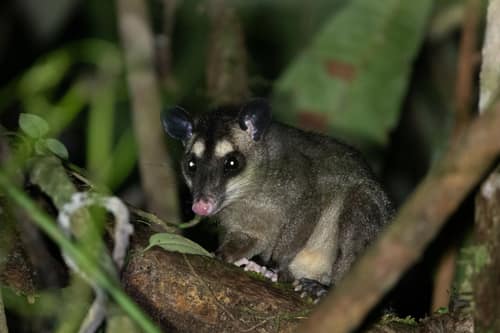
Family Relative "black four-eyed opossums, gray four-eyed opossums" by Demian Hiß is licensed under CC BY 4.0. To view a copy of this license, visit http://creativecommons.org/licenses/by/4.0/. · cc-by
Keep collecting in Fauna
Found in Collections
Species set
Moonlight Marvels
Virginia Opossum is found in this collection. Identify it in Fauna to fill this slot and continue your progress.
—/7
Help improve the field guideSomething wrong?
Checking your Fauna account…Report a name, category, or profile issue for review.