
Mammal · GBIF taxon 5219892
African Brush-tailed Porcupine
Atherurus africanusAlso known as Brush-tailed Porcupine, African Brush-tail
African brush-tailed porcupines forage along tropical forest floors at night, traveling in small family groups that communicate through quiet grunts and tail-rattling. Their slender profile is covered by a coat of stiff, flattened quills and a long tail tipped with hollow bristles that produce a rustling warning signal when shaken. By excavating burrows among tree roots and dispersing seeds through fallen fruit consumption, these rodents shape the understory ecosystem across Central and West Africa.
NocturnalForest DwellerMammal
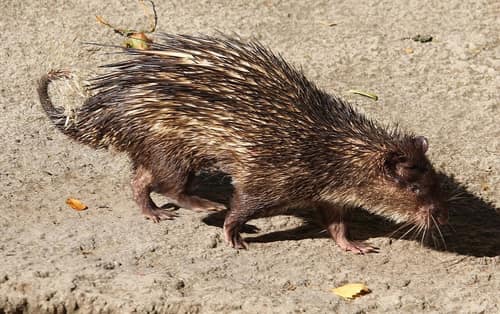
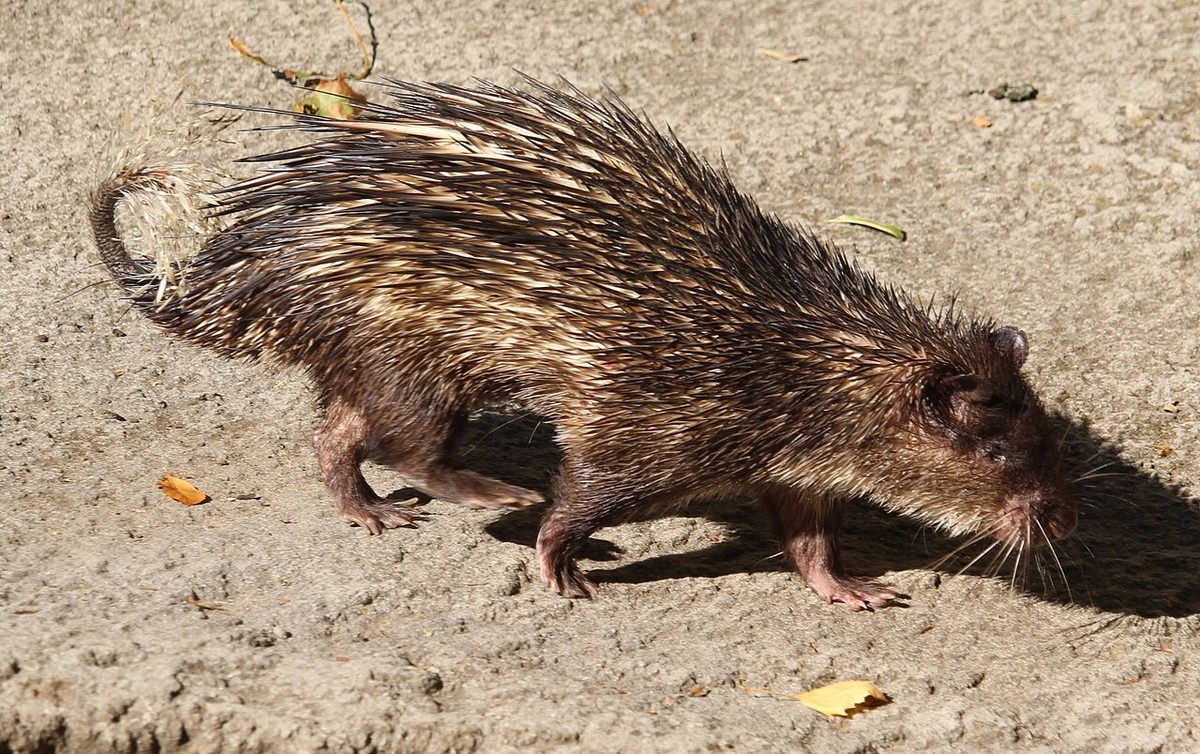
Licensed referenceUdo Schröter / CC BY-SA 4.0 · CC BY-SA 4.0
—observations
—countries
—peak records
Least ConcernConservation statusIUCN Red List categoriesLCNTVUENCREWEXLeast ConcernRed List categories, explained →
Diet & prey
- Fallen Fruit
- Roots and Tubers
- Tree Bark
Predators
- African Leopard
- African Rock Python
- African Golden Cat
ThreatsBushmeat hunting, localized deforestation, habitat fragmentation
HabitatsTropical rainforests, gallery forests, dense riverine thickets
Life span10–15 years (up to 23 in captivity)
Size / weightNot available
Classification
- FamilyHystricidae
- SpeciesAtherurus africanus
Range data is not available yet.
Interaction riskLow
- Low
- Moderate
- High
- Very high
- Why interaction risk is low
- Quills can puncture skin if cornered or handled; observe from a safe distance.
- Why it is dangerous
- Dorsal quills detach upon contact and possess sharp tips that easily puncture skin and tissue.
- How to recognize a risky encounter
- Slender body with dark grey fur, flattened back spines, and a tail ending in a light-colored bristle tuft.
- What to do
- Never attempt to touch or corner wild porcupines, and give burrow entrances a wide berth.
Responsible observation
- Nocturnal Spotting: Use red-filtered light to observe foraging groups without disrupting their behavior.
- Safe Distance: Maintain several meters of space to prevent defensive quill rattling or sudden retreats.
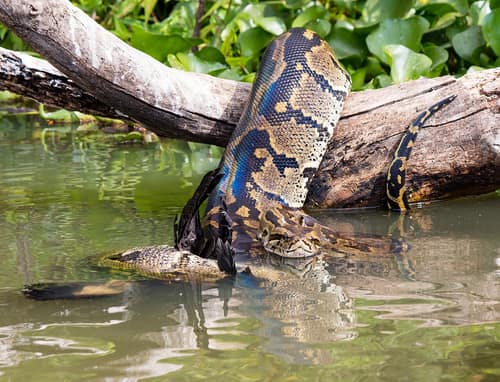
Predator Ray in Manila / CC BY 2.0 · cc-by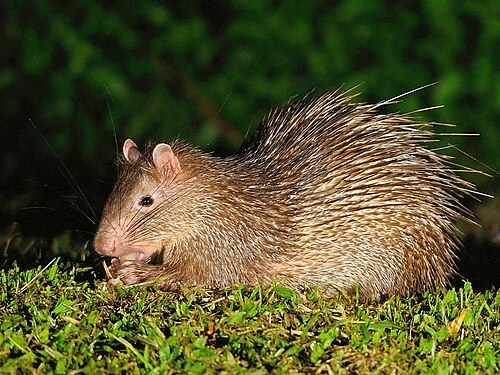
Close Relative tontantravel / CC BY-SA 2.0 · cc-by-sa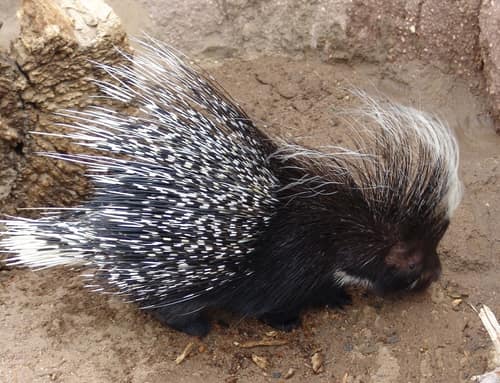
Co-occurring Relative (c) Drew Avery, some rights reserved (CC BY) · cc-by
Help improve the field guideSomething wrong?
Checking your Fauna account…Report a name, category, or profile issue for review.