
Mammal · GBIF taxon 5219576
Diana Monkey
Cercopithecus dianaAlso known as Diana Guenon
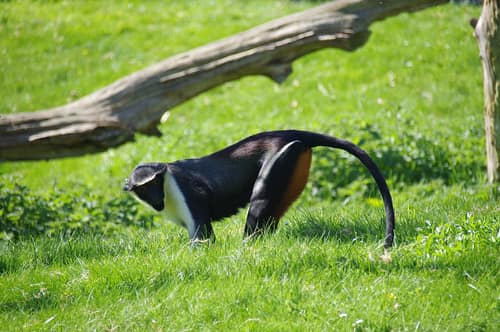
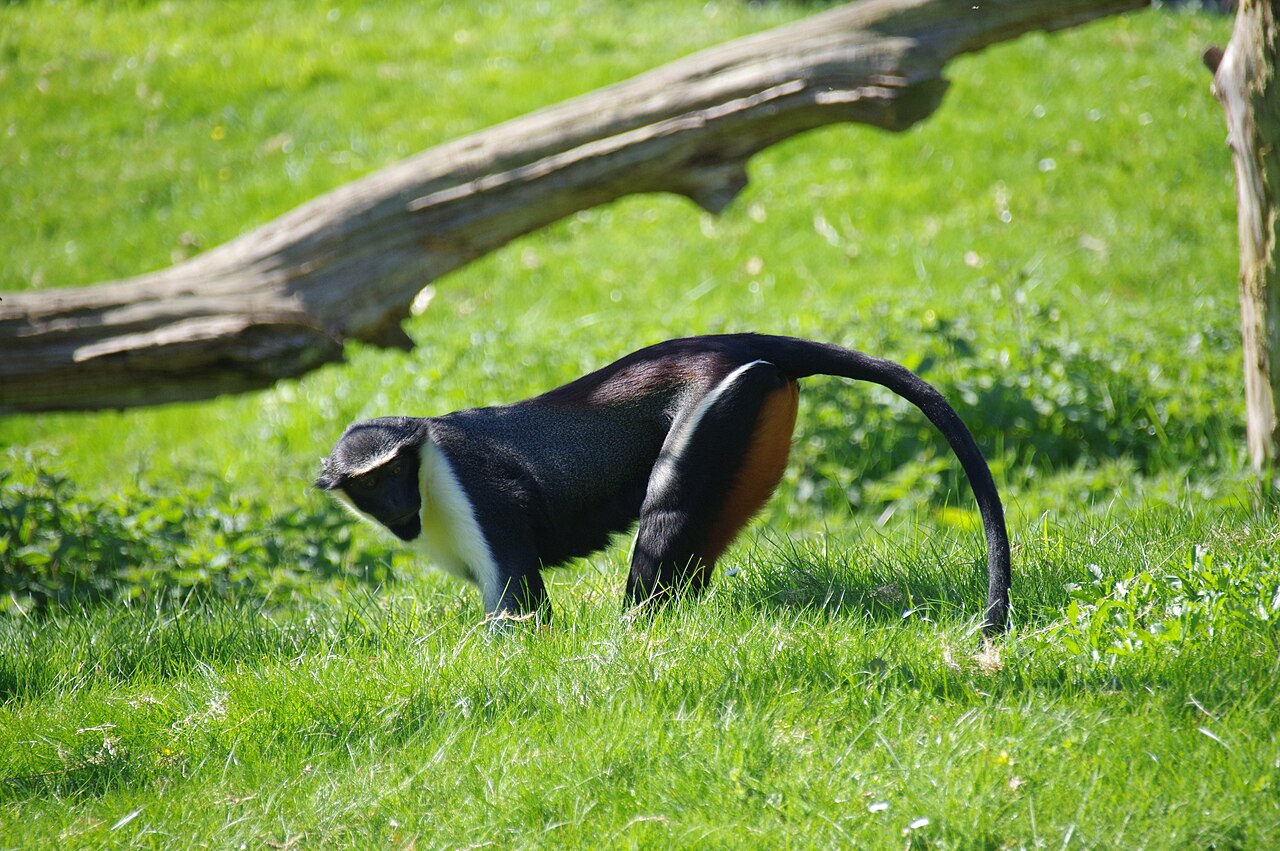
Diana monkeys spend virtually their entire lives high in the upper canopy of West African rainforests, moving through dense foliage in small troops led by a single dominant male. They maintain complex alarm communication, producing specific vocalizations for aerial predators like crowned eagles versus ground predators like leopards. Their striking contrast of black, white, and chestnut fur provides camouflage in dappled sunlight while serving as visual signals to troop members.
ArborealSocialFrugivorous
—observations
—countries
—peak records
EndangeredConservation statusIUCN Red List categoriesLCNTVUENCREWEXEndangeredRed List categories, explained →
Diet & prey
- Fruits
- Insects
- Flowers
Predators
- Crowned Eagle
- Leopard
- Chimpanzee
ThreatsDeforestation, habitat fragmentation, and commercial bushmeat hunting
HabitatsHigh canopy primary lowland tropical rainforests
Life span15–20 years in the wild; up to 30 years in captivity
Size / weightNot available
Classification
- FamilyCercopithecidae
- SpeciesCercopithecus diana
Range data is not available yet.
Interaction riskLow
- Low
- Moderate
- High
- Very high
- Why interaction risk is low
- Can deliver a sharp defensive bite if cornered; observe from a respectful distance in the wild.
- Why it is dangerous
- Equipped with strong jaws and long sharp canines capable of inflicting severe defensive bites if cornered or restrained.
- How to recognize a risky encounter
- Look for the distinctive white crescent browband, white chest beard, and long dark tail high in the tree canopy.
- What to do
- Never approach, corner, or attempt to feed wild primates; maintain distance and observe quietly.
- What to notice
- Identified by a white crescent brow, white throat and beard, and dark body with a chestnut patch on the lower back.
- Support conservation
- Avoid publishing precise location coordinates of wild sightings to protect troops from illegal hunters.
Responsible observation
- Listen for Alarms: Distinct high-pitched calls often reveal troop locations high in the canopy.
- Keep Distance: Maintain a respectful distance to avoid alarming social groups while foraging.
- Use Optics: Binoculars or telephoto lenses are necessary to spot them in high branches.
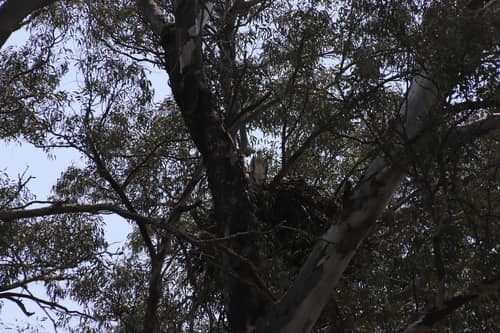
Predator (c) Suvarna Parbhoo Mohan, some rights reserved (CC BY-SA) · cc-by-sa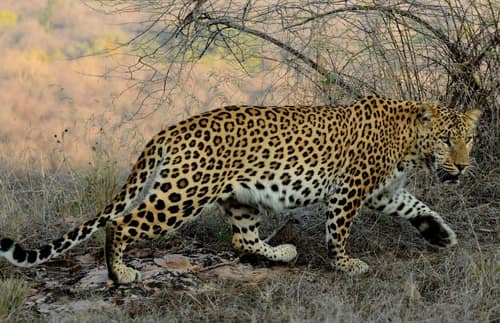
Predator (c) Raja bandi, some rights reserved (CC BY), uploaded by Raja bandi · cc-by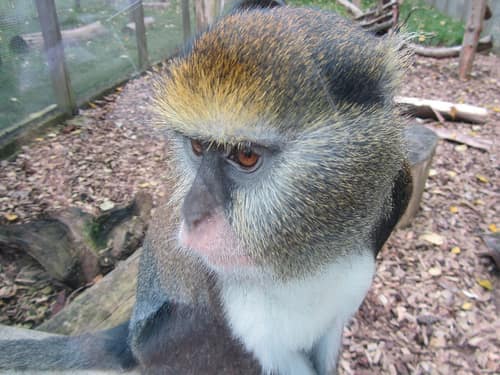
Close Relative Badgernet / CC BY-SA 3.0 · cc-by-sa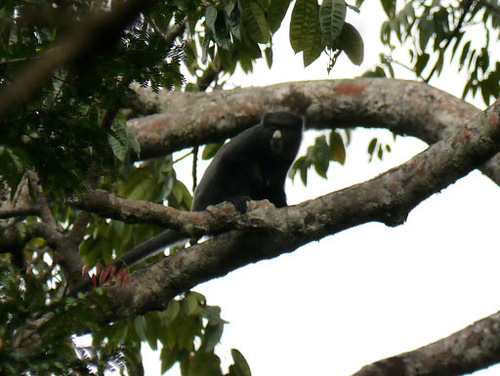
Close Relative (c) 116916927065934112165, some rights reserved (CC BY), uploaded by 116916927065934112165 · cc-by
Help improve the field guideSomething wrong?
Checking your Fauna account…Report a name, category, or profile issue for review.