
Mammal · GBIF taxon 5219571
White-throated Monkey
Cercopithecus erythrogasterAlso known as Red-bellied Guenon, Red-bellied Monkey, White-throated Guenon
White-throated monkeys travel through rainforest canopies in small social groups usually consisting of a single adult male, several females, and their young. Distinctive white throat fur contrasts sharply with a dark coat and reddish abdomen, making them visually striking among West African primates. Severe habitat fragmentation and bushmeat hunting have restricted remaining populations to isolated forest patches across southern Nigeria and Benin.
ArborealFrugivorousDiurnal
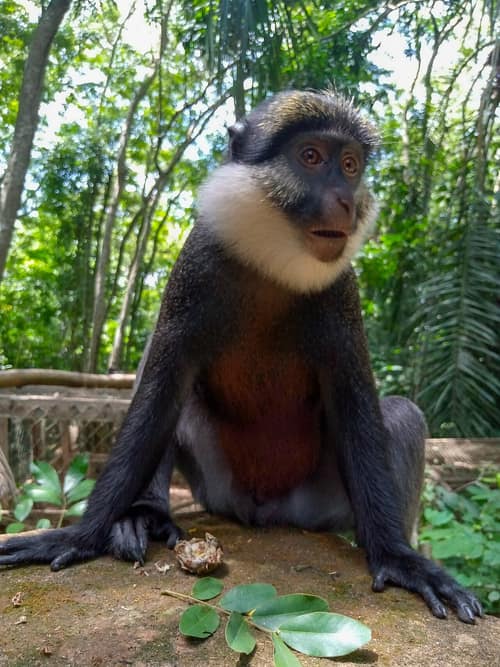
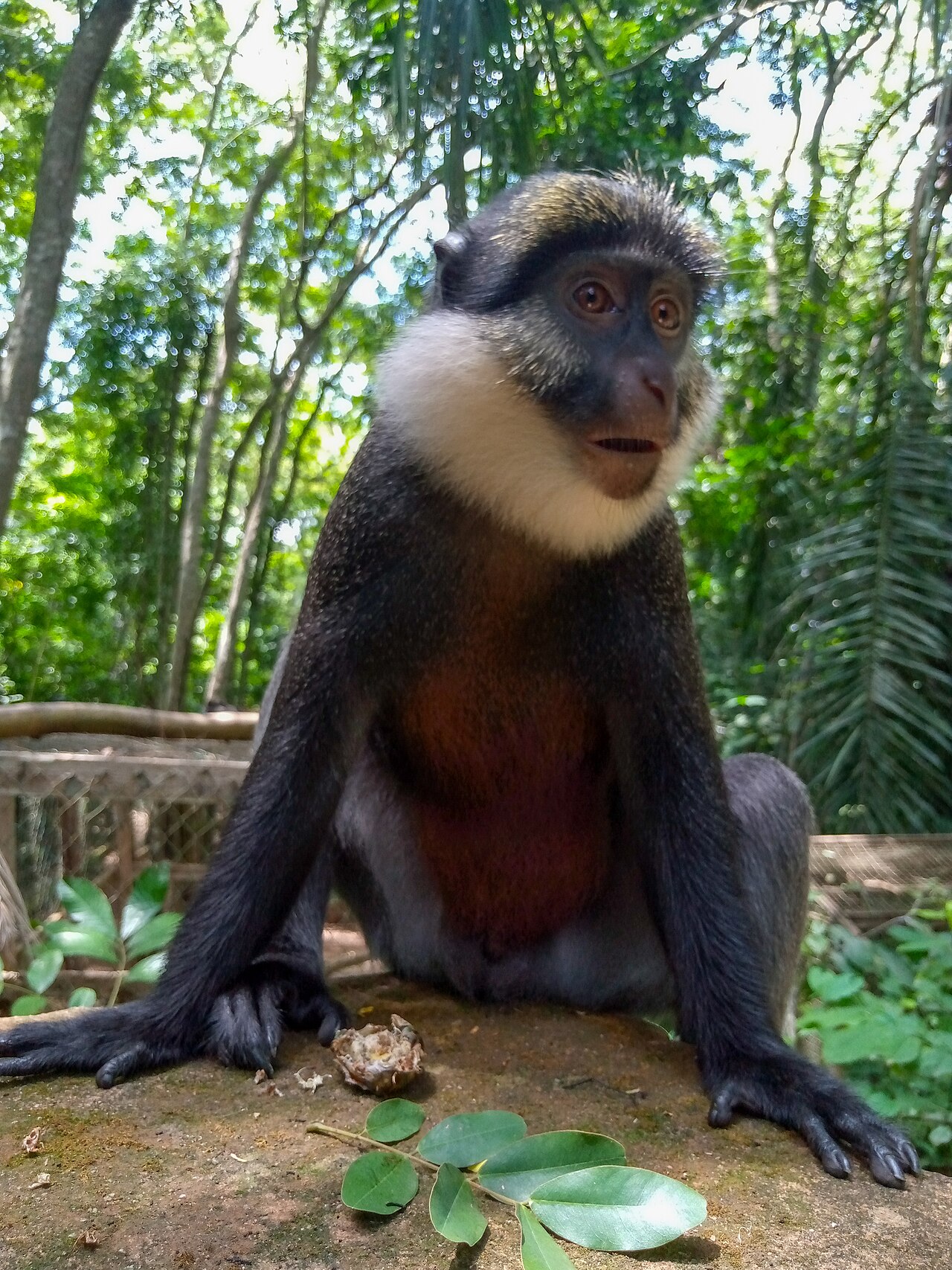
Licensed referenceFreed Armel / CC BY-SA 4.0 · cc-by-sa
—observations
—countries
—peak records
EndangeredConservation statusIUCN Red List categoriesLCNTVUENCREWEXEndangeredRed List categories, explained →
Diet & prey
- Wild figs
- Tree foliage
- Insects
Predators
- Crowned Eagle
- Leopard
- African Rock Python
ThreatsDeforestation, forest degradation, and bushmeat hunting
HabitatsTropical rainforests, swamp forests, and gallery forests
Life span20–25 years
Size / weightNot available
Classification
- FamilyCercopithecidae
- SpeciesCercopithecus erythrogaster
Range data is not available yet.
Interaction riskLow
- Low
- Moderate
- High
- Very high
- Why interaction risk is low
- Capable of delivering a painful bite if cornered; observe quietly from a safe distance.
- Why it is dangerous
- Sharp canine teeth and strong jaws can inflict deep puncture wounds if an individual feels trapped or cornered.
- How to recognize a risky encounter
- Watch for open-mouth threat displays, low guttural grunts, or vigorous branch-shaking.
- What to do
- Never attempt to touch or feed wild monkeys; back away slowly if an individual acts assertively.
- What to notice
- Recognizable by the bright white throat patch and reddish belly in high canopy foliage.
- Support conservation
- Stay on established forest trails and avoid sharing precise geographic coordinates of wild sightings.
Responsible observation
- Maintain distance: Keep well back from canopy trees to prevent alarming foraging troops.
- Minimize noise: Quiet observation allows natural vocalizations and social displays to continue.
- Avoid direct eye contact: Prolonged eye contact can be interpreted as an aggressive threat.
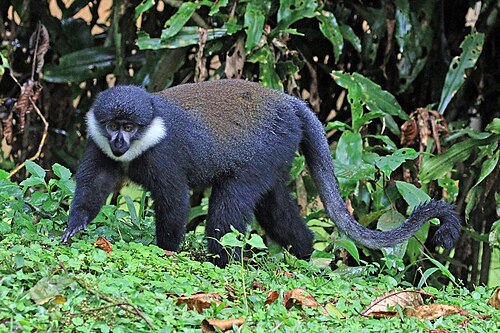
Genus Member Charles J. Sharp / CC BY-SA 4.0 · cc-by-sa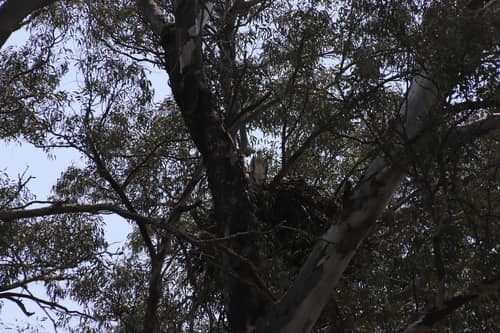
Predator (c) Suvarna Parbhoo Mohan, some rights reserved (CC BY-SA) · cc-by-sa
Close Relative (c) pavlaki1968, some rights reserved (CC BY) · cc-by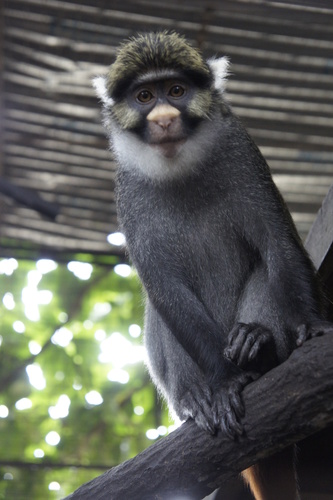
Close Relative (c) LaetitiaC, alguns direitos reservados (CC BY-SA) · cc-by-sa
Help improve the field guideSomething wrong?
Checking your Fauna account…Report a name, category, or profile issue for review.