
Mammal · GBIF taxon 5219566
Mona Monkey
Cercopithecus monaAlso known as Mona Guenon
Mona monkeys navigate the forest canopy in lively troops, using long tails for balance and expandable cheek pouches to stash harvested fruit while foraging. Dominant males produce deep, resonant boom calls that echo through the trees to broadcast territory boundaries to rival groups. Introduced to Grenada centuries ago, island populations have successfully adapted to tropical fruit orchards alongside their native West African rainforest haunts.
ArborealDiurnalSocial
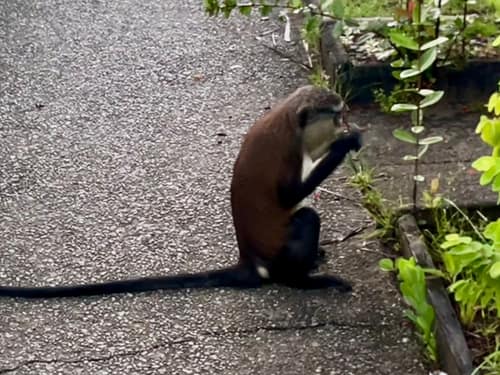
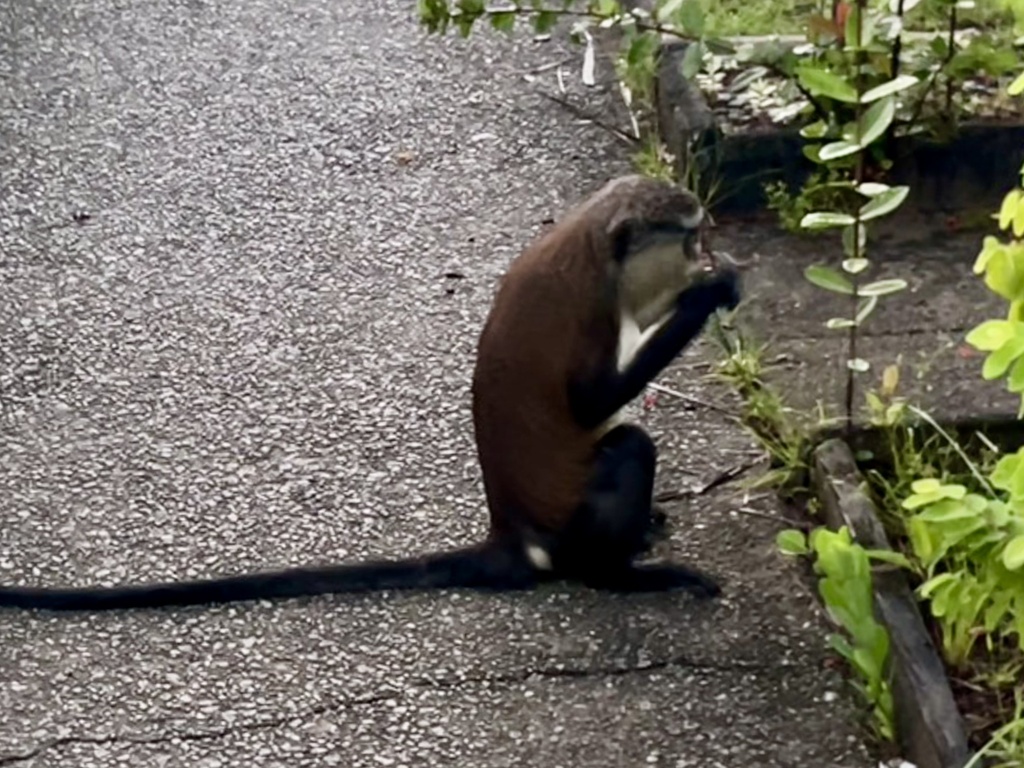
—observations
—countries
—peak records
Near ThreatenedConservation statusIUCN Red List categoriesLCNTVUENCREWEXNear ThreatenedRed List categories, explained →
Diet & prey
- Tropical Fruits
- Tree Leaves
- Insects
Predators
- Leopards
- African Crowned Eagles
- Chimpanzees
ThreatsHabitat loss, forest fragmentation, bushmeat hunting
HabitatsLowland rainforests, gallery forests, mangrove swamps
Life span15–20 years (wild), up to 30 years (captivity)
Size / weightNot available
Classification
- FamilyCercopithecidae
- SpeciesCercopithecus mona
Native
Interaction riskLow
- Low
- Moderate
- High
- Very high
- Why interaction risk is low
- May bite or scratch if cornered or handled; observe quietly from a safe distance.
- What to notice
- Look for agouti brown fur, a white rump, black limbs, and a blue-grey face with a dark brow stripe.
- Support conservation
- Observe troops quietly without attempting to approach, feed, or mimic vocalizations.
Responsible observation
- Maintain Distance: Stay far enough away to avoid causing stress or provoking defensive responses.
- Never Feed: Withhold food to prevent habituation and dangerous begging behaviors.
- Listen Carefully: Watch for sudden alarm chatter or male boom calls indicating troop movement.
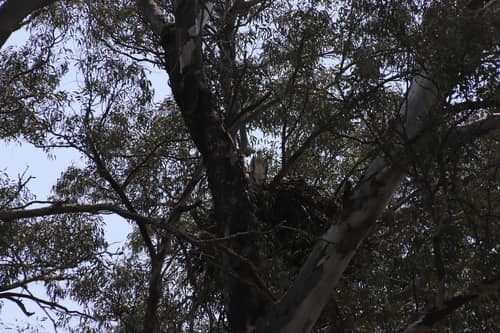
Predator (c) Suvarna Parbhoo Mohan, some rights reserved (CC BY-SA) · cc-by-sa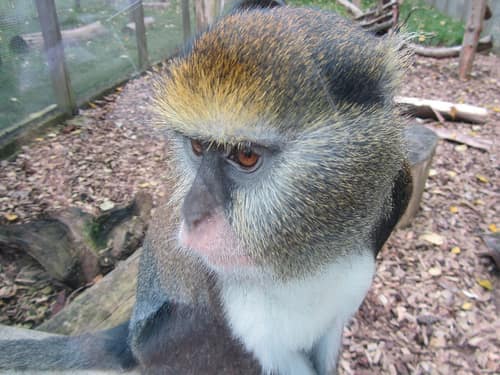
Close Relative Badgernet / CC BY-SA 3.0 · cc-by-sa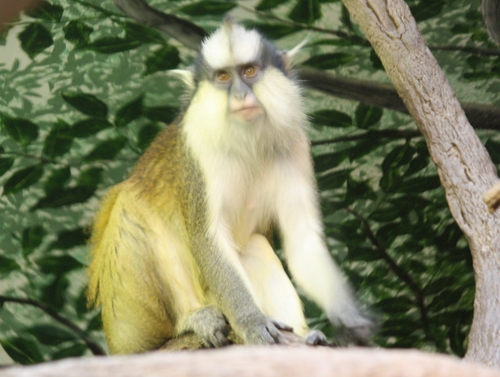
Close Relative (c) Ltshears, some rights reserved (CC BY-SA) · cc-by-sa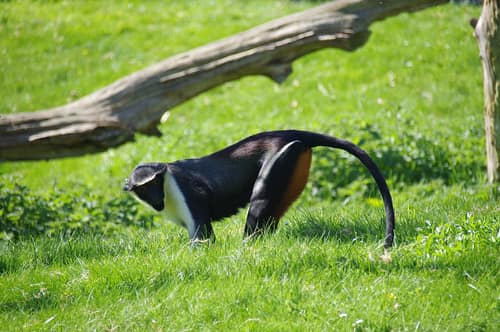
Genus Relative Abujoy / CC BY 4.0 · cc-by
Help improve the field guideSomething wrong?
Checking your Fauna account…Report a name, category, or profile issue for review.