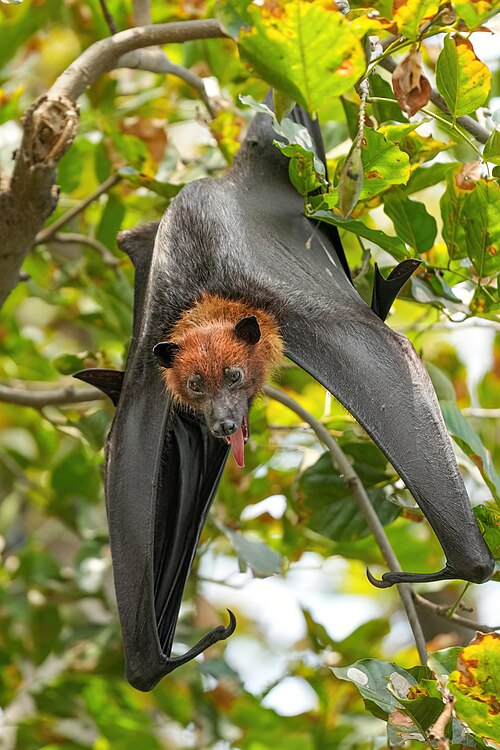
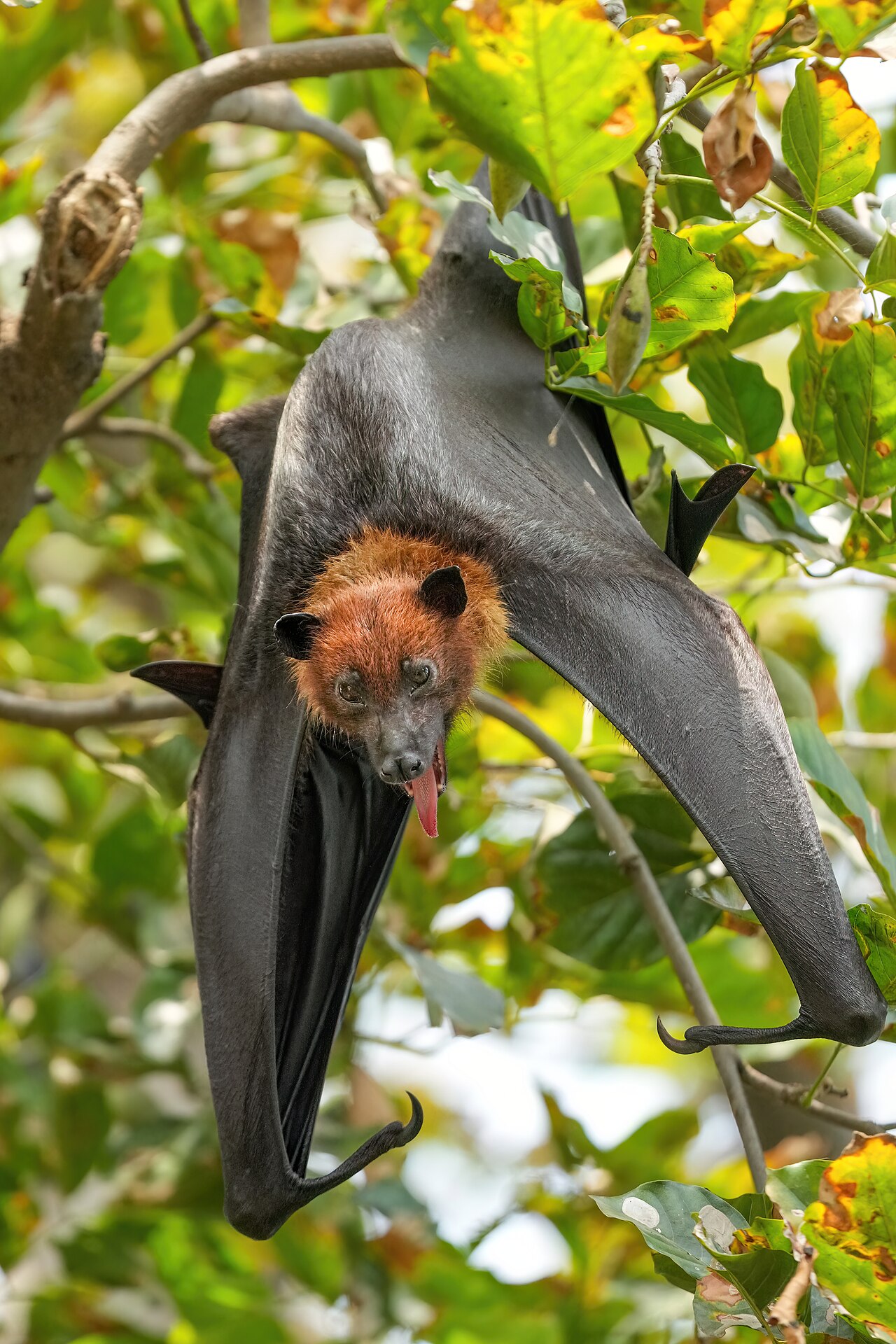
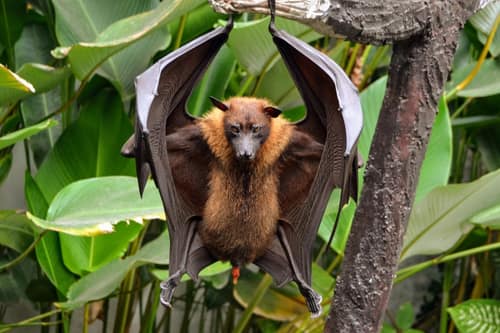
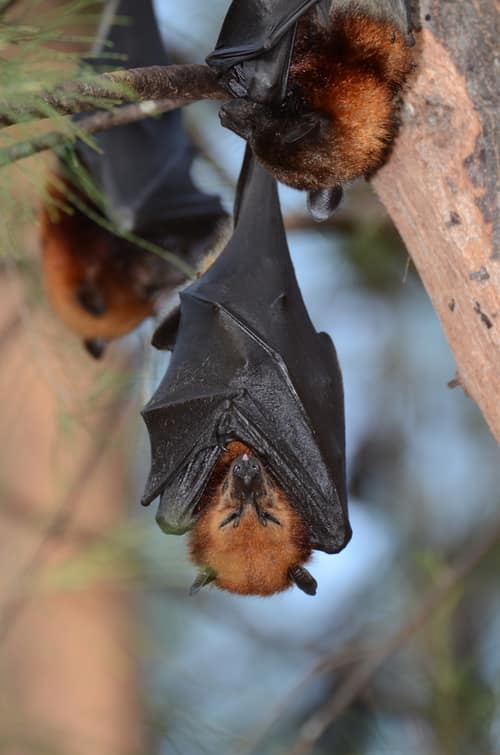
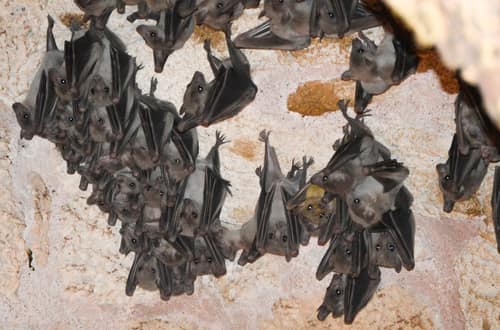
Indian flying foxes form enormous, vocal colonial roosts high in old-growth trees, often numbering in the thousands and greeting each dusk with a coordinated exodus into neighboring orchards and forest canopies. Lacking echolocation, they rely on keen nocturnal eyesight and an exceptional sense of smell to track flowering trees and ripe canopy fruit across vast agricultural and jungle landscapes. By dispersing seeds and pollinating blossoms over dozens of kilometers nightly, they act as indispensable keystone engineers throughout South Asia.
ThreatsCulling as agricultural vermin, habitat loss, roost disturbance, and powerline electrocution
HabitatsTropical moist forests, agricultural orchards, urban parks, and swamps
Life span15–30 years
Classification
FamilyPteropodidae
SpeciesPteropus giganteus
Range & activity
Range data is not available yet.
Safe observation
Interaction riskModerate
Low
Moderate
High
Very high
Why interaction risk is moderate
Carries serious zoonotic pathogens including Nipah virus; observe roosts from a distance and never handle individuals.
Why it is dangerous
Natural reservoir for high-consequence viral pathogens including Nipah virus and rabies, which cause acute encephalitis and respiratory failure in humans.
How to recognize a risky encounter
Recognizable by its fox-like golden-brown face, expansive dark wings spanning over a meter, and absence of an external tail.
What to do
Maintain distance, avoid consuming fruit bitten or dropped by bats, and alert wildlife authorities if an injured animal is found.
Responsible observation
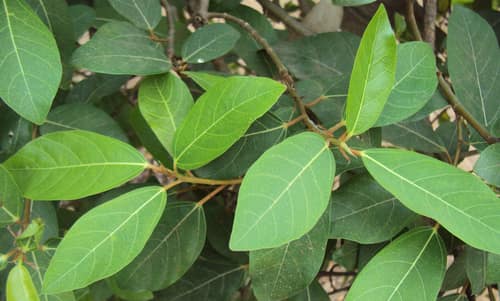
Viewing Roosts: Scan large banyan, tamarind, or eucalyptus trees during daylight to observe vocal grooming behavior.
Watching Flyouts: Position along open river corridors or fields just after sunset to witness vast columns taking flight.
Health Safety: Avoid lingering directly beneath occupied roosting canopies to steer clear of droppings and falling debris.