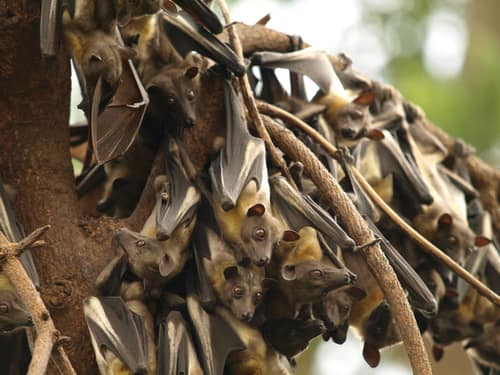
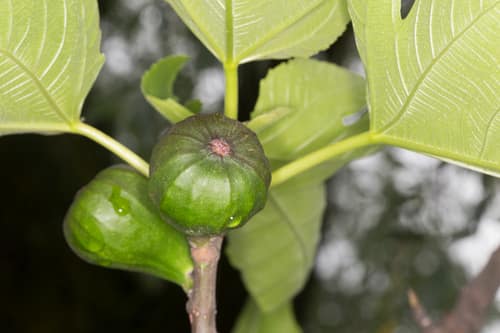
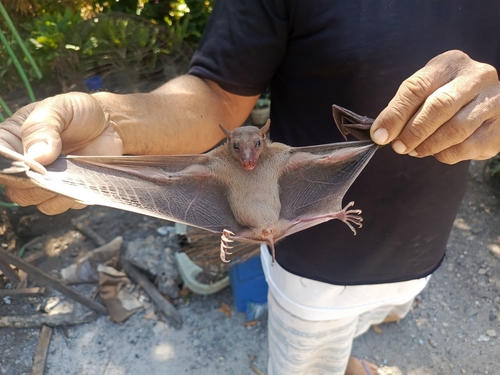
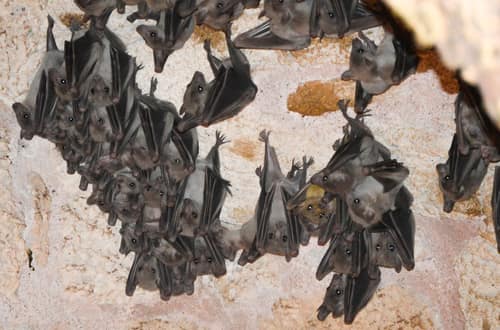
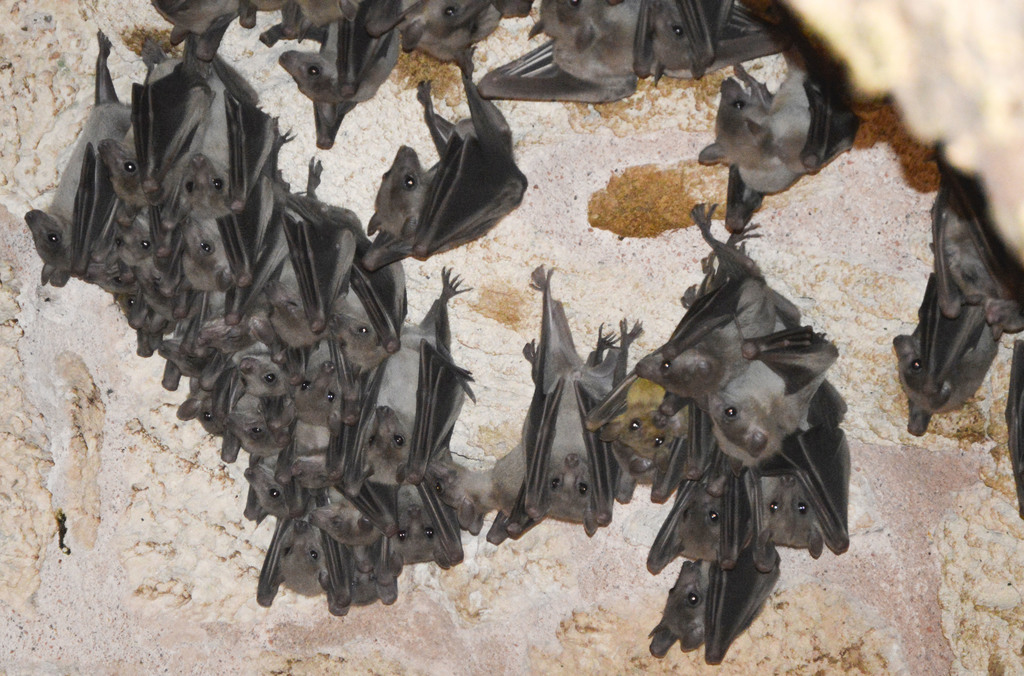
Egyptian rousettes are highly gregarious fruit bats that gather in subterranean cave colonies numbering anywhere from dozens to thousands of individuals. Unlike most megabats, which rely almost purely on vision and olfaction, they navigate dark cavern systems using rapid lingual echolocation, producing sharp clicks with their tongues. Foraging over extensive distances each night, they consume soft pulp and drink fruit juices, playing an indispensable role as seed dispersers and pollinators throughout arid and subtropical landscapes.
ThreatsDirect eradication by commercial fruit growers, roost disturbance, and cave quarrying
HabitatsCaves, arid savannahs, subtropical woodlands, and fruit orchards
Life span15–22 years
Size / weightNot available
Classification
FamilyPteropodidae
SpeciesRousettus aegyptiacus
Range & activity
Native
Safe observation
Interaction riskModerate
Low
Moderate
High
Very high
Why interaction risk is moderate
Natural reservoir for Marburg virus and rabies; avoid entering roost caves and never handle wild bats.
Why it is dangerous
This species is the primary natural reservoir of Marburg virus, a severe and often fatal hemorrhagic fever agent, and can also transmit rabies through defensive bites.
How to recognize a risky encounter
Look for medium-sized grayish-brown bats hanging tightly packed in dark cave ceilings, making distinct audible clicks with their tongues.
What to do
Never touch or handle grounded, injured, or trapped bats, and seek immediate specialized medical treatment if bitten or scratched.
Responsible observation
Roost Etiquette: Avoid entering confined roost caves to prevent disturbance and exposure to aerosolized pathogens.
Nighttime Watching: Use a red-filtered flashlight to view individuals feeding in fruit trees without causing panic.

 1 / 6
1 / 6