
Mammal
Hoary Bat
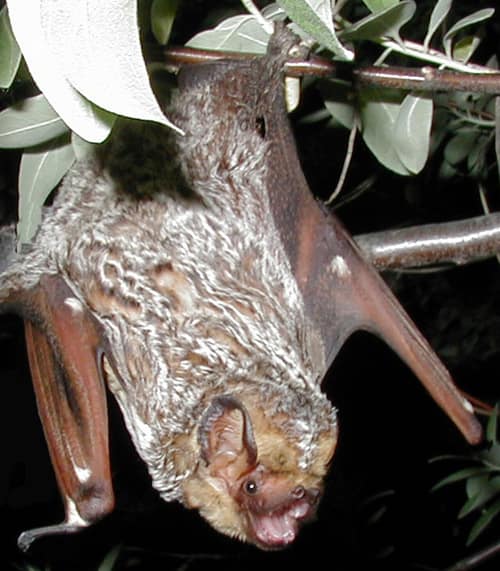
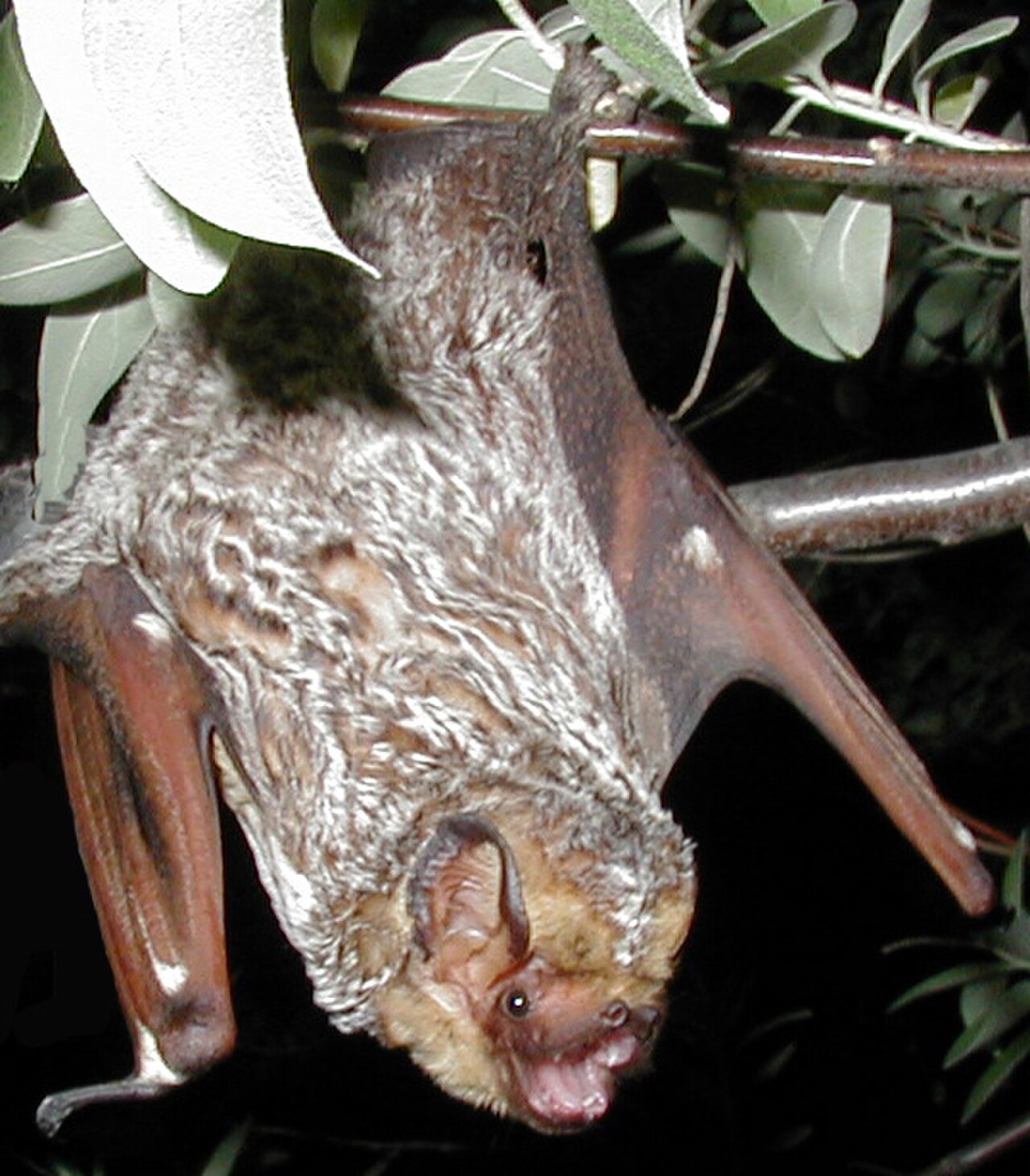
Lasiurus cinereusHoary bats are solitary, tree-roosting mammals easily recognized by their dense, dark brown fur tipped with frosty white, giving them a frosted appearance. Unlike many other bats, they spend their days hanging in the open foliage of trees rather than in caves, relying on their excellent camouflage to blend in with bark and leaves. During autumn, these remarkable flyers embark on long-distance migrations to warmer southern climates, navigating vast distances across North America.
MigratoryNocturnalInsectivorous
—observations
—countries
—peak records
Least ConcernConservation statusIUCN Red List categoriesLCNTVUENCREWEXLeast ConcernRed List categories, explained →
Diet & preyMoths, Beetles, Flies
Predators
- Owls
- Hawks
- Snakes
ThreatsWind turbine collisions, habitat loss, and pesticide use reducing insect prey
HabitatsConiferous and deciduous forests, woodland edges, and urban parks
Life span6 to 12 years
Classification
- FamilyVespertilionidae
- SpeciesLasiurus cinereus
Native
Interaction riskModerate
- Low
- Moderate
- High
- Very high
- Why interaction risk is moderate
- Can carry rabies and may bite if handled; observe from a safe distance and never touch.
- What to notice
- Look for a large bat with frosted white-tipped fur, a yellow-orange throat patch, and a fully furred tail membrane.
- Support conservation
- Avoid disturbing roosting bats in trees, and support bat-friendly wind energy practices in your region.
Responsible observation
- Acoustic Detection: Use a bat detector to listen for their low-frequency echolocation calls on summer nights.
- Tree Gazing: Scan the undersides of branches in dense foliage to spot roosting individuals during the day.
- Leave in Place: If you find one resting on the ground, contact a local wildlife rehabilitator immediately.
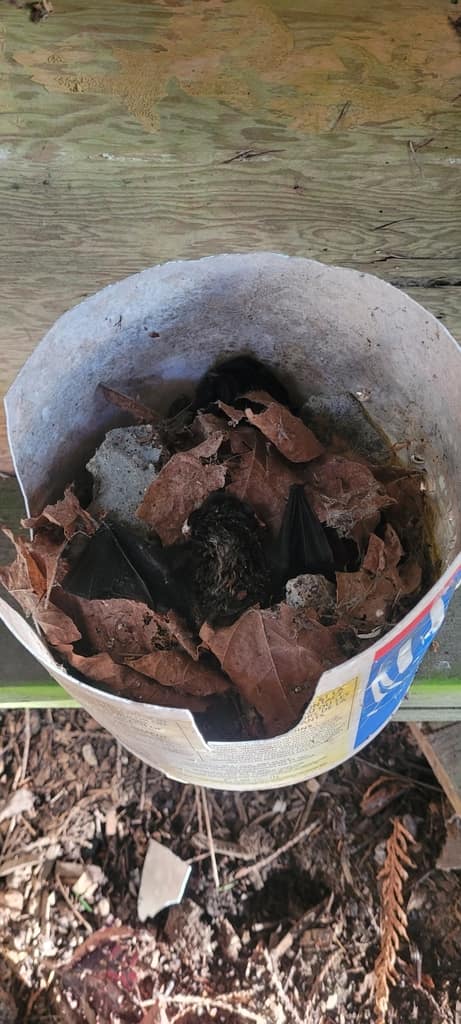
Migratory Companion no rights reserved · cc0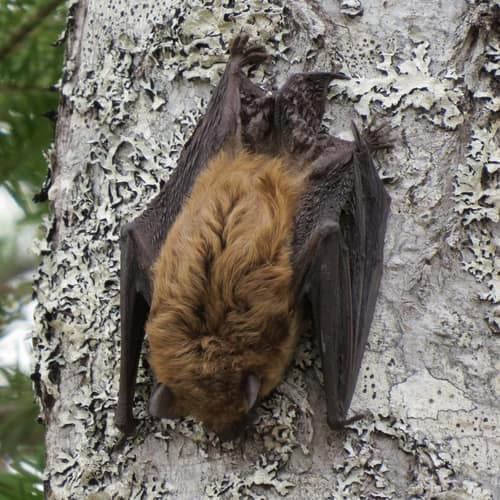
Competitor (c) Fyn Kynd, some rights reserved (CC BY) · cc-by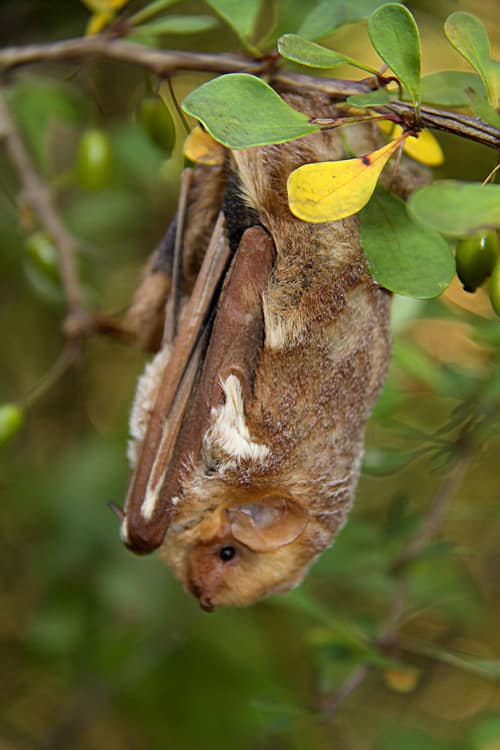
Close Relative (c) Kristof & Yulia, some rights reserved (CC BY) · cc-by
Help improve the field guideSomething wrong?
Checking your Fauna account…Report a name, category, or profile issue for review.