
Amphibian
Common Rain Frog
Breviceps adspersusAlso known as Bushveld Rain Frog, Transvaal Rain Frog
Common rain frogs spend most of the year buried deep in loose soil, emerging en masse after soaking seasonal rains to forage and reproduce. Lacking the slender limbs and webbed feet of typical frogs, they walk rather than hop and rapidly inflate their rotund bodies into tight spheres when threatened. During mating, smaller males glue themselves to females with a sticky skin secretion, after which females deposit eggs in subterranean nests where the young develop directly into miniature froglets.
FossorialNocturnalSubterranean
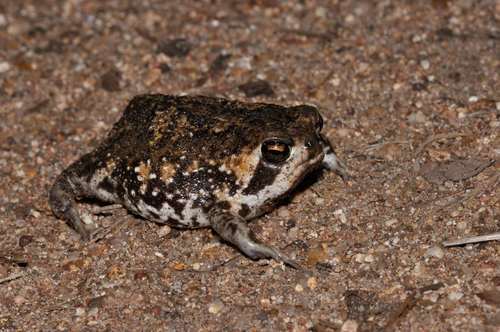
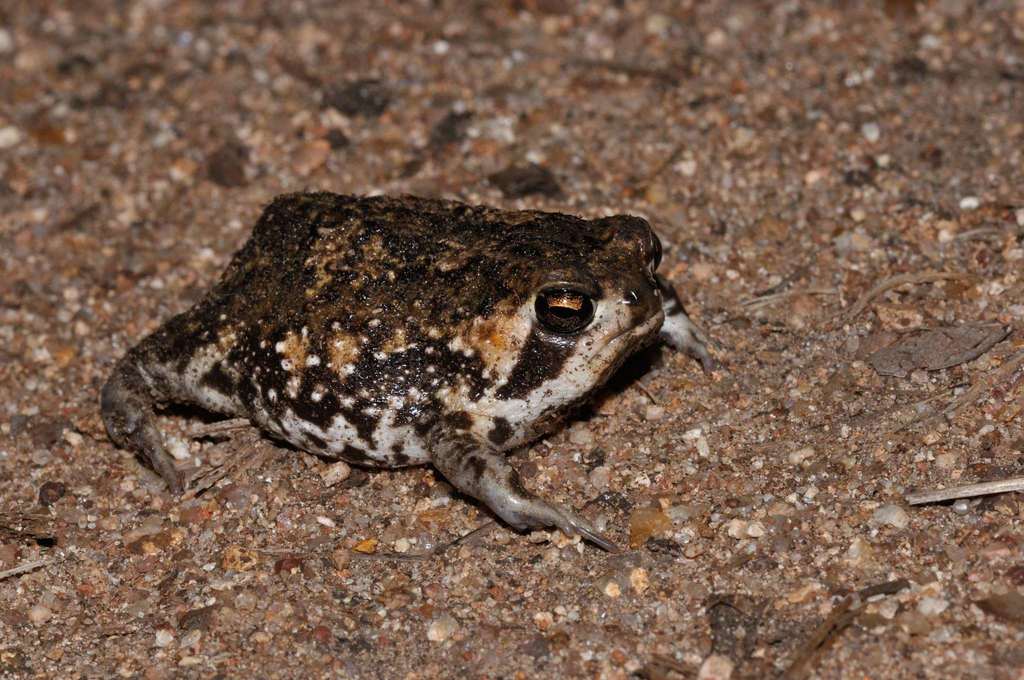
—observations
—countries
—peak records
Least ConcernConservation statusIUCN Red List categoriesLCNTVUENCREWEXLeast ConcernRed List categories, explained →
Diet & preyTermites, Ants, Small Beetles
Predators
- Spotted Eagle-Owl
- Mozambique Spitting Cobra
- Rock Monitor
ThreatsHabitat fragmentation, agricultural development, and road mortality during breeding rains
HabitatsSavanna, semi-arid bushveld, open woodlands, and sandy grasslands
Life span4–10 years
Classification
- FamilyBrevicipitidae
- SpeciesBreviceps adspersus
Range data is not available yet.
Interaction riskLow
- Low
- Moderate
- High
- Very high
- Why interaction risk is low
- Harmless and safe to observe at a normal distance.
Responsible observation
- Listening for Calls: Listen after heavy downpours for their short, high-pitched chirps resonating across sandy open ground.
- Watching Movement: Observe their unique waddling walk along unpaved roads and dirt paths on warm rainy nights.
- Handling Etiquette: Avoid picking them up, as skin secretions are tacky and human skin oils can harm sensitive amphibians.
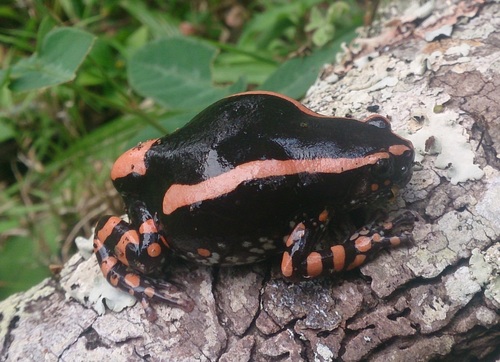
Sympatric Amphibian (c) Nick Schaller, some rights reserved (CC BY), uploaded by Nick Schaller · cc-by
Prey (c) Nicola van Berkel, some rights reserved (CC BY-SA), uploaded by Nicola van Berkel · cc-by-sa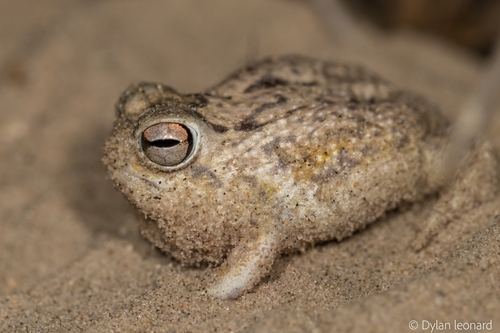
Close Relative (c) Dylan Leonard, some rights reserved (CC BY-SA), uploaded by Dylan Leonard · cc-by-sa Image unavailable
Close Relative
Help improve the field guideSomething wrong?
Checking your Fauna account…Report a name, category, or profile issue for review.